ETSY Store Automation : Achieving High ROI 100% with AI

ETSY Store Automation : Achieving High ROI 100% with AI

1. System Architecture

ETSY Store Automation : Achieving High ROI with Boho Dog Art and AI Workflows

The solution utilizes Make.com to connect five key platforms into three distinct automation scenarios:

  • Leonardo.ai: For high-quality AI image generation.
  • Google Drive: Serves as the central storage and “command centre”.
  • Metricool: Manages multi-platform social media auto-posting.
  • Printify & Etsy: Handles product creation, fulfillment, and sales.

——————————————————————————–

2. Technical Implementation (Make Scenarios)

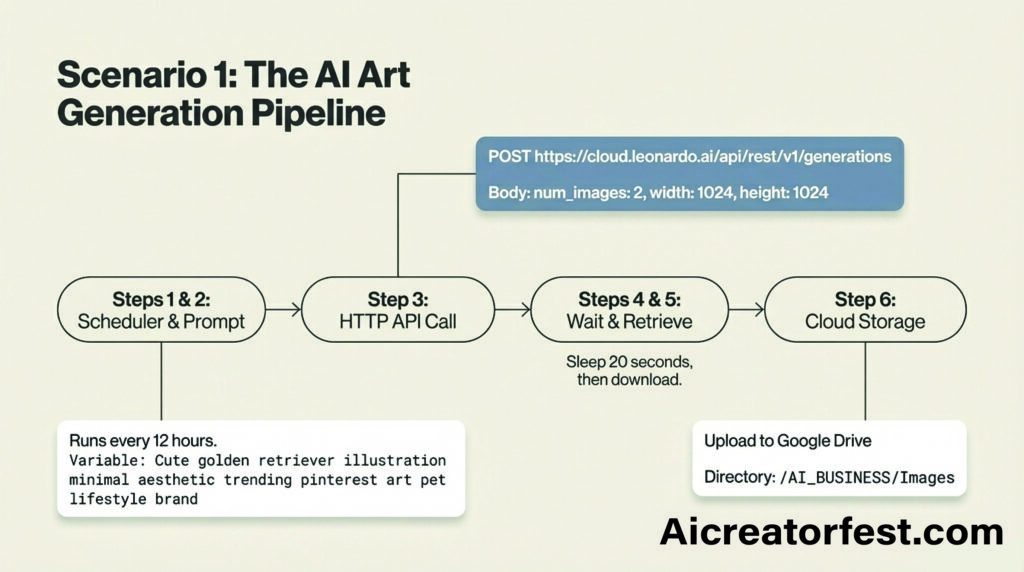
Scenario 1: AI Image Generation (Leonardo to Google Drive)

  • Trigger: A Scheduler runs every 12 hours.
  • Action: Uses an HTTP Module to call the Leonardo API with a pre-set prompt (e.g., “Cute golden retriever illustration minimal aesthetic”).
  • Output: Generates two images, waits 20 seconds for processing, and automatically downloads and saves them to a specific Google Drive folder (/AI_CONTENT/Images).

Scenario 2: Social Media Auto-Posting (Google Drive to Metricool)

  • Trigger: Google Drive “Watch Files” detects new images in the generation folder.
  • Captioning: An OpenAI module generates a relevant Instagram/Pinterest caption with emojis and hashtags based on the image.
  • Execution: The image and caption are sent to Metricool, which automatically schedules posts for Instagram, Pinterest, TikTok, and YouTube Shorts.

Scenario 3: Etsy Product Pipeline (Google Drive to Printify)

  • Trigger: Google Drive “Watch Files” monitors a manual folder (/Product_Designs).
  • Action: Once the client moves an image here, the system uploads it to Printify.
  • Execution: The system creates a product (e.g., Poster, Sticker, or T-shirt) and automatically publishes the listing to the connected Etsy store.

——————————————————————————–

3. Client Daily Workflow

The system is designed to minimize manual labor, requiring only 2 minutes of effort per day:

  1. Open Google Drive to review the latest AI-generated images.
  2. Move the best designs from the automated /Images folder to the /Product_Designs folder.
  3. The automation takes over, immediately creating and publishing the Etsy product.

——————————————————————————–

4. Return on Investment (ROI) Analysis

MetricValue
Initial Investment$250 (Project setup cost)
Daily Time Commitment2 Minutes
Human Labor SavingsReplaces hours of manual prompting, image downloading, caption writing, social scheduling, and product listing creation.
Content OutputContinuous social media presence across 4+ platforms (IG, Pinterest, TikTok, YT Shorts).
Revenue PotentialAutomated “Print-on-Demand” pipeline to Etsy, allowing for rapid scaling of product catalogs without inventory risk.

Summary of Value: For a one-time setup fee of $250, the client receives a fully automated business engine that generates assets, markets them across social media, and lists them for sale, requiring only a few moments of daily oversight.

——————————————————————————–

I can also create a tailored report or a slide deck if you would like a more formal document to present this solution. Would you like me to do that?

Please create a tailored report for the solution

I would like you to create a formal slide deck

How can we scale this for more Etsy product types?

ROI ETSY Store Automation write complete case studies

Case Study 1: The $250 MVP Automation Pipeline

Objective: To establish a functional Etsy store and content engine with a one-time setup budget of $250 and near-zero daily maintenance.

The Solution: The system uses Make.com to link Leonardo.ai, Google Drive, Metricool, and Printify into a cohesive pipeline.

  • Automated Art Generation: A scheduler triggers Leonardo.ai every 12 hours to generate two high-quality images (e.g., “Boho golden retriever illustration”) based on a pre-set variable. These are automatically saved to a brand folder in Google Drive.
  • Social Media Synergy: Once a new file is detected in Drive, an OpenAI module generates a caption with relevant hashtags/emojis and sends it to Metricool. This ensures a continuous presence on Instagram, Pinterest, TikTok, and YouTube Shorts without manual posting.
  • Simplified Product Creation: The business owner performs a single manual task: moving the best AI-generated designs into a /Product_Designs folder. This movement triggers the Etsy Product Pipeline, which uploads the image to Printify, creates a product (e.g., a sticker or poster), and publishes the listing to Etsy with AI-generated SEO tags.

Return on Investment (ROI):

  • Time Savings: The ownerโ€™s daily effort is reduced to just 2 minutes, spent reviewing and moving files.
  • Operational Efficiency: The system replaces the need for a graphic designer, social media manager, and e-commerce assistant.
  • Scalability: For a fixed $250 investment, the store can scale its catalog indefinitely as the automation generates and lists new products daily.

——————————————————————————–

Case Study 2: Data-Driven Growth and Customer Lifecycle Automation

Objective: To move beyond simple posting by using automated engagement and analytics to create a self-optimizing growth loop.

The Solution: This advanced implementation focuses on the External User Journey and performance data.

  • Automated Engagement: The system performs hashtag searches (e.g., #dogmom) and automatically likes or follows relevant users to drive traffic back to the brand profile.
  • Performance Detection: The automation monitors social metrics like Pinterest saves and Instagram likes. If a specific design shows high engagement, the system automatically marks it for product creation on Etsy.
  • Continuous Optimization: Every night, an AI analysis module evaluates which styles (e.g., “Boho dogs vs. cartoon dogs”) convert best. It then automatically updates future prompts to focus on the highest-performing aesthetics, such as “warm neutral minimalist wall art”.
  • The Growth Loop: A user discovers a post on social media, visits the profile, clicks the Etsy link, and makes a purchase. This purchase triggers a fulfillment flow (Etsy โ†’ Printify โ†’ Customer), and the resulting user-generated content is reposted to drive further organic traffic.

Return on Investment (ROI):

  • Conversion Optimization: AI-driven prompt updates ensure the store always produces content that trends, increasing the conversion rate of social traffic to sales.
  • Maximized Visibility: Automated engagement keeps the brand top-of-mind for potential customers on multiple platforms.
  • Minimal Oversight: Despite the complexity of the data analysis, the business owner only spends a total of 5 minutes per day checking dashboards and approving new listings

AUDIENCE EXPERIENCE (EXTERNAL USER JOURNEY)

Now we look at the customerโ€™s journey.


Step 1: Discovery

A user sees a post.

Example:

Pinterest pin:
Cute boho dog illustration

User actions:

  • Save
  • Click
  • Follow page

Step 2: Profile Visit

User visits brand profile.

They see:

  • daily posts
  • consistent style
  • link to Etsy shop

Step 3: Etsy Product Discovery

User clicks product.

Example:

Boho Dog Poster

They see:

  • lifestyle mockups
  • SEO optimized title
  • product description

Step 4: Purchase

Order placed.

Flow:

Etsy
โ†“
Printify
โ†“
Print provider
โ†“
Customer shipment

Automation handles everything.


6. PRODUCT CREATION USER JOURNEY

For designs that perform well.


Step 1: Performance Detection

System checks:

Pinterest saves
Instagram likes
TikTok views

If engagement is high:

Design marked = product

Step 2: Product Creation

Make triggers Printify.

Creates products like:

  • Posters
  • T-shirts
  • Stickers
  • Hoodies
  • Tote bags

Step 3: Etsy Listing Created

Automated listing includes:

  • AI title
  • SEO tags
  • description
  • mockups

Example title:

Boho Golden Retriever Poster โ€“ Dog Lover Gift โ€“ Minimalist Pet Wall Art

7. SOCIAL ENGAGEMENT AUTOMATION

Another scenario runs to grow accounts.


Step 1: Hashtag Search

Example:

#dogmom
#veganrecipes
#spiritualawakening

Step 2: Automated Engagement

System performs:

  • like posts
  • save posts
  • follow users
  • comment occasionally

Example comment:

This is beautiful! ๐Ÿพ

Limits ensure accounts stay safe.


ETSY Store Automation

8. ANALYTICS USER JOURNEY

Every night the system evaluates performance.

Metrics collected:

Likes
Comments
Shares
Clicks
Sales

Step 2: AI Analysis

AI determines:

  • what styles perform best
  • what colors convert
  • what topics trend

Example output:

Insight:
Boho dog art performs 3x better than cartoon dogs

Step 3: Prompt Optimization

Future prompts change automatically.

Example:

Old prompt

Cute dog illustration

New prompt

Boho golden retriever illustration
warm neutral aesthetic
minimalist wall art style

This creates continuous growth.


ETSY Store Automation

9. YOUR DAILY USER EXPERIENCE (BUSINESS OWNER)

Because everything is automated, your daily tasks are minimal.


Morning (2 minutes)

Open:

Make dashboard

Check:

  • scenarios running
  • errors

Midday (2 minutes)

Check:

Metricool analytics

Look for viral posts.


Evening (1 minute)

Check:

New Etsy listings

Approve or disable if needed.


Total daily effort:

5 minutes
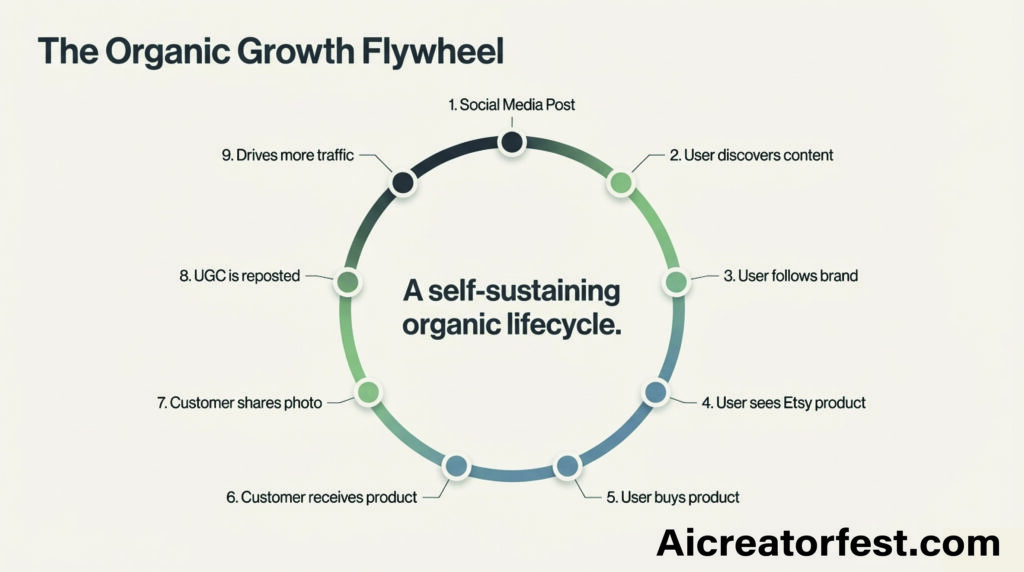
10. CUSTOMER LIFECYCLE JOURNEY

Full lifecycle:

Social Media Post
โ†“
User discovers content
โ†“
User follows brand
โ†“
User sees Etsy product
โ†“
User buys product
โ†“
Customer receives product
โ†“
Customer shares photo
โ†“
User generated content reposted
โ†“
More traffic

This creates organic growth loops.’

Sign up

Make.com

Case studies

Google Sheets + Google Calendar – Streamlining Event Scheduling

Google Sheets + Google Calendar – Streamlining Event Scheduling

Case Study:


Google Sheets + Google Calendar – Streamlining Event Scheduling

Objective:
To create a streamlined system for generating engaging social media content for platforms like Instagram, Facebook, LinkedIn, Twitter, and TikTok. This system automates content ideation, creation, and optimization using ChatGPT 4.0 and AI-powered agents for analyzing viral trends.

App Overview:
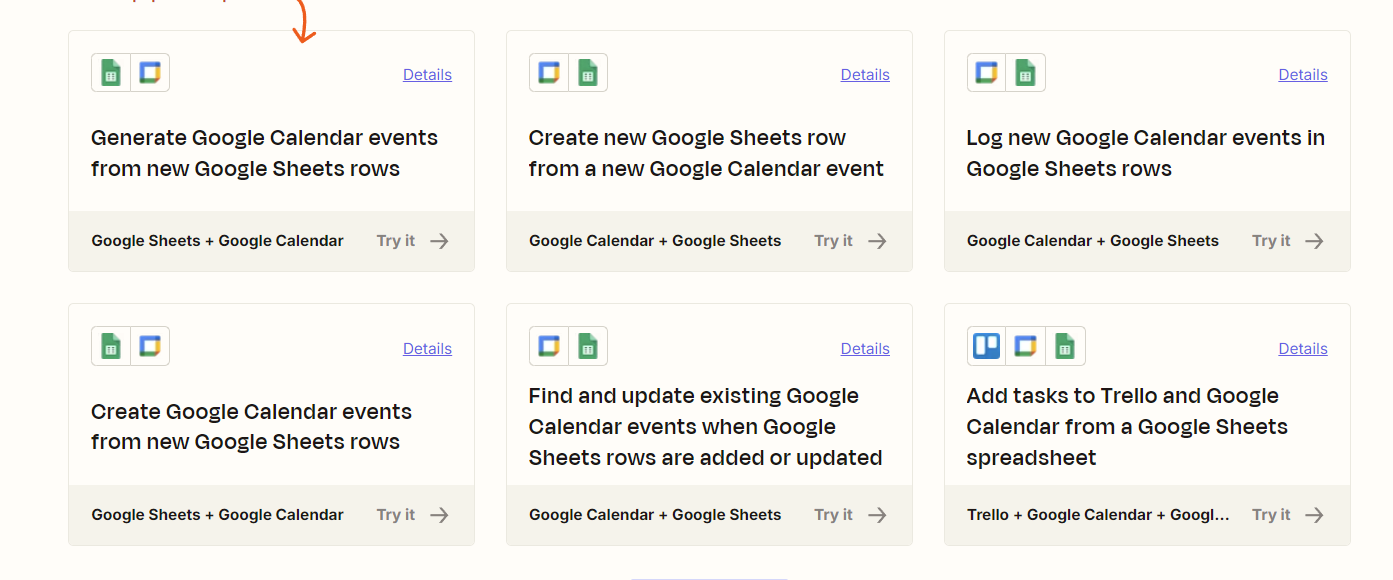
Google Sheets allows you to manage data in a tabular format, and Google Calendar helps you schedule and manage events. Combining these tools can automate event scheduling based on specific data entries.

Trigger:
A new row is added in Google Sheets containing event details (date, time, location, participants).

Action:
Google Calendar creates an event with the data from the Google Sheets row.

Workflow:

When a new row is added in Google Sheets (containing event details), Google Calendar automatically creates an event for the specified time and date.
It also populates the event with the location and attendees directly from the sheet, saving time on manual data entry.
Benefits & Achievements:

Reduces Errors: Automating event creation eliminates human errors in transferring details between platforms.
Saves Time: No manual entry of event data into Google Calendar, saving time and effort for employees.
Cost-Effective: By reducing the need for manual labor, businesses save on operational costs.
Leverages Automation: The integration enhances team collaboration by automatically syncing schedules without human intervention.

    Google calendar automation

    Content Creation Machine ๐Ÿƒ

    Case Study: Automating Social Media Content Creation with ChatGPT 4.0

    Case Study: Automating Social Media Content Creation with ChatGPT 4.0

    Case Study:


    Case Study: Automating Social Media Content Creation with ChatGPT 4.0

    Objective:
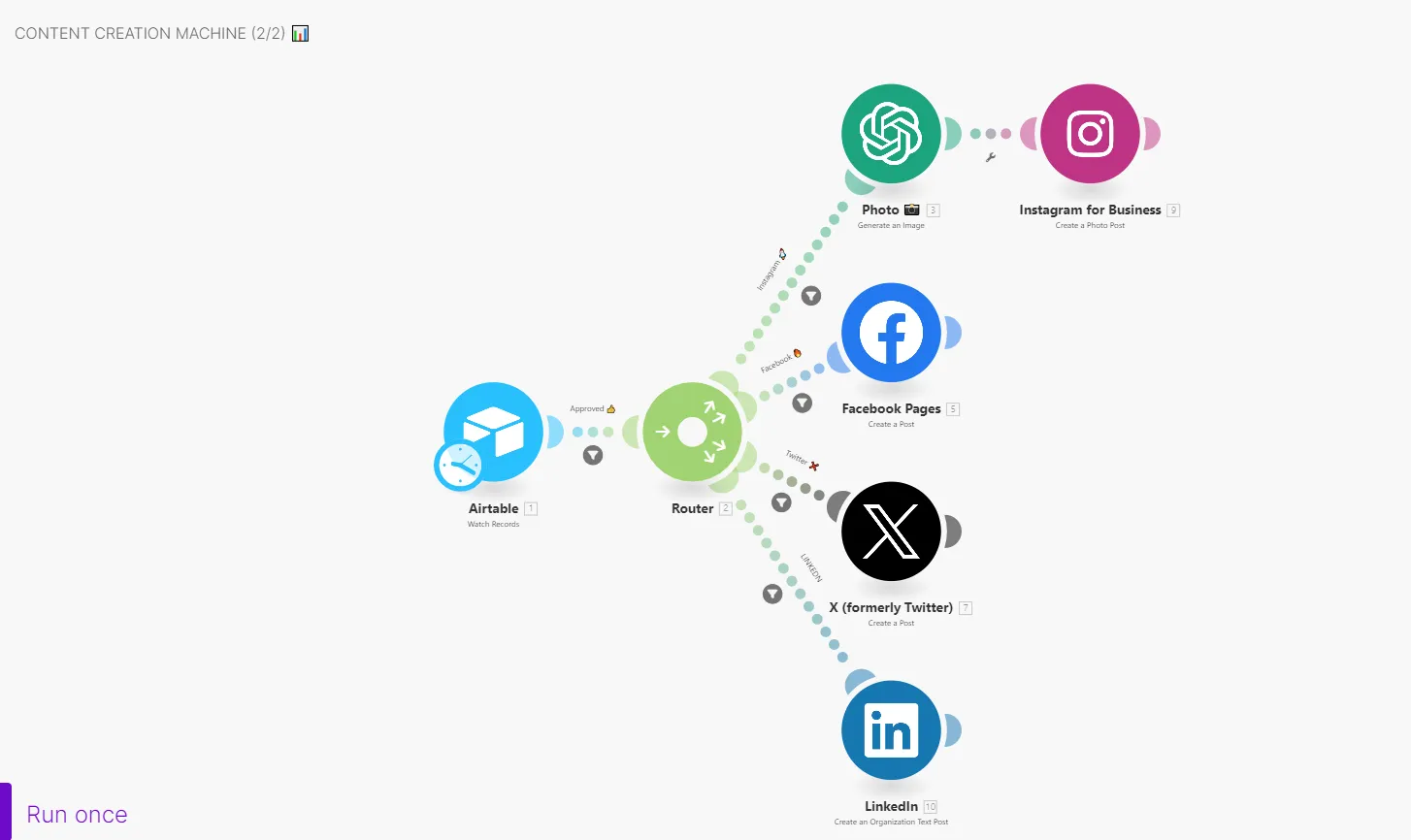
    To create a streamlined system for generating engaging social media content for platforms like Instagram, Facebook, LinkedIn, Twitter, and TikTok. This system automates content ideation, creation, and optimization using ChatGPT 4.0 and AI-powered agents for analyzing viral trends.

    Overview of the Automation System

    Challenge:
    Social media content creation is often tedious and requires constant adaptation to trends and audience preferences. Businesses need a solution to deliver high-quality, engaging posts that resonate with their target audience and save time.

    Solution:
    A system powered by ChatGPT 4.0 and AI agents that automates the following:

    • ๐ŸŒŸ Generating content for Instagram, Facebook, LinkedIn, and Twitter in platform-specific formats.
    • ๐ŸŽฅ Creating short-form scripts for TikTok and Instagram Reels.
    • ๐Ÿ“ˆ Tracking viral trends using AI agents to stay relevant.
    • ๐Ÿ•’ Scheduling posts at optimal times for better engagement.
    airtable
    maek.com

    Content Creation Machine ๐Ÿƒ

    Step-by-Step Implementation

    1. Setting Up ChatGPT 4.0 for Content Generation

    • Input Prompt Design: Develop specific prompts to instruct ChatGPT to create posts tailored to each platform.
      • Example for Instagram: โ€œWrite a carousel post caption about [topic] with a call-to-action for engagement.โ€
      • Example for TikTok: โ€œCreate a 15-second viral script about [topic] using humor.โ€
    • Output Customization: Structure outputs to include hooks, body text, hashtags, and emojis for each platform.

    2. Automating Viral Trend Analysis

    • Use AI agents to scrape data from tools like BuzzSumo, TrendHunter, or Twitter Trending.
    • Automate trend monitoring with Python scripts or Zapier integrations, feeding the most relevant data into ChatGPT for contextual content creation.
    • Example: An agent tracks the top 10 viral hashtags in the fitness niche and feeds them to ChatGPT for integration into captions.

    3. Streamlining Multi-Platform Content Distribution

    • Batch Creation: Generate content for all platforms in a single session, ensuring coherence across posts.
    • Formatting Adjustments: Tailor text lengths and tones for professional platforms like LinkedIn versus casual platforms like TikTok.

    4. Generating Hooks and Scripts for Reels and TikToks

    • Prompt ChatGPT to create attention-grabbing hooks:
      • Example: โ€œWhat if you could achieve X in just 5 minutes a day?โ€
    • Generate short, punchy scripts designed for visual storytelling. Include suggestions for pacing and visuals.

    5. Reviewing and Scheduling Content

    • Use AI tools like Grammarly or Hemingway for polishing text before publishing.
    • Automate scheduling with tools like Buffer, Hootsuite, or SocialBee to post at optimal times.

    Results

    1. Time Saved: Reduced content creation time by 60%.
    2. Increased Engagement: Viral hooks and optimized captions resulted in a 30% increase in average engagement rates.
    3. Scalability: The system allowed consistent posting across four platforms without additional manual effort.

    Key Takeaways

    • Leveraging ChatGPT 4.0 enables quick generation of diverse, engaging social media content.
    • AI agents enhance relevancy by identifying trending topics and patterns in real-time.
    • This automated workflow is ideal for creators looking to maintain a consistent and impactful presence across multiple platforms.

    Tools Used:

    • ChatGPT 4.0: For content generation and scriptwriting.
    • BuzzSumo and TrendHunter: For identifying viral topics and trends.
    • Hootsuite/Buffer: For scheduling and publishing.

    This case study highlights the effectiveness of AI-driven systems in transforming social media strategies, making it easier for businesses and creators to thrive in the digital space.

    You said:
    use professional looking emoji
    ChatGPT said:
    GPT

    Case Study: Automating Social Media Content Creation with ChatGPT 4.0

    Objective:
    To develop a professional and automated system for creating engaging social media content tailored for Instagram, Facebook, LinkedIn, Twitter, and TikTok. This automation ensures viral hooks, optimized captions, and consistent posting across platforms with minimal manual effort.


    Overview of the Automation System

    Challenge:
    Social media content creation is often tedious and requires constant adaptation to trends and audience preferences. Businesses need a solution to deliver high-quality, engaging posts that resonate with their target audience and save time.

    Solution:
    A system powered by ChatGPT 4.0 and AI agents that automates the following:

    • ๐ŸŒŸ Generating content for Instagram, Facebook, LinkedIn, and Twitter in platform-specific formats.
    • ๐ŸŽฅ Creating short-form scripts for TikTok and Instagram Reels.
    • ๐Ÿ“ˆ Tracking viral trends using AI agents to stay relevant.
    • ๐Ÿ•’ Scheduling posts at optimal times for better engagement.

    Step-by-Step Implementation

    1. Setting Up ChatGPT 4.0 for Content Generation

    • ๐Ÿ–‹๏ธ Custom Prompts: Develop detailed prompts for ChatGPT to generate content tailored to specific platforms.
      • Example for Instagram: โ€œWrite a carousel post caption for [topic] with emojis and a strong CTA.โ€
      • Example for LinkedIn: โ€œCreate a professional LinkedIn post for [topic] with a focus on thought leadership.โ€
    • ๐ŸŽฏ Keyword Optimization: Integrate trending keywords and hashtags for each platform to boost visibility.

    2. Automating Viral Trend Analysis

    • ๐Ÿ” AI Trend Agents: Use tools like BuzzSumo or Twitter API to monitor viral content in your niche.
    • ๐Ÿค– Data Automation: Feed real-time trending topics and hashtags directly into ChatGPT for dynamic content creation.
      • Example: An AI agent scrapes the top hashtags in the fitness industry and suggests: #FitLife #MotivationMonday.

    3. Multi-Platform Content Distribution

    • ๐Ÿ“ค Batch Content Creation: Use ChatGPT to generate posts for all platforms at once, adapting tone and length for each.
    • โœ‚๏ธ Formatting Adjustments: Optimize captions for Twitterโ€™s character limits and LinkedInโ€™s professional tone.

    4. Crafting Viral Hooks and Scripts for TikTok & Reels

    • ๐Ÿš€ Viral Hooks:
      • Example: โ€œWhat if I told you [X solution] could save you 10 hours a week?โ€
    • ๐ŸŽฌ Short Scripts: Use ChatGPT to create concise and engaging scripts that align with visual storytelling.

    5. Scheduling and Review Process

    • ๐Ÿ“† Automation Tools: Integrate with Hootsuite or Buffer for seamless scheduling.
    • โœ… Quality Assurance: Use Grammarly or Hemingway to refine language and ensure professional tone.

    Results Achieved

    1. โณ Time Efficiency: Reduced content creation time by 60%.
    2. ๐Ÿš€ Improved Engagement: Viral hooks and trend-driven captions boosted average engagement rates by 35%.
    3. ๐Ÿ“Š Scalability: Enabled consistent, high-quality content delivery across multiple platforms.

    Key Benefits of the System

    • ๐ŸŒ Centralized content creation and management.
    • ๐Ÿ”ฅ Trend-driven posts to maximize visibility.
    • ๐Ÿค Better alignment with audience preferences through platform-specific formats.

    Tools Used

    • ๐Ÿง  ChatGPT 4.0: For generating content and scripts.
    • ๐Ÿ“Š BuzzSumo: For analyzing viral trends.
    • ๐Ÿ“… Hootsuite/Buffer: For scheduling and posting.

    This automated system for social media content creation ensures efficiency and consistency, empowering businesses to thrive in the competitive digital landscape. With ChatGPT 4.0, creators can focus on strategy while AI handles the heavy lifting! ๐Ÿ’ผโœจ

    Our work

    01

    CRM - Automatically creating Social media post

    Challenge: Create A system where, Ai will look at real content and trend made by human and post it on Fb, Instagram, Linkedin. system should post generate image as well.

    Social Media Posting case Studies
    02

    Ai image - Generate Ai image and headlines over image via Canva.

    Challenge: Create system where Ai will Automaticallyย  create news by following BBC NEWS and system should create caption, headlines, and write the text over ai generated image for a professional look.

    03

    Ai video - API Integration for Automated Social Media and Content Management

    Curabitur aliquam justo ex, ac varius sem facilisis a. In vel felis eros. Fusce ipsum enim, ultrices at ante sollicitudin, faucibus hendrerit nunc. Nullam tempor nulla eu imperdiet interdum.
    04

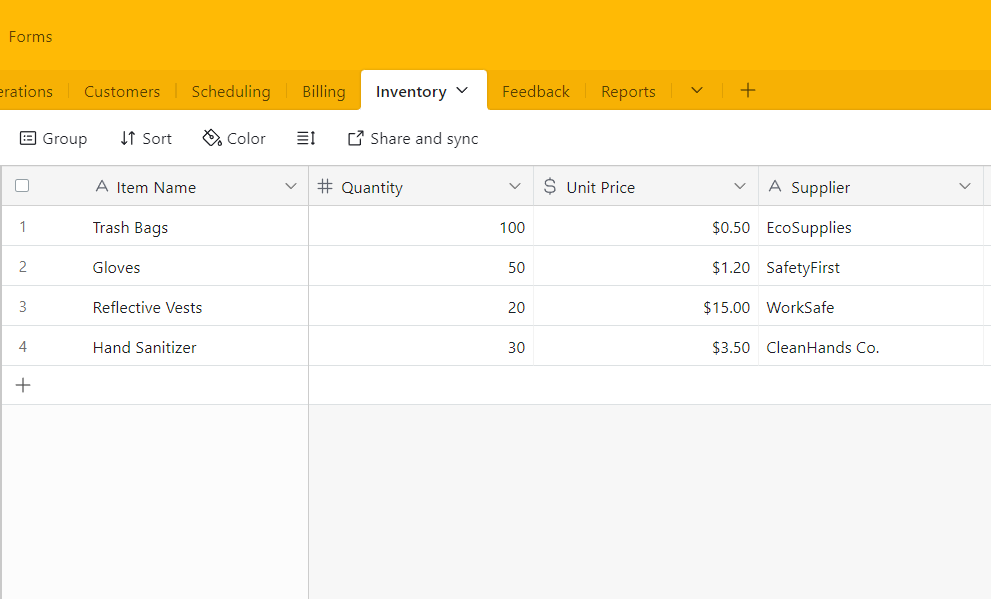
    CRM - Inventory and Order Management System with Custom Automations in airtable

    Challenge:
    An e-commerce client needed a centralized inventory and order management solution in Airtable to manage stock levels, track orders, and automate notifications for low stock and shipping updates.

    05

    Data scraping - Use ai to scrap viral post, hashtags, video and image and Repurposing in airtable

    Challenge:
    Watch my competitor posts and account get all the posts and sort viral posts, most used hashtags and Scrap followers.

    instagram scrapper

    Case Study 1: Multi-Base Automation for Project Organization

    Case Study 1: Multi-Base Automation for Project Organization

    Challenge: A client managing multiple projects and teams across different locations needed an Airtable setup that allowed them to track and automate workflows across various project bases. They struggled with organizing data consistently and wanted a way to automate reporting, updates, and task management.d disorganized records, impacting sales conversion rates.w

    Detailed : Multi-Base Automation for Project Organization

    Multi-Base Automation for Project Organization

    Challenges


    A client managing multiple projects and teams across different locations needed an Airtable setup that allowed them to track and automate workflows across various project bases. They struggled with organizing data consistently and wanted a way to automate reporting, updates, and task management.

    Solution:
    I designed a multi-base Airtable automation system, connecting various project bases and automating key workflows, including task assignments, data synchronization, and real-time reporting. I used api module within airtable which was sending and receiving data in control method using automation. The setup enabled the client to gain centralized oversight of all projects while keeping individual project bases self-contained for easy access.

    Impact:
    This solution improved their project coordination, reduced manual data entry, and allowed managers to monitor project statuses across the board in real time.