
The evolution of enterprise automation looks a lot like the automotive journey from fully manual driving to autonomous vehicles. You can’t simply flip a switch from cruise control to self-driving; you move through discrete stages, each laying the foundation for the next.
Similarly, in the IT world, your organization cannot leap overnight from task-level automation to full enterprise orchestration. You must build the capabilities carefully.
The 2025 Gartner® Magic Quadrant™ for Service Orchestration and Automation Platforms report flags that we are at a pivotal inflection point: what was once the domain of job schedulers and workload automation is now evolving into enterprise orchestration fabrics that span IT, business services, data pipelines and multi-cloud ecosystems. The vendors leading this shift are not just automating but orchestrating. And the business consequences could not be clearer.
We’ll walk through five stages of evolution, from manual operations to autonomous orchestration, framed in the language of orchestration, and pull insights from the Magic Quadrant™ on what to watch for as you chart your next move.
Stage 1: Manual operations
The pre-automation era

Before any driver-assist features, the human driver handled everything: steering, braking, monitoring blind spots, judging distances. In this phase, your automation may not yet be formalized. Work is isolated. Dependencies are hidden. Risk is unmanaged.
As Gartner notes, the shift away from purely workload automation is driven by exactly this: organizations finding that scheduling jobs and hoping they succeed is no longer enough.
Key action: Inventory the manual work: what processes are being run by hand, what dependencies are invisible and which handoffs are subject to errors or delay? Capturing the map of manual operations is the first step toward orchestration.
Stage 2: Assisted automation
The rise of workload automation

Just as cars added features like cruise control, lane-keeping or adaptive cruise assist, organizations added scheduling tools, workload automation platforms and event-driven triggers. At this stage, you’re automating within domains: IT ops can schedule jobs, data teams can automate transfers, Finance may have some back-office automation — but it remains siloed.
In Gartner’s framing, however, this stage is no longer sufficient, considering the future of automation will be AI-driven. The market shifted to SOAPs precisely because these assisted workload platforms cannot orchestrate across hybrid, multi-domain, service-oriented environments.
Key action: Push beyond individual automations. Ask: Which tasks are being automated but still reside in silos? Which workflows span applications and teams and, yet, are still manually handed off? Start identifying cross-domain opportunities for integration, handoffs and orchestration.
Stage 3: Coordinated orchestration
SOAPs transform the enterprise

Now, we reach the point in automotive evolution where vehicles begin to talk to one another, sharing speed, position and intention. It’s no longer isolated, driver-assist features but real coordination.
In enterprise terms, this is where orchestration comes into play. A platform can integrate across multiple domains (IT operations, business services, data pipelines), across environments (on-premises, cloud, edge) and across organizational boundaries (business users, DevOps, operations).
This is exactly the space Gartner defines for SOAPs:
“Service orchestration and automation platforms are essential for delivering business services through complex workloads. SOAPs unify workflow orchestration, workload automation and resource provisioning, extending across data pipelines and cloud-native architectures.”
In the 2025 Magic Quadrant™, vendors who sit in the Leader quadrant are those who already deliver across those boundaries. One of the key shifts is moving from automation as tasks to orchestration as services. Workflows are no longer just sequences of jobs but deliverables to the business.
Key action: If you’re in this stage (or aiming for it), your focus should shift from “How many tasks are automated?” to “Which end-to-end services do we deliver, how well are they orchestrated and how visible and responsive are they?” Define service-level outcomes, identify orchestration gaps and consider a platform that supports orchestration rather than just job scheduling.
Stage 4: Intelligent orchestration
Where SOAPs are heading
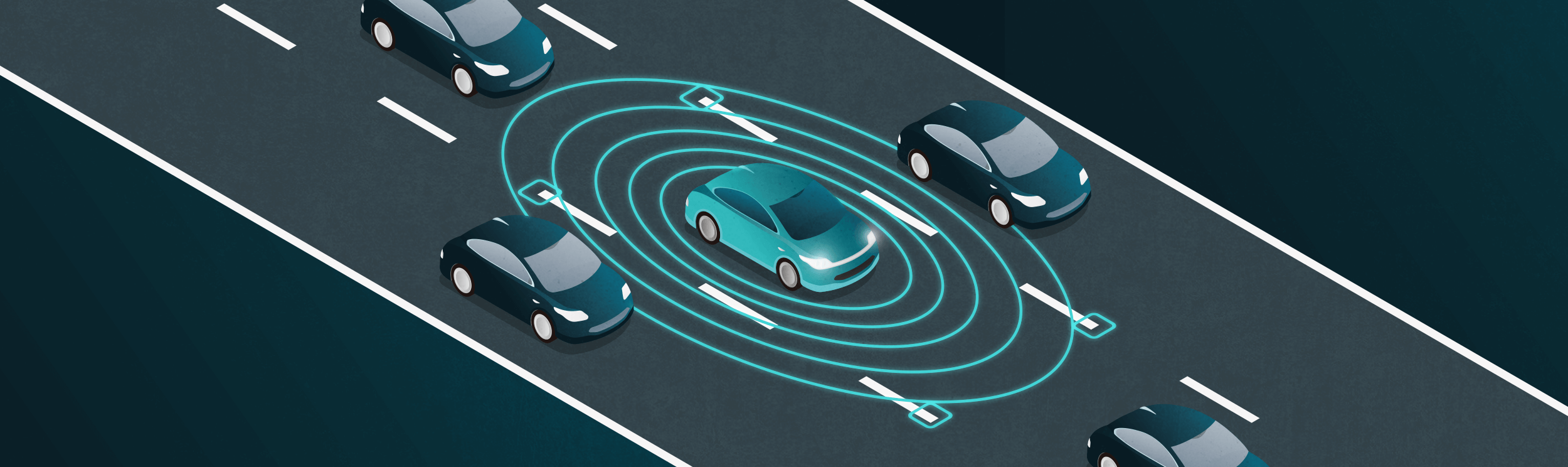
The next generational shift in driving is full autonomy, when cars not only sense lane, distance and speed but adapt to traffic, make decisions and even anticipate hazards. The comparable shift in orchestration is when platforms begin to embed intelligence, analytics, machine learning and predictive capabilities, turning from reactive to proactive.
Gartner’s commentary on SOAPs points to this evolution from scheduling. Orchestration enables business outcome optimization, real-time responsiveness, hybrid execution and data-driven insights.
What makes this stage distinct:
- The platform monitors SLA slippage, process deviations and event patterns and intervenes automatically
- It adapts workflows based on business outcome metrics, not just runtime metrics
- It integrates across domains (IT, business, data) with a unified observability and orchestration layer
Key action: Ask whether your orchestration approach is still reactive (executing defined workflows) or becoming intelligent (monitoring, adapting, optimizing). Consider adding observability dashboards, SLA tracking, anomaly detection and business-metric alignment. Ensure that your orchestration platform supports and surfaces these capabilities.
Stage 5: Autonomous orchestration
The inevitable destination

In the automotive metaphor, this is fleet-wide coordination, vehicles and infrastructure orchestrating together — with no human driver in the loop. In enterprise automation, this is where orchestration spans entire business ecosystems: external partners, supply chains, digital services and beyond. Platforms anticipate demand, compose new service flows, self-heal and self-optimize.
The Gartner report points toward this future: by 2029, Gartner predicts “90% of organizations currently delivering workload automation will be using service orchestration and automation platforms (SOAPs) to orchestrate workloads and data pipelines in hybrid environments across IT and business domains.”
Thus, the destination is a space where orchestration is the only way to stay competitive. Businesses that stay in scheduling or siloed automation risk being outpaced.
Key action: Visualize not just automation within your walls, but orchestration across your value chain. Consider how automation fabrics can link partner systems, customer-facing services, external data flows and more across business functions. Begin constructing the operational model for autonomous orchestration: monitoring, governance, AI-assisted workflows and outcome-based orchestration.
Accelerate your journey
Gartner is signaling that this shift has already arrived. The question isn’t whether enterprises need orchestration platforms but who will have them and how effectively they’ll deploy them. The vendors in the Leader quadrant have already embraced the orchestration fabric, not just automation modules.
For CIOs, heads of infrastructure and operations (I&O) and automation leaders, here are the implications:
- Siloed automation tools (task → script → schedule) are no longer sufficient for scale, complexity or agility
- A SOAP platform becomes the anchor for hybrid, cloud and business service-oriented orchestration
- The technology investment moves from standalone tools to orchestration fabrics: connectors, observability, low-code orchestration and event-driven services
Your roadmap must reflect the above stages of automation and orchestration maturity to ensure you can deliver business outcomes at speed. Use analyst frameworks (like the Magic Quadrant™ and Critical Capabilities) as strategic lenses — not just vendor checklists — to benchmark your progress and maturity.
Just as automakers gradually moved through mechanical driving, driver assist, autonomy and vehicle-to-vehicle coordination, enterprises must traverse these orchestration stages deliberately. And the 2025 Gartner Magic Quadrant™ for SOAP provides the framework for what good looks like today and which vendors are leading the charge.
Download the full report now and use it to choose a partner with a proven track record of enterprise orchestration.