Unlocking New Opportunities in Your Business Workflow
In today’s rapidly evolving business landscape, “automation” is no longer a buzzword; it’s a strategic imperative. From small and medium-sized enterprises (SMEs) to global corporations, businesses are increasingly recognizing the profound impact of automating repetitive, manual tasks to drive efficiency, reduce costs, and unlock new avenues for growth. As we move further into 2025, the conversation shifts from if to automate, to what and how to automate for maximum impact.
What is Business Process Automation (BPA)?
Business Process Automation (BPA) refers to the strategic application of technology to automate complex, repetitive, and often rule-based business processes. It’s about streamlining day-to-day operations to ensure smooth functioning and achieve organizational goals. Unlike simple task automation, BPA often involves a series of interconnected steps, sometimes spanning multiple departments or systems, to achieve a complete workflow. This can involve technologies like Robotic Process Automation (RPA), Artificial Intelligence (AI), Machine Learning (ML), and workflow management systems.
The Undeniable Benefits of Automation
The advantages of embracing automation are multifaceted and compelling:
Increased Efficiency and Productivity: Automated processes execute tasks faster and with greater consistency than manual methods, freeing up human employees to focus on higher-value, strategic activities.
Reduced Costs: By minimizing manual labor and errors, businesses can significantly lower operational expenses. This includes savings on salaries, reduced rework, and optimized resource allocation.
Improved Accuracy and Reduced Errors: Humans are prone to mistakes, especially in repetitive tasks. Automation eliminates human error, leading to more accurate data, consistent output quality, and better compliance.
Enhanced Scalability: As businesses grow, manually managing processes becomes increasingly challenging. Automated systems can handle larger workloads without the need for proportional increases in staff, enabling seamless scalability.
Better Compliance and Security: Automation helps ensure adherence to regulatory requirements by providing consistent execution and auditable records of processes. It can also enhance data security.
Faster Decision-Making: Automation provides real-time data insights, allowing businesses to spot trends, identify bottlenecks, and make informed decisions more quickly.
Improved Employee Morale: By offloading tedious and repetitive tasks, automation empowers employees to engage in more fulfilling and impactful work, leading to increased job satisfaction and reduced burnout.
Enhanced Customer Experience: Automation tools like chatbots and personalized email marketing can provide instant support, improve response times, and deliver tailored interactions, leading to greater customer satisfaction.
Identifying Automation Opportunities in Your Workflow
The key to successful automation lies in identifying the right processes. Here’s how businesses can start thinking about what can be automated:
Look for Repetitive, Rule-Based Tasks: Any task that involves consistently following a set of predefined rules and is performed frequently is a prime candidate for automation. This could be data entry, report generation, invoice processing, or customer onboarding.
Identify High-Volume Tasks: Processes that handle a large volume of transactions or data are excellent for automation. Even small efficiency gains per transaction can lead to significant overall improvements.
Pinpoint Bottlenecks and Delays: Where do processes consistently get stuck? Where are delays frequent? Automation can often resolve these bottlenecks by accelerating specific steps or ensuring smooth handoffs.
Assess Tasks Prone to Human Error: If a particular task frequently results in mistakes, automation can drastically reduce errors and improve accuracy.
Engage Your Employees: Your staff are on the front lines and have invaluable insights into which tasks are most tedious, time-consuming, or frustrating. Conduct workshops or surveys to gather their input.
Analyze Time-Consuming Activities: Evaluate which tasks consume a significant amount of your employees’ time that could be better spent on strategic initiatives.
Review Cross-Departmental Workflows: Processes that involve multiple departments often have handoff issues and communication gaps. Automation can streamline these interdepartmental workflows.
Business Automation Ideas and Opportunities for 2025
The landscape of business automation is continually evolving, with AI and machine learning playing increasingly central roles. Here are some key areas where businesses can focus their automation efforts:
Customer Service:
AI-Powered Chatbots and Virtual Assistants: Handling common inquiries, providing instant support, and routing complex issues to human agents.
Automated Ticket Management: Prioritizing and assigning customer service tickets, sending automated resolution notifications.
Automated Feedback Collection: Sending out surveys and collecting customer feedback automatically.
Finance and Accounting:
Automated Invoice Processing and Payments: Generating invoices, sending payment reminders, and processing vendor payments.
Payroll Automation: Streamlining payroll calculations, tax deductions, and direct deposits.
Expense Management: Automating expense approvals and reimbursement processes.
Automated Financial Reporting: Generating profit and loss statements, budget reports, and other financial analyses.
Human Resources:
Recruitment and Onboarding: Automating resume screening, initial candidate communication, background checks, and new hire paperwork.
Employee Data Management: Automating updates to employee records, leave requests, and benefits administration.
Performance Management: Setting up automated reminders for performance reviews and tracking key performance indicators.
Sales and Marketing:
Lead Generation and Nurturing: Automating lead capture, qualification, and personalized email marketing campaigns.
CRM Integration: Seamlessly updating customer information across different systems.
Sales Proposal Generation: Automating the creation of customized sales proposals.
Social Media Scheduling: Automating posts and engagement across various platforms.
Operations and IT:
Inventory Management: Automated tracking of stock levels, reorder alerts, and supply chain optimization.
Workflow Approvals: Automating document approvals, contract reviews, and project sign-offs.
IT Service Desk Support: Automating password resets, software installations, and routine IT inquiries.
Data Entry and Management: Eliminating manual data entry across various systems, ensuring data accuracy and consistency.
The Future of Business Automation: Hyperautomation and Beyond
The future of business automation is characterized by “hyperautomation,” which involves leveraging a combination of advanced technologies like RPA, AI, ML, and intelligent process discovery to automate end-to-end complex workflows. Cloud-based automation platforms and low-code/no-code solutions are also gaining prominence, empowering business users to create and manage automations without extensive technical expertise.
In 2025 and beyond, automation will continue to evolve, with an increasing focus on:
AI-driven Decision Intelligence: Using AI to analyze vast datasets and provide insights that enable smarter, data-driven decisions.
Personalized Interactions: Leveraging AI to deliver highly tailored customer and employee experiences.
Enhanced Security and Compliance: Automation playing a crucial role in maintaining robust security protocols and ensuring regulatory adherence.
Seamless Integration: More sophisticated integration of automation tools with existing enterprise systems like ERP and CRM.
Conclusion
Business automation is no longer a luxury but a fundamental component of a competitive and efficient enterprise. By strategically identifying areas for automation, businesses can not only reduce costs and improve efficiency but also free up valuable human capital to focus on innovation, strategic growth, and fostering deeper customer relationships. The opportunities are vast, and the time for businesses to thoughtfully explore and implement automation in their workflows is now.
Zapier Automation is a powerful tool that connects your favorite apps and automates repetitive tasks without the need for coding. With Zapier, users can create workflows—called “Zaps”—that trigger actions across apps, saving valuable time and ensuring smooth operations.
For businesses, Zapier streamlines data transfer, integrates systems, and boosts productivity. Whether it’s automating lead generation, customer support, or sales follow-ups, Zapier simplifies the process, making it a must-have for professionals who want to focus on more important tasks while leaving the repetitive ones to automation.
Introduction: Why Automation is the Key to Business Success 🌟
In today’s fast-paced business world, staying ahead of the competition requires more than just hard work – it requires smart work. One of the most powerful tools to achieve this is business automation. Studies show that businesses that embrace automation are 6 times more likely to achieve significant revenue growth compared to those that don’t. 📈
The benefits of automation extend far beyond just reducing manual labor. It can streamline operations, improve customer satisfaction, and, most importantly, drive substantial revenue growth. Let’s explore why automating your business is not just a trend, but a crucial strategy for long-term success. ⚙️
What Does Business Automation Mean? 🤖
Business automation involves using technology to perform repetitive tasks, optimize processes, and manage workflows with minimal human intervention. From marketing automation (like email campaigns) to customer service (such as automated support systems), automation touches every aspect of a business. Here’s how:
Marketing Automation: Automating email campaigns, social media posts, and lead generation processes.
Sales Automation: Automating CRM systems, follow-ups, and lead nurturing.
Customer Service Automation: Implementing chatbots, help desks, and ticketing systems to provide 24/7 support.
By removing the manual effort involved in these tasks, businesses can focus on strategy and innovation.
Why Automated Businesses See Significant Revenue Growth 📊💡
Increased Efficiency = More Time for Strategy ⏰ Automation takes care of time-consuming tasks, allowing your team to focus on high-impact activities like developing new products, creating growth strategies, or engaging with customers. This efficiency is key to scaling your business and increasing revenue.
Improved Customer Experience 🏅 Automation ensures that your customers receive timely and consistent communication. Whether it’s through personalized email marketing or automated follow-up sequences, customers feel valued, leading to higher retention and loyalty, which translates into higher sales.
Reduced Costs 💵 With automation, businesses can reduce overhead costs by minimizing the need for manual labor. This enables companies to reallocate resources towards innovation or expanding their offerings, leading to better revenue opportunities.
Data-Driven Decision Making 📉📈 Automated systems provide detailed insights into your business performance, including customer behaviors, sales metrics, and campaign results. This valuable data helps businesses make informed decisions, refine strategies, and optimize for growth.
6X More Likely to Achieve Revenue Growth – The Data Behind the Claim 📊📈
According to recent studies, businesses that adopt automation are 6 times more likely to achieve significant revenue growth than those that don’t. This remarkable statistic emphasizes the power of automation in today’s business landscape. Here’s why:
Scale Faster: Automation enables businesses to handle increased demand without scaling their workforce.
Maximized Productivity: Streamlined processes increase output with fewer resources.
Faster Time-to-Market: Automation allows businesses to launch new products and services more quickly, capturing market share before competitors.
The ability to scale efficiently, deliver quality consistently, and innovate continuously are all contributors to the 6X revenue growth. 🏆
How to Get Started with Business Automation 🚀
Ready to unlock the power of automation for your business? Here’s how you can get started:
1. Identify Key Areas for Automation 🔍
Start by evaluating which processes in your business are most time-consuming or repetitive. These could include:
Email marketing campaigns
Lead generation and qualification
Social media scheduling and posting
Customer support and communication
2. Choose the Right Tools and Platforms 🛠️
There are various automation tools available, each catering to specific business needs. Some popular platforms include:
HubSpot: Great for marketing automation and CRM management.
Zapier: Automates workflows across different apps.
Make: For connecting apps and automating tasks with minimal code.
3. Implement Automation Gradually 🐢
Start small by automating one area of your business, such as your email marketing or social media posting. As you see results, expand automation to other areas of your business. This allows for smooth integration and minimizes disruptions.
4. Monitor and Optimize 🔄
Once automation is in place, continuously monitor its performance. Use data analytics to identify areas for improvement and tweak your processes to enhance efficiency.
The Future of Automation and Business Growth 🌍
The future of business lies in its ability to automate more processes. As technology advances, the scope for automation continues to grow. For businesses to remain competitive, embracing automation is no longer optional – it’s a necessity. 🚀
Automating your business can lead to higher productivity, improved customer experiences, and ultimately, significant revenue growth. The businesses that adapt now will reap the rewards in the coming years. 🌱
Start Automating Your Business Today! 🚀
Ready to transform your business? Start using automation tools to streamline your operations and unlock the potential for exponential growth. Sign up for Make Automation and discover how easily you can automate your business processes: Sign up for Make Automation
SEO Optimization Instructions
Focus Keyword in Title: “Highly Automated Businesses Are 6 Times More Likely to Achieve Significant Revenue Growth” should appear prominently in the title for visibility.
Focus Keyword in Meta Description: Ensure the keyword appears in the meta description for SEO optimization.
Focus Keyword in URL: The URL should include keywords such as “highly-automated-businesses-revenue-growth” for easy indexing.
Subheadings: Use keyword variations in subheadings like “Automated Business Success” and “Revenue Growth with Automation” to maintain SEO consistency.
Alt Text for Images: Use relevant, keyword-rich descriptions for images, such as “Business Automation Process” and “Revenue Growth with Automation.”
Conclusion: Automation is the Future of Business Success 🚀
Embracing automation is more than just a smart decision – it’s the key to staying competitive and ensuring growth in today’s fast-paced world. Highly automated businesses are better equipped to adapt, innovate, and achieve substantial revenue growth. Start implementing automation today and watch your business thrive! 🌱
Streamlining Data Integration with Make Automation
Background:
A leading e-commerce company was struggling with manual data entry across multiple platforms. They wanted to automate the transfer of customer data between their CRM, shipping system, and inventory management tool.
Objective:
The goal was to reduce manual labor, avoid errors, and improve the efficiency of their data processes.
Automation Solution:
We leveraged Make automation to connect their systems. With Make, the customer could easily integrate their CRM with their shipping system and inventory management, ensuring data flowed seamlessly across platforms. Make’s drag-and-drop interface enabled quick setup, and with minimal maintenance, the automation took over tedious tasks.
Automated Data Transfer: Customer data entered into the CRM was instantly transferred to the shipping system.
Inventory Updates: When an order was placed, Make updated the inventory in real-time.
Results:
The business experienced a 30% reduction in manual data entry time and saw an improvement in inventory accuracy, leading to faster order fulfillment and a better customer experience.
AI Audio Transcription: Convert Speech to Text Effortlessly 🎙️
Meta Description: Transform your audio files into highly accurate text documents with AI Audio Transcription. Improve accessibility, automate note-taking, and boost productivity.
Introduction
AI-powered audio transcription is transforming industries by converting speech into accurate text effortlessly. From journalists to businesses, automated transcription saves time, enhances accessibility, and eliminates manual effort.
Features
✅ High Accuracy: Uses advanced NLP models to ensure precise transcriptions. ✅ Multi-Language Support: Transcribe audio in multiple languages and dialects. ✅ Speaker Identification: Differentiates between multiple speakers automatically. ✅ Custom Formatting: Outputs text in various formats like DOCX, PDF, or plain text. ✅ Cloud-Based Processing: Upload and transcribe on the go without heavy software.
Benefits
💡 Saves Time: Automate lengthy manual transcription tasks. 💡 Boosts Accessibility: Helps individuals with hearing impairments access content. 💡 Improves Efficiency: Enables quick and seamless content creation for marketing teams. 💡 Enhances Documentation: Ideal for business meetings, lectures, and legal proceedings.
Case Study: How XYZ Media Company Reduced Transcription Time by 60%
XYZ Media Company, a digital news platform, used AI audio transcription to automate interview transcriptions. This reduced manual effort by 60% and enabled their team to publish articles twice as fast.
Google Sheets + Google Calendar – Streamlining Event Scheduling
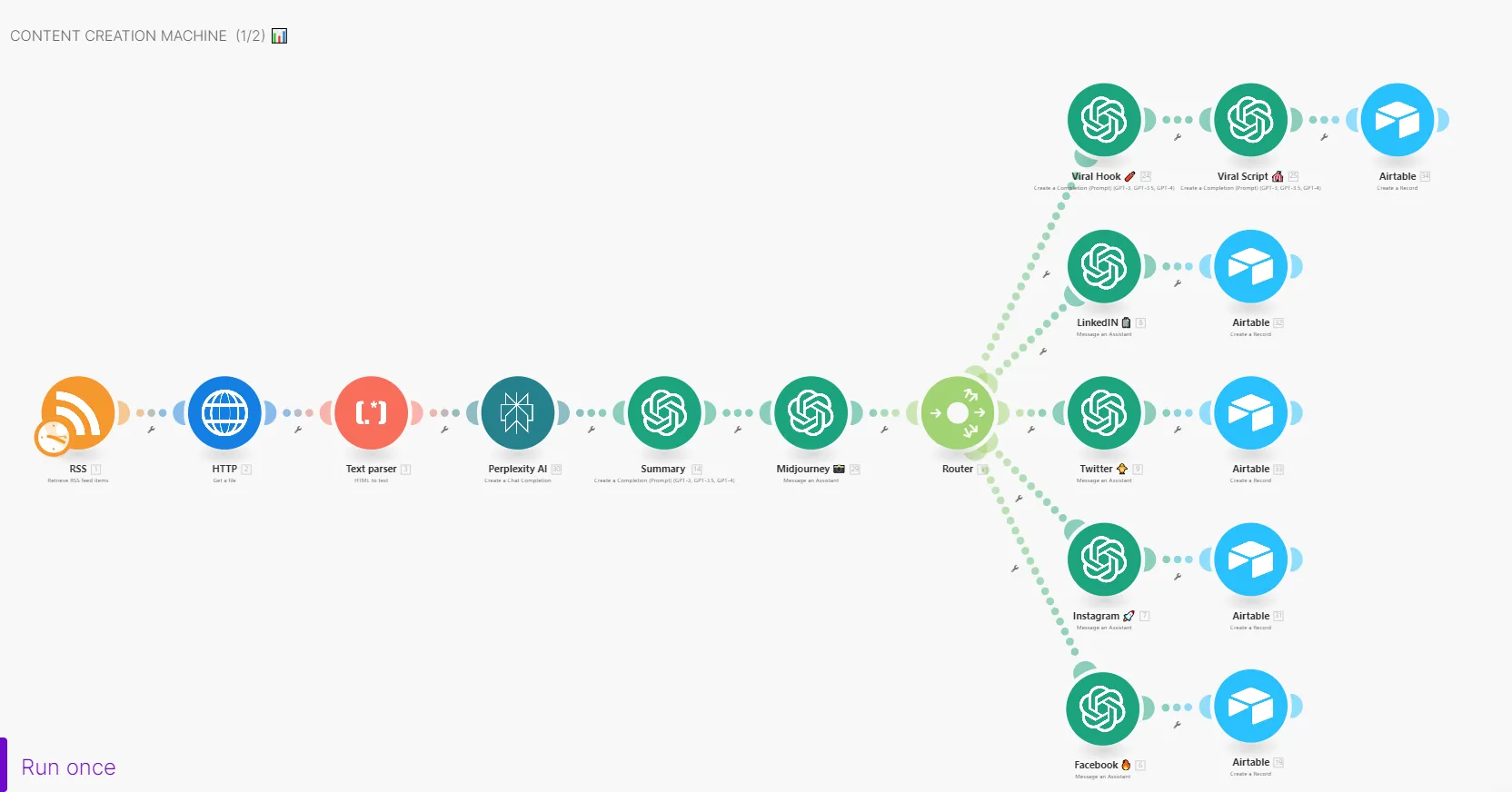
Objective: To create a streamlined system for generating engaging social media content for platforms like Instagram, Facebook, LinkedIn, Twitter, and TikTok. This system automates content ideation, creation, and optimization using ChatGPT 4.0 and AI-powered agents for analyzing viral trends.
App Overview: Google Sheets allows you to manage data in a tabular format, and Google Calendar helps you schedule and manage events. Combining these tools can automate event scheduling based on specific data entries.
Trigger: A new row is added in Google Sheets containing event details (date, time, location, participants).
Action: Google Calendar creates an event with the data from the Google Sheets row.
Workflow:
When a new row is added in Google Sheets (containing event details), Google Calendar automatically creates an event for the specified time and date. It also populates the event with the location and attendees directly from the sheet, saving time on manual data entry. Benefits & Achievements:
Reduces Errors: Automating event creation eliminates human errors in transferring details between platforms. Saves Time: No manual entry of event data into Google Calendar, saving time and effort for employees. Cost-Effective: By reducing the need for manual labor, businesses save on operational costs. Leverages Automation: The integration enhances team collaboration by automatically syncing schedules without human intervention.
Agentic AI is a game-changing development in the field of intelligent automation. It gives systems the ability to make decisions and carry out tasks on their own, without needing human involvement. This level of sophistication is crucial in today’s fast-paced digital world, where businesses need to be able to operate independently in order to stay competitive.
With the rise of data and rapid technological advancements, businesses that can use intelligent systems to work autonomously will be able to achieve new levels of efficiency and innovation. Intelligent automation, which combines AI capabilities with traditional automation, plays a key role in this transformation by streamlining operations and improving decision-making processes. By integrating Agentic AI into their business models, organizations can expect a future where they can quickly adapt to market demands and respond with agility and accuracy.
One area where this digital transformation powered by Agentic AI can have a significant impact is in manufacturing. It has the potential to completely transform operations by increasing production rates, enhancing quality, and minimizing downtime.
Agentic AI, Business Autonomy, and Intelligent Automation are not just trendy terms; they are the fundamental concepts that will determine the success of enterprises in the future.
Understanding Agentic AI
Agentic AI represents a new frontier in advanced AI systems characterized by their autonomy and decision-making capabilities. Unlike traditional AI models, which follow pre-defined instructions, agentic AI operates with a level of independence that allows it to adapt to changing environments and make decisions based on real-time data.
Capabilities of Agentic AI:
Autonomy: These systems can execute tasks without constant human oversight, enabling businesses to streamline operations and reduce manual intervention.
Decision-Making: Agentic AI employs sophisticated algorithms that mimic cognitive processes, allowing it to evaluate numerous variables and make informed decisions swiftly.
Key characteristics of agentic AI include:
Adaptability: Capable of learning from past interactions and experiences, these systems adjust their behavior to improve performance continuously.
Real-Time Interaction: By processing vast amounts of data instantaneously, agentic AI facilitates timely responses in dynamic situations.
Scalability: Designed to handle complex tasks across various domains, these systems scale efficiently as organizational needs evolve.
The role of adaptive decision-making is central to the functionality of agentic AI. By leveraging real-time interactions, these systems can predict outcomes and optimize processes across industries. For instance, an autonomous investment management system can analyze market trends and adjust portfolios proactively, minimizing risks while maximizing returns.
Agentic AI’s integration into business processes offers transformative potential by enhancing efficiency and fostering innovation. As organizations strive for greater agility and resilience in the digital age, the adoption of agentic AI solutions becomes increasingly crucial in maintaining competitive advantage.
A notable aspect of this evolution is the rise of Conversational AI, which is becoming an integral part of the agentic AI landscape. This technology enables seamless customer interactions by understanding and responding to human language in a natural way. The implementation of effective strategies for conversational AI not only enhances customer experience but also provides valuable insights into consumer behavior, further optimizing decision-making processes within businesses.
The Evolution of Intelligent Automation
Using intelligent automation in business processes brings about significant improvements in efficiency, accuracy, and cost reduction. By integrating technologies like intelligent document processing, businesses can automate repetitive tasks, freeing up valuable human resources for more strategic activities. This change not only speeds up process execution but also reduces the risk of errors, improving overall operational accuracy.
Efficiency Gains Across Industries
qBotica’s solutions have shown impressive efficiency improvements in various industries. For example, in healthcare, automation has made patient data management smoother, cutting down manual processing times by significant amounts as seen in their case studies.
Direct Cost Savings Through Automation
These efficiency gains directly lead to cost savings, as automation decreases the need for extensive manual work and quickens workflow processes.
Financial Benefits of Intelligent Automation
One of the main reasons businesses choose to adopt intelligent automation is for its financial advantages. Companies often see a substantial return on investment because automation lowers operational costs and improves how resources are used.
The use of AI-driven solutions enables enterprises to scale operations without a proportional increase in costs—a critical factor in achieving business autonomy.
Agentic AI and Business Autonomy: The Future of Intelligent Automation isn’t just a concept for the future; it’s something many companies are experiencing right now. As businesses continue to embrace these technologies, they are better equipped to stay competitive in a constantly changing digital market.
By using agentic AI systems, companies ensure that their processes are not only automated but also flexible and able to respond to immediate changes. A notable example includes how qBotica’s automation solutions helped a large financial services company streamline its pricing strategy through GenAI and automation, creating opportunities for a more self-sufficient future.
Business Orchestration and Automation Technologies (BOAT)
The Gartner BOAT framework is crucial for intelligent automation. It guides organizations in streamlining processes through effective automation. BOAT focuses on coordinating business activities, ensuring different technologies work together for efficient results.
The Role of AI Agents in Business Orchestration
AI agents play a vital role in this framework by being integrated into business orchestration. These agents enable adaptive decision-making, allowing systems to respond flexibly to changing business environments. The goal is not just to automate tasks but also to optimize them in line with strategic objectives. AI agents help connect separate systems, improving the agility and responsiveness of business processes.
Impact on Enterprise Systems
One significant outcome of the BOAT framework is its influence on end-to-end automation within enterprise systems. Enterprises can now manage processes seamlessly across various departments, resulting in increased efficiency and lower operational costs. This ability to automate complex workflows throughout the organization transforms traditional business operations into agile ecosystems that can quickly adapt.
Success in Finance: Robotic Process Automation
The BOAT framework has achieved impressive results, particularly in Robotic Process Automation in Finance. With intelligent document processing for tasks like opening new accounts, billing, and onboarding customers, businesses have significantly improved their financial operations.
Achieving Process Optimization with BOAT
By applying the principles of the Gartner BOAT framework, businesses can reach new heights in process optimization. The integration of advanced AI capabilities within this structure enables organizations to foresee challenges and respond promptly, maintaining competitiveness in a constantly changing digital world.
Applications of Agentic AI Across Industries
Agentic AI is transforming industries by introducing automation capabilities that were once thought to be the realm of science fiction.
1.Finance
In finance, agentic AI is revolutionizing autonomous investment management. AI systems now analyze vast datasets, identify patterns, and make investment decisions in real time, providing an unprecedented edge in market responsiveness. This capability not only enhances portfolio performance but also reduces human errors associated with emotional and impulsive trading. For a more in-depth understanding, you can explore this guide on automating wealth management.
2. Healthcare
Healthcare is another sector witnessing significant advancements through agentic AI. One prominent application is patient data monitoring. AI agents now continuously analyze patient data, predict potential health issues, and alert healthcare providers before critical situations arise. This proactive approach enhances patient care and optimizes medical resource allocation.
3. Supply Chain Management
Agentic AI assists in predictive analytics for demand forecasting, inventory management, and logistical planning in supply chain management. This results in a seamless supply chain operation that adjusts dynamically to market changes.
4. Customer Service
AI-driven chatbots and virtual assistants provide customers with instant support, handling queries with precision and learning from each interaction to improve future responses.
The impact of agentic AI is also being felt in the insurance sector where AI-driven claims management is streamlining processes, making them more efficient, accurate, and customer-centric.
Agentic AI’s role across these industries underscores its potential to drive efficiency and innovation. Embracing this technology can lead to enhanced operational capabilities and deliver a competitive advantage in today’s fast-paced business environment.
The Role of Agents in Healthcare
In the healthcare sector, Agentic AI and its agents have the potential to revolutionize patient care and operational efficiency. By leveraging real-time data from various sources, such as patient records, medical devices, and diagnostic tools, agents can make rapid, data-driven decisions that enhance the quality of care.
Efficiency: Agents speed up business processes by automating repetitive tasks, enabling employees to focus on more strategic objectives.
Accuracy: Agentic AI agents use precise data analysis, reducing human error in decision-making processes.
Scalability: With agents handling the workload, businesses can scale their operations without needing proportional increases in human labor.
Adaptability: Agents adapt to changes in the environment, ensuring businesses can respond to market demands quickly.
Case Studies in Various Sectors
Real-world examples of successful implementations of Agentic AI are crucial for understanding its transformative potential. qBotica’s solutions have been at the forefront, driving significant improvements in both healthcare and finance sectors.
Healthcare Sector:
1. Patient Data Monitoring
qBotica has deployed intelligent automation to streamline patient data management. By utilizing agentic AI systems, hospitals can now manage vast amounts of data efficiently, ensuring timely updates and reducing manual errors. This has led to improved patient care outcomes and operational efficiency.
2. Intelligent Document Processing
In collaboration with leading healthcare providers, qBotica’s intelligent document processing solutions have significantly reduced the time required to process medical records. This innovation enhances data accuracy and accelerates decision-making processes.
Finance Sector:
1. Autonomous Investment Management
Financial institutions leveraging qBotica’s solutions have seen marked improvements in investment management processes. These agentic AI tools enable real-time data analysis, providing insights that enhance decision-making and portfolio management.
2. Risk Assessment and Compliance
With automated risk assessment capabilities, financial companies can ensure compliance with ever-evolving regulations. The integration of agentic AI allows for real-time monitoring and reporting, thus minimizing risks associated with manual oversight.
Impact on Operational Efficiencies:
Leading enterprises have reported substantial gains in operational efficiencies through the adoption of agentic AI. A notable example is Western Union, where Thomas Mazzaferro praised qBotica’s solutions for drastically reducing execution times for business processes. Such success stories underscore the potential of agentic AI to drive business autonomy and intelligent automation across diverse industries.
Implementation Challenges and Considerations with Agentic AI
Strategic partnerships play a crucial role in the successful deployment of intelligent automation solutions. These ecosystems not only facilitate access to cutting-edge technologies but also offer businesses the expertise needed to harness the full potential of agentic AI.
UiPath Partner Programs
The UiPath Partner programs exemplify how collaborations can enhance business autonomy through agentic AI technologies. As a UiPath Platinum Partner, qBotica offers an array of services including planning, building, and troubleshooting automation solutions. This partnership ensures that businesses can leverage a robust framework for implementing intelligent automation effectively.
Key Benefits of Partner Ecosystems:
Access to Expertise: Partners provide specialized knowledge in areas like intelligent document processing and cloud computing, enabling tailored solutions for industry-specific needs.
Enhanced Service Delivery: Managed service provider solutions allow for end-to-end automation, reducing execution time for business processes significantly.
Industry Recognition: Being recognized as a featured Diamond Certified Partner of UiPath underscores the capability to deliver enhanced services across sectors such as healthcare, manufacturing, and supply chain management.
Partnerships with leading enterprises worldwide ensure that organizations can navigate the complexities of deploying agentic AI with confidence. These ecosystems foster innovation and operational efficiency, paving the way for the future of intelligent automation.
Ethical Oversight, Compliance, and Future Outlook for Agentic AI
Establishing ethical standards for human oversight in decision-making processes involving agentic AI technologies is crucial. These standards should focus on transparency, accountability, and fairness to ensure that AI systems act in a manner consistent with societal values and ethical norms. Implementing these standards involves:
Transparency: Clearly documenting AI decision-making processes to allow stakeholders to understand and scrutinize them.
Accountability: Assigning responsibility to human operators or organizations for the actions of AI systems.
Fairness: Ensuring that AI systems do not perpetuate or exacerbate existing biases.
Strategies to ensure compliance with these ethical standards include regular audits of AI systems, continuous monitoring for bias and discrimination, and implementing robust feedback mechanisms to address potential issues swiftly.
Looking into the future, agentic AI is poised to play a significant role in shaping business operations. Its development will likely focus on enhancing ethical frameworks and improving compliance protocols. The collaboration between industry leaders, policymakers, and academia will be essential in crafting regulations that balance innovation with societal expectations. As businesses continue to integrate agentic AI into their operations, maintaining a dialogue around ethics will be key to fostering trust and ensuring sustainable growth.
The Role of Partner Ecosystems in Deploying Intelligent Automation Solutions Effectively
trategic partnerships play a crucial role in the successful deployment of intelligent automation solutions. These ecosystems not only facilitate access to cutting-edge technologies but also offer businesses the expertise needed to harness the full potential of agentic AI.
UiPath Partner Programs
The UiPath Partner programs exemplify how collaborations can enhance business autonomy through agentic AI technologies. As a UiPath Platinum Partner, qBotica offers an array of services including planning, building, and troubleshooting automation solutions. This partnership ensures that businesses can leverage a robust framework for implementing intelligent automation effectively.
Key Benefits of Partner Ecosystems:
Access to Expertise: Partners provide specialized knowledge in areas like intelligent document processing and cloud computing, enabling tailored solutions for industry-specific needs.
Enhanced Service Delivery: Managed service provider solutions allow for end-to-end automation, reducing execution time for business processes significantly.
Industry Recognition: Being recognized as a featured Diamond Certified Partner of UiPath underscores the capability to deliver enhanced services across sectors such as healthcare, manufacturing, and supply chain management.
Partnerships with leading enterprises worldwide ensure that organizations can navigate the complexities of deploying agentic AI with confidence. These ecosystems foster innovation and operational efficiency, paving the way for the future of intelligent automation.
Conclusion
Using Agentic AI along with traditional methods like professional service automation can be a game-changer for businesses. These technologies not only make operations more efficient but also give businesses more control.
Here’s how Agentic AI can benefit organizations:
Adaptive Decision-Making: With Agentic AI, organizations can make real-time decisions, resulting in more flexible and responsive operations.
Improved Process Orchestration: When combined with intelligent automation, businesses can achieve better coordination of processes, as seen in industries such as finance and healthcare.
Cost Savings and Increased Productivity: The potential for reducing costs and boosting productivity is significant, benefiting both operational workflows and financial performance.
As the world of intelligent automation continues to evolve, embracing these advanced technologies puts companies in a position of leadership when it comes to innovation. By harnessing the power of both agentic AI and traditional automation methods, businesses can stay competitive in this rapidly changing digital era.
The future of intelligent automation is here with Agentic AI and Business Autonomy, bringing forth unparalleled opportunities for growth and efficiency.
FAQs (Frequently Asked Questions)
What is Agentic AI and why is it important for business autonomy?
Agentic AI refers to advanced artificial intelligence systems that possess the capability for autonomy and decision-making. In the digital age, business autonomy is crucial as it enables organizations to operate efficiently and adaptively, leveraging intelligent automation to enhance their processes.
How does intelligent automation differ from traditional automation?
Intelligent automation combines traditional robotic process automation (RPA) with advanced AI capabilities. This evolution allows for adaptive decision-making and real-time interactions, enabling businesses to transition from simple task automation to more complex, intelligent processes that improve overall efficiency.
What are the key benefits of implementing intelligent automation in businesses?
The benefits of intelligent automation include enhanced efficiency, improved accuracy, and significant cost reductions. Case studies have shown that organizations adopting these solutions experience notable gains in operational performance and financial savings.
What is the Gartner BOAT framework and its significance?
The Gartner BOAT framework focuses on business orchestration and automation technologies. It emphasizes the importance of integrating AI agents within business processes to streamline operations and achieve end-to-end automation across enterprise systems.
In which industries can agentic AI be applied effectively?
Agentic AI has diverse applications across various sectors, including finance—such as autonomous investment management—and healthcare, like patient data monitoring. Other areas benefiting from agentic AI include supply chain management and customer service.
What challenges might organizations face when implementing agentic AI?
Organizations may encounter integration challenges with existing systems and issues related to change management, such as adapting workflows and redefining roles. Addressing these considerations is vital for successful implementation of agentic AI technologies.
Generative AI (Gen AI) in finance is changing the way we predict market trends by turning large amounts of data into actionable insights. As financial markets become more complex, the need for accurate predictive modeling has increased. This development is crucial for making informed decisions. Gen AI, with its advanced algorithms and automation capabilities, offers an unmatched advantage in financial forecasting.
The introduction of finance automation and technologies like Robotic Process Automation (RPA) have already made many financial tasks more efficient. By incorporating Gen AI, organizations can improve these systems with predictive abilities, revealing patterns that may otherwise go unnoticed.
This article explores how Gen AI can transform financial forecasting and presents five key strategies to effectively use this technology for predicting market trends.
In addition, the use of Conversational AI in finance is expected to reshape customer interactions by enabling smooth communication and tailored experiences. This change not only improves customer satisfaction but also makes processes such as wealth management more efficient through automation technologies.
Moreover, areas like payroll processing are also likely to benefit greatly from automation. Implementing payroll automation can save companies valuable time and resources while enhancing accuracy and compliance in reporting.
1. Enhanced Data Processing with Gen AI
Traditional data processing methods often struggle with large and complex financial datasets. These conventional techniques may not be able to quickly process and analyze the intricacies of such data, resulting in delayed or inaccurate insights.
Generative AI, also known as Gen AI, emerges as a game-changing tool in this situation. By using advanced algorithms, Gen AI significantly improves the speed and accuracy of data processing. This capability allows financial analysts to handle large amounts of data effortlessly, ensuring that no important information is missed.
Some key benefits of using Gen AI for data processing include:
Increased Efficiency: Gen AI automates routine data handling tasks, freeing up time for analysts to focus on more strategic activities. For instance, qBotica’s implementation of Gen AI and automation in a large financial services company significantly improved their pricing strategy.
Improved Accuracy: With its ability to learn from historical data patterns, Gen AI reduces errors that might occur with manual processing.
Scalability: As financial markets grow and evolve, Gen AI can scale operations without compromising on speed or quality.
By integrating Gen AI into financial forecasting processes, organizations can produce more reliable market predictions that inform better decision-making. This leads to a more agile response to market shifts and ultimately strengthens competitive positioning.
Moreover, the use of Intelligent Document Processing (IDP) solutions like those offered by qBotica, which provide Robotic Process Automation (RPA) as a service, further enhances the efficiency and accuracy of financial operations. Such digital transformation in finance not only streamlines processes like customer onboarding and billing but also offers end-to-end intelligent document processing that revolutionizes how financial entities operate.
2. Uncovering Hidden Patterns through Advanced Pattern Recognition Techniques
Identifying subtle patterns in historical market data is crucial for accurate trend prediction. Financial markets are complex and dynamic, often influenced by a myriad of factors. Traditional analytical methods may overlook these intricate patterns, which can lead to missed opportunities or inaccurate forecasts. This is where Generative AI (Gen AI) steps in with its powerful pattern recognition capabilities.
Gen AI-powered algorithms excel at uncovering patterns that remain hidden from human analysts or conventional models. These algorithms leverage advanced techniques such as neural networks and deep learning to sift through vast amounts of data, identifying correlations and trends that may not be immediately apparent. For instance, Gen AI can analyze fluctuations in stock prices over decades to detect cyclical trends or sudden shifts influenced by economic policies.
How Gen AI Achieves Advanced Pattern Recognition
Gen AI employs various techniques to achieve advanced pattern recognition:
Advanced Neural Networks: These can simulate complex relationships within data, providing insights into potential future market movements.
Deep Learning Models: They enhance pattern recognition by processing layers of information, capturing nuances that simple models might miss.
This ability to recognize and interpret subtle signals positions Gen AI as a transformative tool for financial forecasting, offering a competitive edge in the rapidly evolving marketplace. By harnessing these technologies, organizations can develop more accurate and nuanced predictive models, leading to informed decision-making and strategic planning.
3. Using Machine Learning Algorithms for Adaptive Learning in Financial Forecasting
Adaptive learning is an important concept in financial forecasting. It involves models that can continuously evolve and adapt to new market data and conditions. This flexible approach allows Gen AI to transform raw data into predictive models that accurately capture market trends.
How Gen AI Uses Machine Learning Algorithms
Gen AI utilizes various machine learning algorithms to achieve adaptive learning in financial forecasting. Here are some of the key algorithms used:
1. Deep Learning Neural Networks: These algorithms mimic the neural networks of the human brain, enabling them to learn intricate patterns within large datasets. Their ability to process vast amounts of information makes them ideal for recognizing complex financial trends.
2. Reinforcement Learning: This type of algorithm adapts based on feedback from its environment, making it suitable for fluctuating market conditions. Reinforcement learning optimizes decision-making processes by considering multiple potential outcomes.
3. Support Vector Machines (SVMs): Known for their robustness in classification tasks, SVMs can analyze historical market data to classify and predict future trends with high accuracy.
The Importance of Adaptive Learning in Financial Forecasting
Adaptive learning is crucial in financial forecasting due to the ever-changing nature of markets. Traditional models that rely on static assumptions may struggle to accurately predict future trends, especially during periods of volatility or uncertainty.
By leveraging machine learning algorithms, Gen AI can continuously update its models based on new data, allowing for more accurate predictions. This adaptability is particularly valuable for finance professionals who need to make informed decisions in a rapidly evolving market environment.
In summary, adaptive learning powered by machine learning algorithms plays a vital role in enhancing financial forecasting capabilities. By incorporating these techniques into their predictive models, finance professionals can gain deeper insights into market dynamics and improve their decision-making processes.
4. Building Robust Predictive Models with a Comprehensive Analytics Framework
Creating predictive models using a comprehensive analytics framework involves several key components that integrate Gen AI methodologies effectively. 1
1. Data Collection
This process begins with data collection, where vast amounts of financial data are gathered from various sources, ensuring the dataset is both relevant and comprehensive.
2. Data Preprocessing
Following this, data preprocessing is crucial to clean and transform raw data into a format suitable for analysis, removing noise and handling missing values.
3. Selection of Appropriate Algorithms
Next, the focus shifts to the selection of appropriate algorithms. Here, Gen AI techniques play a critical role in identifying which models best capture the complexity of market behaviors.
4. Training on Historical Data
Once selected, these models need to be rigorously trained on historical data to fine-tune their predictive capabilities.
5. Model Deployment
The step of model deployment is where these trained models are integrated into existing systems for real-time forecasting. It’s essential that these systems support seamless interaction between model outputs and decision-making processes.
6. Continuous Monitoring and Refinement
Continuous monitoring and refinement ensure that models remain robust over time. This involves regularly updating datasets, re-evaluating model performance, and making necessary adjustments.
Implementing such a framework requires careful planning but promises significant enhancements in forecasting reliability and efficiency, paving the way for more informed financial decisions.
5. Addressing Challenges and Ethical Considerations in Implementing Gen AI Solutions for Financial Forecasting
Integrating Generative AI into financial forecasting systems presents a myriad of challenges.
1. Ensuring Data Quality
One major issue is data quality; financial data often contains noise and anomalies that can skew predictions if not properly handled. This necessitates robust data cleansing processes to ensure that the inputs to AI models are accurate and reliable.
2. Enhancing Model Interpretability
Another hurdle is the lack of interpretability inherent in many Gen AI models. While these models can produce highly accurate forecasts, their complex nature makes it difficult for stakeholders to understand the decision-making process behind predictions. This opacity can lead to hesitation in adopting such technologies without clear insights into how conclusions are drawn.
3. Establishing Ethical Guidelines
Ethical considerations also play a critical role. There’s an urgent need for ethical guidelines to prevent biases from creeping into AI models, which could unfairly influence financial decisions. Protecting sensitive information is paramount, as financial forecasting often involves handling confidential data. Encryption and rigorous access controls are crucial for safeguarding this data during model development and deployment.
Addressing these challenges requires a balanced approach that combines technical innovation with ethical responsibility, ensuring that Gen AI solutions enhance financial forecasting without compromising integrity or trustworthiness.
For instance, scalable automation tools can help streamline operations, improve productivity, and grow business operations with little to no downtime, thereby addressing some of the data quality issues.
Moreover, the principles of AI-driven claims management could be applied to financial forecasting processes to make them more efficient and accurate.
Finally, it’s essential to remember the importance of supporting communities through initiatives that promote education and innovation in fields like robotics process automation (RPA) and Intelligent Automation, as demonstrated by qBotica’s community support strategy.
Conclusion
Generative AI is a powerful tool that can revolutionize financial forecasting. By analyzing large amounts of data and creating predictive models, Gen AI provides valuable insights into market trends. It is essential for finance professionals to embrace these technologies and improve their forecasting abilities.
The future of Gen AI in finance looks promising, with expectations of further development and integration into strategic decision-making. These advanced tools will offer greater precision and flexibility, enabling organizations to thrive in an ever-changing market. By utilizing Gen AI solutions, professionals can enhance their predictive capabilities and confidently navigate intricate financial situations.
As the financial services industry continues to evolve, automation will remain a key enabler of innovation and growth. Organizations that embrace these technologies will be better positioned to navigate the complexities of a rapidly changing landscape and deliver value to customers worldwide.
FAQs (Frequently Asked Questions)
What is Generative AI and how does it relate to financial forecasting?
Generative AI refers to advanced algorithms that can generate new data based on existing datasets. In financial forecasting, it plays a crucial role in analyzing vast amounts of financial data, enabling the identification of market trends and making more accurate predictions.
How does Gen AI improve data processing in finance?
Traditional data processing methods often struggle with large volumes of complex financial data. Gen AI enhances data processing efficiency and accuracy, allowing for more reliable forecasts by utilizing advanced algorithms that can process and analyze data at scale.
What are the benefits of using machine learning algorithms in financial forecasting?
Machine learning algorithms, particularly deep learning neural networks, offer adaptive learning capabilities. This means they can continuously learn from new data, capturing dynamic market behavior and improving the accuracy of predictions over time.
What components are essential for a predictive analytics framework utilizing Gen AI?
A comprehensive analytics framework includes key components such as data collection, model development, deployment, and continuous monitoring. Incorporating Gen AI methodologies ensures that models remain robust and effective in predicting market trends.
What challenges might organizations face when implementing Gen AI for financial forecasting?
Organizations may encounter challenges such as ensuring data quality, overcoming integration issues with existing systems, and addressing the lack of interpretability in AI models. It is vital to establish ethical guidelines to mitigate biases and protect sensitive information during model development.
Why is it important for finance professionals to adopt Gen AI technologies?
Embracing innovative technologies like Gen AI is essential for finance professionals as it enhances forecasting capabilities. By leveraging these advancements, they can make more informed decisions based on accurate predictions of market trends.
In today’s digital-first world, virtual learning environments have become an indispensable part of education. While they bridge gaps and offer accessibility like never before, they also bring unique challenges, especially for underprivileged children. A global non-profit organization recently embarked on an ambitious initiative to create a secure and effective virtual learning space for children aged 6-12 across the United States. Leveraging advanced automation technologies, they successfully launched a program spanning over 1200 schools, creating a safer, more efficient online learning experience.
The Challenge: Bridging the Digital Divide in Virtual Learning
Underprivileged children often face barriers to quality education, from limited access to resources to inadequate technological support. In this case, the organization aimed to launch a virtual tutoring initiative that would directly support over 2500 children across more than 1200 schools. However, delivering such an expansive program came with a set of unique challenges:
1. Efficient Meeting Management:
Coordinating virtual classrooms manually for hundreds of schools can be overwhelming. Teachers and administrators struggled with scheduling, starting, and monitoring multiple sessions. This inefficiency often led to delays and disrupted the overall learning experience for students.
2 .Technology Usability Issues:
For many students and educators, adapting to new digital tools posed a significant challenge. Without proper training or technical support, they encountered frequent obstacles, such as navigating the platform or troubleshooting basic issues, which detracted from their learning and teaching efforts.
3. Ensuring Safety:
The organization prioritized creating a safe and distraction-free learning environment, particularly for young children. Ensuring that students couldn’t accidentally or intentionally disrupt sessions by accessing video or other interactive features was a major focus to protect the integrity of the virtual classroom.
4. Scalability:
With the potential to grow the program to additional schools, the solution needed to handle increased demands seamlessly. A manual approach would have been unsustainable as the program expanded, necessitating an automated system capable of scaling efficiently.
These challenges required an innovative, scalable, and automation-driven solution to ensure the initiative’s success.
The Solution: Automation for Efficiency and Safety
To tackle these challenges, the organization implemented a suite of automation technologies designed to streamline operations and enhance the virtual learning experience. The solution consisted of two core components:
1. Intelligent Zoom Automation Bot
Managing virtual classrooms manually for hundreds of schools can be overwhelming. To address this, an intelligent Zoom Bot was deployed to automate the process of starting and maintaining virtual meetings. This tool ensured that:
Meetings were initiated automatically:
Teachers and students no longer had to worry about setup delays or technical glitches. The bot handled the logistics, ensuring that every session began on time without manual intervention, improving punctuality and reducing downtime.
Smooth operation throughout the session:
The bot actively monitored sessions to prevent common issues like accidental disconnections or platform errors. Teachers could focus on teaching, while students benefited from a seamless and uninterrupted learning experience.
Unnecessary distractions were minimized:
By turning off students’ video by default, the bot ensured that the classroom environment remained focused and professional. This feature also reduced bandwidth usage and improved overall session stability, particularly in areas with limited internet connectivity.
2. Virtual ChatBot for Real-Time Assistance
dopting new technology often comes with a steep learning curve. To address this, a virtual ChatBot was integrated to assist teachers and students with common queries related to using the platform. Key features included:
Troubleshooting:
The ChatBot provided instant solutions for frequently encountered issues, such as login errors or audio problems. This reduced the need for external technical support, empowering users to resolve issues independently and quickly.
Guided Support:
For users unfamiliar with the platform, the ChatBot offered step-by-step instructions for tasks like joining a session, adjusting audio settings, or sharing files. This guidance minimized frustration and increased user confidence in the technology.
Enhanced Accessibility:
The ChatBot featured a simple, user-friendly interface designed to cater to younger students. By making technology easier to navigate, it encouraged active participation from both students and educators.
These automation tools worked in tandem to create a seamless, secure, and scalable virtual learning environment.
Ensuring a Safe Learning Space for Children
One of the most critical aspects of this initiative was maintaining a secure and distraction-free environment for students. Automation played a pivotal role in ensuring this by:
1. Restricting Unnecessary Controls:
Students were prevented from accessing features like screen sharing, chat spamming, or unauthorized muting of others, which could disrupt the flow of the class. By limiting these controls, teachers could maintain better classroom discipline and focus on instruction.
2. Protecting Privacy:
The automatic disabling of video for students ensured that their privacy was preserved during sessions. This measure also helped mitigate potential risks of inappropriate or accidental video sharing, fostering a safer environment for everyone involved.
3. Monitoring for Safety:
Automated systems continuously monitored sessions to flag and address any inappropriate activity promptly. This proactive approach minimized risks and ensured that the virtual classroom remained a secure space conducive to learning.
By leveraging these safeguards, the organization was able to provide a secure virtual space where children could focus entirely on learning.
The Results: Transforming Virtual Education
The implementation of these automation-driven solutions led to remarkable outcomes:
Seamless Implementation Across 200+ Schools:
Within a short span, the solution was successfully rolled out to over 200 schools. This rapid deployment demonstrated the scalability and adaptability of the system, setting the stage for further expansion to meet the needs of the full target of 1200 institutions.
Direct Impact on Over 2500 Children:
The initiative directly supported the education of more than 2500 underprivileged children, many of whom had limited access to quality learning resources. By providing these students with a structured and accessible virtual learning environment, the program significantly enhanced their educational opportunities.
A Safe and Effective Learning Space:
The automated safeguards ensured a distraction-free and secure setting, fostering a conducive atmosphere for education. Teachers reported improved engagement, and students could learn without fear of interruptions or privacy concerns.
Why Automation Matters in Education
The success of this initiative underscores the transformative power of automation in addressing modern educational challenges. Here’s why automation is a game-changer:
1. Scalability:
Automation enables programs to expand rapidly without compromising quality or efficiency. Even as the initiative grew to include hundreds of schools, the automated systems maintained consistency and reliability.
2. Consistency:
Automated systems reduce variability and human error, ensuring a uniform experience for all participants. Every session adhered to the same high standards, regardless of location or scale.
3. Enhanced Focus on Core Activities:
By handling administrative and technical tasks, automation allows educators to dedicate their energy to teaching. This shift in focus directly improves the quality of instruction and student engagement.
4. Cost-Effectiveness:
Automation reduces the need for extensive human intervention, leading to significant cost savings in large-scale projects. The organization could achieve more with fewer resources, maximizing their impact.
The Future of Automation in Education
As digital learning continues to evolve, automation will play an increasingly critical role in shaping its future. From enhancing accessibility for underprivileged communities to improving operational efficiency, the possibilities are endless. This initiative serves as a model for how organizations can harness the power of technology to drive meaningful change in education.
Automation isn’t just a tool; it’s a catalyst for transforming traditional learning into an inclusive, engaging, and future-ready experience.
Conclusion: Paving the Way for the Future
This success story underscores the critical role of automation in driving efficiency, accuracy, and customer satisfaction in the financial services sector. By adopting a comprehensive automation strategy, the organization not only achieved immediate operational improvements but also laid the foundation for long-term success.
As the financial services industry continues to evolve, automation will remain a key enabler of innovation and growth. Organizations that embrace these technologies will be better positioned to navigate the complexities of a rapidly changing landscape and deliver value to customers worldwide.
The financial services industry is at the forefront of digital transformation, driven by the need for efficiency, accuracy, and scalability. In today’s competitive landscape, organizations are under constant pressure to streamline processes, reduce operational costs, and enhance customer experiences.
A leading financial services company recently undertook an ambitious automation initiative to revolutionize its operations. By adopting advanced automation solutions, the organization achieved remarkable results, including over 90% cost and time savings, faster document turnaround, and streamlined processes across global operations. This blog explores how automation transformed their business and set new benchmarks for efficiency and innovation.
The Challenge: Modernizing Financial Operations
The financial services sector is characterized by complexity, with operations spanning multiple geographies, regulatory frameworks, and data systems. For the organization in question, several key challenges hindered operational efficiency and customer satisfaction:
1. Global Document Translation Needs
Financial documents needed to be translated across multiple languages and compliance frameworks to meet global regulatory requirements. The existing manual processes were slow, requiring significant human effort to ensure accuracy and consistency. Often taking up to two weeks to complete, these tasks delayed operations, increased costs, and posed a risk of errors that could impact compliance and customer trust.
2. Automated Statement Generation
Generating eStatements for digital banking services presented a unique challenge. Each statement needed to align seamlessly with customer data while adhering to strict formatting and regulatory requirements. Without automation, this process relied heavily on manual formatting, which was time-consuming, error-prone, and unsustainable for the high volume of customer data processed daily.
3. eReceipts for Global Transactions
Generating eReceipts for global transactions added another layer of complexity. With transactions spanning multiple currencies, languages, and jurisdictions, the manual creation process struggled to keep pace. Integrating data from various platforms into a unified format required significant manual effort, leading to inefficiencies and inconsistencies.
4. Cost and Time Efficiency
Traditional processes were both costly and time-intensive, creating bottlenecks in daily operations. This inefficiency limited the organization’s ability to scale and affected its overall competitiveness. There was a critical need for a solution that could reduce operational costs while significantly improving turnaround times.
To address these challenges, the company sought a cutting-edge automation solution capable of handling complex workflows while ensuring scalability and compliance.
One of the most time-intensive tasks was translating compliance documents across various languages and jurisdictions. The automation platform enabled:
Global Scalability:
The automated system was designed to handle translations across multiple languages, ensuring that compliance documents were consistently accurate, regardless of geographic location. This scalability allowed the organization to expand operations globally without additional strain on resources.
Regulatory Compliance:
The platform adhered to diverse international compliance standards, automatically matching document layouts with local regulatory requirements. By standardizing these processes, the organization significantly reduced the risk of non-compliance while improving document quality.
Real-Time Updates:
Automation allowed for real-time updates to translated documents, ensuring immediate corrections and reducing the time spent on reworks. This capability improved operational agility and responsiveness to regulatory changes.
4. Key Results and Business Impact
The results of Deluxe’s automation journey speak volumes about the transformative power of AI and automation.
Key Metrics Achieved:
99% Faster Time-to-Value: The time required to extract and analyze data was reduced from weeks to mere hours.
800+ Hours Saved: Manual processes were replaced by AI-driven workflows, freeing up valuable resources.
Consistent Data Governance: Improved data accuracy allowed for streamlined governance processes and faster approvals.
Employee Empowerment
By automating repetitive tasks, employees were empowered to focus on higher-value activities, leading to:
Enhanced productivity.
Greater job satisfaction and reduced burnout.
Scalability Across Operations
The solution’s flexibility allows Deluxe to expand automation to other critical areas, such as billing, invoicing, and customer onboarding.
To see how qBotica helps organizations achieve similar outcomes, visit qBotica’s success stories here.
2. Streamlined eStatement Generation
Generating eStatements for customers worldwide was another critical need. The automation solution provided:
Seamless Data Integration:
The platform integrated with powerful data ecosystems, extracting customer information from multiple sources and formatting it into compliant eStatements. This automation ensured that data was accurate, up-to-date, and formatted to meet both customer and regulatory expectations.
Customizable Layouts:
The system’s flexibility enabled the creation of customized layouts that aligned with specific customer and jurisdictional requirements. This adaptability enhanced customer satisfaction by delivering visually appealing and easy-to-read statements.
Rapid Deployment:
Unlike traditional solutions that require months to implement, the automated system was developed and rolled out in less than six weeks. This rapid deployment minimized disruption to daily operations and delivered immediate benefits to the organization.
3. Automated eReceipts for Global Transactions
The company also required automation for generating eReceipts for global transactions. Key features of the solution included:
Integration with Data Ecosystems:
By seamlessly integrating with existing platforms, the system matched receipt layouts with source data automatically. This eliminated manual data entry, significantly reducing errors and ensuring faster transaction processing.
Global Accessibility:
The automated solution supported multiple currencies and languages, allowing for a unified process that met the needs of diverse customer bases across regions. This capability enhanced the organization’s ability to provide consistent service globally.
Enhanced Customer Experience:
With faster receipt generation, customers received accurate transaction details promptly. This reliability improved customer trust and satisfaction, reinforcing the organization’s reputation for excellence.
The Results: Unprecedented Efficiency Gains
The automation initiative delivered transformational results, setting a new standard for operational efficiency in financial services:
1. Over 90% Cost and Time Savings
By automating key processes, the organization reduced operational costs by over 90%. Tasks that previously required extensive manual effort were now completed seamlessly with minimal human intervention. This allowed the company to allocate resources to more strategic initiatives, driving innovation and growth.
2. Faster Document Turnaround
The automation platform reduced the time required to translate compliance documents from two weeks to less than two days. This acceleration not only improved regulatory compliance but also enabled faster decision-making, ensuring that the organization could respond promptly to market demands.
3. Rapid Implementation
The statement generation solution was developed and deployed in less than six weeks. This rapid implementation showcased the agility of the automation platform and minimized disruption to ongoing operations, delivering immediate value to the organization.
4. Improved Accuracy and Compliance
Automation eliminated the errors associated with manual processes, ensuring that all documents, statements, and receipts adhered to strict regulatory requirements. This focus on accuracy enhanced the organization’s reputation for reliability and built trust among customers and stakeholders.
5. Enhanced Customer Satisfaction
The automation initiative significantly improved service delivery times and accuracy, resulting in a better customer experience. Faster and more reliable service strengthened the organization’s competitive edge in a highly demanding market.
Key Components of Success
he success of this initiative can be attributed to several critical factors:
1. Scalable Automation Technology
The use of an advanced automation platform ensured that solutions could scale effortlessly to meet growing demands. As the organization expanded its operations, the platform adapted to new challenges without compromising efficiency or accuracy.
2. Integration with Existing Systems
Seamless integration with data platforms like Snowflake and MuleSoft allowed the organization to streamline workflows and optimize existing infrastructure. This avoided the need for costly overhauls and ensured continuity in daily operations.
3. Focus on Compliance
By automating compliance-related tasks, the organization maintained adherence to international standards while reducing the risk of regulatory violations. This proactive approach enhanced the company’s standing in the global financial market.
4. Agility and Speed
The rapid deployment of solutions enabled the organization to achieve quick wins, delivering measurable benefits in record time. This agility provided a competitive advantage in a fast-paced industry.
5. Customer-Centric Approach
The focus on accuracy, speed, and customization ensured that customer needs were met effectively. This commitment to customer satisfaction reinforced trust and loyalty, driving long-term success.
The Broader Implications for Financial Services
This case study highlights the transformative potential of automation in financial services. By automating repetitive and resource-intensive tasks, organizations can achieve significant efficiency gains while improving compliance and customer satisfaction. Key takeaways include:
1. Automation Drives Strategic Value
By eliminating manual processes, automation allows organizations to redirect resources toward innovation, growth, and customer engagement. This shift creates long-term value and strengthens competitive positioning.
2. Enhanced Compliance Through Technology
Automated systems ensure consistency and accuracy in compliance-related tasks, reducing the risk of errors and regulatory breaches. This reliability is essential for maintaining trust in the financial sector.
3. Customer Experience Is a Competitive Differentiator
Fast, accurate, and personalized service delivery enhances customer satisfaction, setting organizations apart in a crowded marketplace. Automation enables companies to meet these expectations efficiently.
Conclusion: Paving the Way for the Future
This success story underscores the critical role of automation in driving efficiency, accuracy, and customer satisfaction in the financial services sector. By adopting a comprehensive automation strategy, the organization not only achieved immediate operational improvements but also laid the foundation for long-term success.
As the financial services industry continues to evolve, automation will remain a key enabler of innovation and growth. Organizations that embrace these technologies will be better positioned to navigate the complexities of a rapidly changing landscape and deliver value to customers worldwide.