Revolutionizing Claims Processing: How Expion Health Achieved 600% Growth with AI Automation

Revolutionizing Claims Processing: How Expion Health Achieved 600% Growth with AI Automation


In today’s fast-paced healthcare industry, efficiency and accuracy are paramount. Expion Health, a leader in cost-management solutions, recognized this challenge and took a bold step to transform its claims processing operations. By partnering with qBotica, a trailblazer in intelligent automation solutions, Expion Health achieved a groundbreaking 600% increase in claims processing volume, reaching new heights of productivity and efficiency. 

This blog explores Expion Health’s journey, the challenges they faced, and how qBotica’s AI-driven solutions revolutionized their claims processing operations. 

The Healthcare Claims Challenge

The healthcare industry is one of the most complex and dynamic sectors in the world, valued at a staggering $5.1 trillion in the United States alone. It is an essential part of the economy, but inefficiencies in processes, lack of transparency, and the variability in service pricing create significant barriers to cost control. For example, a single MRI scan could range from $375 in one facility to as high as $5,000 in another. This lack of standardization creates confusion and drives up costs for consumers and insurers alike. 

Expion Health is dedicated to solving this problem by helping its clients—ranging from large insurance organizations to self-insured employers—identify fair pricing through its cost-management solutions. However, their claims processing operations faced major hurdles. Historically, the company relied heavily on manual workflows, including the tedious task of logging claims data from unstructured documents. Employees were required to manually key in data, match it against historical and market data, and return a recommended price. 

This process not only consumed significant time but also limited scalability. With a daily capacity of only 75 claims, Expion found itself constrained by its traditional processes, especially as client demands grew. Furthermore, the heavy reliance on manual data entry increased the potential for errors, reducing overall efficiency and accuracy. 

In this context, automation wasn’t just a luxury—it was a necessity. The healthcare industry’s scale demanded solutions that could keep pace with evolving demands, improve accuracy, and free employees from repetitive, time-consuming tasks. Expion Health recognized this opportunity and took a strategic leap by partnering with qBotica, a leader in intelligent automation. 

For a deeper dive into healthcare automation, visit qBotica’s Intelligent Automation page here. 

Why Expion Chose qBotica

Expion Health’s journey toward automation began with a clear objective: to scale its claims processing capacity without sacrificing accuracy or transparency. After evaluating multiple options, the organization partnered with qBotica, a trusted UiPath partner known for delivering cutting-edge automation solutions tailored to complex industries like healthcare. 

qBotica’s Expertise 

qBotica brought a wealth of expertise to the table, leveraging UiPath’s advanced tools such as Document Understanding, AI Center, and Action Center. These technologies enable organizations to process unstructured documents with unparalleled accuracy, seamlessly integrating human intervention where necessary. By combining intelligent automation with predictive intelligence, qBotica ensured that Expion’s solution was not only efficient but also aligned with the company’s long-term goals. 

Strategic Collaboration 

The partnership between Expion Health and qBotica went beyond deploying off-the-shelf solutions. Instead, qBotica worked closely with Expion’s team to understand their pain points, map out workflows, and design a customized automation strategy. This approach ensured that the solution addressed both immediate challenges and future scalability. 

For organizations considering automation, qBotica’s expertise in tailoring solutions is a game-changer. Learn how they can transform your business here. 

The Transformation Process

The transformation at Expion Health was anchored in a structured, four-step process that optimized claims processing end-to-end. Here’s a closer look at each phase: 

Automated Claim Downloads 

UiPath robots were deployed to automate the downloading of claims in PDF format from payer systems. This eliminated the need for manual data collection, significantly reducing time and effort. 

Data Extraction and Validation 

Using UiPath’s Document Understanding, unstructured claims documents were processed to extract critical data points. This AI-powered tool not only classified and validated claims but also ensured high accuracy, even with complex formats. 

Human-Robot Collaboration 

For claims with extraction issues, Expion employees used UiPath’s Action Center to review and correct errors. This human-in-the-loop approach maintained quality control, ensuring that no claim was processed incorrectly. 

Final Processing and Reconciliation 

Once validated, the data was sent to Expion’s proprietary Expion platform, where it was analyzed and reconciled to determine fair pricing. 

This intelligent integration of automation and human expertise enabled Expion to move from a labor-intensive workflow to a streamlined, highly efficient system. 

How qBotica Redefined Claims Processing for Expion Health

Expion Health’s transformation began with a strategic partnership with qBotica, a leader in UiPath-powered automation solutions. Together, they devised a comprehensive plan to streamline claims processing, leveraging advanced technologies to automate data extraction, validation, and reconciliation. 

The Four-Step Process: 

Automated Claim Downloads 

UiPath robots automated the collection of claims from payer systems, eliminating the need for manual downloads. 

AI-Powered Data Extraction 

Using UiPath Document Understanding, Expion extracted critical data points from unstructured claims documents. This ensured accuracy and reduced processing time significantly. 

Human-Robot Collaboration 

UiPath’s Action Center allowed Expion employees to review and correct data where necessary, maintaining quality control while maximizing automation benefits. 

Final Reconciliation 

The cleaned data was fed into ExpionIQ, Expion’s proprietary platform, for pricing and reconciliation. 

This intelligent integration of automation and human expertise enabled Expion to handle up to 710 claims per day, a stark contrast to its previous capacity of 75 claims. 

Explore more about qBotica’s tailored solutions here. 

Results That Speak for Themselves

The impact of qBotica’s automation solution on Expion Health’s operations has been nothing short of revolutionary. Here are some of the key outcomes: 

  • 600% Increase in Claims Processed 

Before automation, Expion could handle only 75 claims daily. After deploying qBotica’s solution, the company consistently processed 148 claims per day on average, with peak days reaching 710 claims. This remarkable growth underscores the scalability of intelligent automation. 

  • Enhanced Productivity 

The 97% increase in overall productivity has freed up employees to focus on strategic initiatives rather than repetitive data entry tasks. This shift has not only improved job satisfaction but also allowed Expion to deliver faster, more reliable results to its clients. 

  • Unprecedented Accuracy 

Achieving a 99% success rate in claims processing, the solution ensures minimal errors, boosting client confidence and satisfaction. 

  • Faster Speed to Market 

By significantly reducing the time taken to process and price claims, Expion has enhanced its ability to meet client demands in a competitive market. 

These results illustrate how qBotica’s automation expertise can drive meaningful, measurable outcomes. For more success stories, visit qBotica’s Case Studies here. 

Lessons from Expion’s Journey

The success of Expion Health’s automation initiative provides valuable insights for other organizations looking to streamline operations: 

1. The Importance of Partnering with Experts 

Choosing a partner like qBotica, with deep expertise in UiPath’s ecosystem, ensures smooth implementation and optimal results. Their tailored approach allowed Expion to address specific challenges without overhauling existing systems entirely. 

2. Balancing Automation with Human Oversight 

While automation can handle repetitive tasks with precision, human oversight remains essential for maintaining quality and addressing anomalies. UiPath’s Action Center facilitated seamless collaboration between AI and human teams. 

3. Scalability and Adaptability 

The automation framework designed by qBotica is not only efficient but also scalable, allowing Expion to adapt to future demands and explore new areas for automation. 

4. Demonstrating ROI 

Automation initiatives often face skepticism about their costs and benefits. Expion’s results—a 600% increase in claims capacity and a 97% productivity boost—demonstrate the clear ROI that intelligent automation can deliver. 

For more insights, visit qBotica’s Success Stories here. 

The Impact of Automation on Expion’s Operations

The results of this automation initiative have been nothing short of transformative. By automating repetitive tasks and streamlining workflows, Expion achieved: 

  • 600% Increase in Claims Processed 

Claims processing capacity surged from 75 claims per day to an average of 148, with peak performance reaching 710 claims in a single day. 

  • Enhanced Productivity 

Automation led to a 97% productivity increase, freeing employees to focus on strategic, value-added tasks. 

  • Improved Accuracy 

With a 99% success rate in claims processing, errors were drastically reduced, boosting client satisfaction and operational efficiency. 

Broader Implications for Healthcare 

These achievements set a benchmark for the healthcare industry, highlighting the transformative potential of intelligent automation. By addressing inefficiencies in claims management, organizations like Expion and qBotica are paving the way for a more transparent and cost-effective healthcare system. 

Future Opportunities for Automation in Healthcare

As Expion Health continues its automation journey, new opportunities for innovation are emerging. Future initiatives could include: 

  • Advanced Predictive Analytics 

Leveraging AI to predict trends in medical pricing and claims patterns, enabling proactive decision-making. 

  • Integration with Other Platforms 

Expanding automation to cover end-to-end workflows, including client-facing portals and real-time data analysis. 

  • AI-Driven Insights for Cost Management 

Using machine learning models to optimize pricing strategies further and identify cost-saving opportunities for clients. 

The collaboration with qBotica has positioned Expion as a pioneer in healthcare automation, inspiring other organizations to embrace similar transformations. 

The Road Ahead 

Expion Health’s journey with qBotica is just the beginning. With its claims processing system now optimized, the company is exploring additional automation opportunities, including advanced analytics and predictive modeling. This forward-thinking approach positions Expion as a leader in healthcare cost management and serves as a blueprint for other organizations. 

Conclusion

Expion Health’s partnership with qBotica showcases the transformative potential of automation in healthcare. From processing 75 claims daily to achieving a 600% increase in volume, Expion’s success underscores the value of intelligent automation in driving efficiency, accuracy, and scalability. 

If your organization is ready to revolutionize its operations, partner with qBotica today. Explore their solutions here. 

The post Revolutionizing Claims Processing: How Expion Health Achieved 600% Growth with qBotica’s AI Automation first appeared.


Case Study: Automating Social Media Content Creation with ChatGPT 4.0

Case Study: Automating Social Media Content Creation with ChatGPT 4.0

Case Study:


Case Study: Automating Social Media Content Creation with ChatGPT 4.0

Objective:
To create a streamlined system for generating engaging social media content for platforms like Instagram, Facebook, LinkedIn, Twitter, and TikTok. This system automates content ideation, creation, and optimization using ChatGPT 4.0 and AI-powered agents for analyzing viral trends.

Overview of the Automation System

Challenge:
Social media content creation is often tedious and requires constant adaptation to trends and audience preferences. Businesses need a solution to deliver high-quality, engaging posts that resonate with their target audience and save time.

Solution:
A system powered by ChatGPT 4.0 and AI agents that automates the following:

  • 🌟 Generating content for Instagram, Facebook, LinkedIn, and Twitter in platform-specific formats.
  • 🎥 Creating short-form scripts for TikTok and Instagram Reels.
  • 📈 Tracking viral trends using AI agents to stay relevant.
  • 🕒 Scheduling posts at optimal times for better engagement.
airtable
maek.com

Content Creation Machine 🃏

Step-by-Step Implementation

1. Setting Up ChatGPT 4.0 for Content Generation

  • Input Prompt Design: Develop specific prompts to instruct ChatGPT to create posts tailored to each platform.
    • Example for Instagram: “Write a carousel post caption about [topic] with a call-to-action for engagement.”
    • Example for TikTok: “Create a 15-second viral script about [topic] using humor.”
  • Output Customization: Structure outputs to include hooks, body text, hashtags, and emojis for each platform.

2. Automating Viral Trend Analysis

  • Use AI agents to scrape data from tools like BuzzSumo, TrendHunter, or Twitter Trending.
  • Automate trend monitoring with Python scripts or Zapier integrations, feeding the most relevant data into ChatGPT for contextual content creation.
  • Example: An agent tracks the top 10 viral hashtags in the fitness niche and feeds them to ChatGPT for integration into captions.

3. Streamlining Multi-Platform Content Distribution

  • Batch Creation: Generate content for all platforms in a single session, ensuring coherence across posts.
  • Formatting Adjustments: Tailor text lengths and tones for professional platforms like LinkedIn versus casual platforms like TikTok.

4. Generating Hooks and Scripts for Reels and TikToks

  • Prompt ChatGPT to create attention-grabbing hooks:
    • Example: “What if you could achieve X in just 5 minutes a day?”
  • Generate short, punchy scripts designed for visual storytelling. Include suggestions for pacing and visuals.

5. Reviewing and Scheduling Content

  • Use AI tools like Grammarly or Hemingway for polishing text before publishing.
  • Automate scheduling with tools like Buffer, Hootsuite, or SocialBee to post at optimal times.

Results

  1. Time Saved: Reduced content creation time by 60%.
  2. Increased Engagement: Viral hooks and optimized captions resulted in a 30% increase in average engagement rates.
  3. Scalability: The system allowed consistent posting across four platforms without additional manual effort.

Key Takeaways

  • Leveraging ChatGPT 4.0 enables quick generation of diverse, engaging social media content.
  • AI agents enhance relevancy by identifying trending topics and patterns in real-time.
  • This automated workflow is ideal for creators looking to maintain a consistent and impactful presence across multiple platforms.

Tools Used:

  • ChatGPT 4.0: For content generation and scriptwriting.
  • BuzzSumo and TrendHunter: For identifying viral topics and trends.
  • Hootsuite/Buffer: For scheduling and publishing.

This case study highlights the effectiveness of AI-driven systems in transforming social media strategies, making it easier for businesses and creators to thrive in the digital space.

You said:
use professional looking emoji
ChatGPT said:
GPT

Case Study: Automating Social Media Content Creation with ChatGPT 4.0

Objective:
To develop a professional and automated system for creating engaging social media content tailored for Instagram, Facebook, LinkedIn, Twitter, and TikTok. This automation ensures viral hooks, optimized captions, and consistent posting across platforms with minimal manual effort.


Overview of the Automation System

Challenge:
Social media content creation is often tedious and requires constant adaptation to trends and audience preferences. Businesses need a solution to deliver high-quality, engaging posts that resonate with their target audience and save time.

Solution:
A system powered by ChatGPT 4.0 and AI agents that automates the following:

  • 🌟 Generating content for Instagram, Facebook, LinkedIn, and Twitter in platform-specific formats.
  • 🎥 Creating short-form scripts for TikTok and Instagram Reels.
  • 📈 Tracking viral trends using AI agents to stay relevant.
  • 🕒 Scheduling posts at optimal times for better engagement.

Step-by-Step Implementation

1. Setting Up ChatGPT 4.0 for Content Generation

  • 🖋️ Custom Prompts: Develop detailed prompts for ChatGPT to generate content tailored to specific platforms.
    • Example for Instagram: “Write a carousel post caption for [topic] with emojis and a strong CTA.”
    • Example for LinkedIn: “Create a professional LinkedIn post for [topic] with a focus on thought leadership.”
  • 🎯 Keyword Optimization: Integrate trending keywords and hashtags for each platform to boost visibility.

2. Automating Viral Trend Analysis

  • 🔍 AI Trend Agents: Use tools like BuzzSumo or Twitter API to monitor viral content in your niche.
  • 🤖 Data Automation: Feed real-time trending topics and hashtags directly into ChatGPT for dynamic content creation.
    • Example: An AI agent scrapes the top hashtags in the fitness industry and suggests: #FitLife #MotivationMonday.

3. Multi-Platform Content Distribution

  • 📤 Batch Content Creation: Use ChatGPT to generate posts for all platforms at once, adapting tone and length for each.
  • ✂️ Formatting Adjustments: Optimize captions for Twitter’s character limits and LinkedIn’s professional tone.

4. Crafting Viral Hooks and Scripts for TikTok & Reels

  • 🚀 Viral Hooks:
    • Example: “What if I told you [X solution] could save you 10 hours a week?”
  • 🎬 Short Scripts: Use ChatGPT to create concise and engaging scripts that align with visual storytelling.

5. Scheduling and Review Process

  • 📆 Automation Tools: Integrate with Hootsuite or Buffer for seamless scheduling.
  • Quality Assurance: Use Grammarly or Hemingway to refine language and ensure professional tone.

Results Achieved

  1. Time Efficiency: Reduced content creation time by 60%.
  2. 🚀 Improved Engagement: Viral hooks and trend-driven captions boosted average engagement rates by 35%.
  3. 📊 Scalability: Enabled consistent, high-quality content delivery across multiple platforms.

Key Benefits of the System

  • 🌐 Centralized content creation and management.
  • 🔥 Trend-driven posts to maximize visibility.
  • 🤝 Better alignment with audience preferences through platform-specific formats.

Tools Used

  • 🧠 ChatGPT 4.0: For generating content and scripts.
  • 📊 BuzzSumo: For analyzing viral trends.
  • 📅 Hootsuite/Buffer: For scheduling and posting.

This automated system for social media content creation ensures efficiency and consistency, empowering businesses to thrive in the competitive digital landscape. With ChatGPT 4.0, creators can focus on strategy while AI handles the heavy lifting! 💼✨

Transform Your Customer Experience by Upgrading Your Contact Center Tech Stack

Transform Your Customer Experience by Upgrading Your Contact Center Tech Stack

In today’s competitive landscape, the importance of customer experience (CX) cannot be overstated. A superior CX is imperative for business success, directly influencing customer loyalty and brand reputation. 

Contact centers play a crucial role in enhancing CX, serving as the frontline for customer interactions. Upgrading your contact center tech stack is crucial. By closing the gaps in these technologies, you ensure optimal performance and seamless customer interactions. This investment not only elevates CX but also aligns operational goals with customer satisfaction metrics, setting your business apart in the market. 

However, it’s not just about upgrading technology; it’s also about streamlining processes. Identifying which business processes should be automated can significantly improve efficiency and performance. 

For instance, the State of California’s Department of Motor Vehicles has successfully automated several of its processes with the help of qBotica, resulting in more efficient handling of around 50,000 MCP renewals per year, which were previously paper-based and manually processed. 

Such examples highlight how a strategic approach to automation can transform customer interactions and overall business performance.

Understanding the Current Landscape of Contact Center Technologies

Contact centers often struggle with isolated technologies that create disconnected systems. These separate solutions can lead to inefficiencies and communication breakdowns, negatively affecting customer experience. 

To tackle these issues, integration becomes crucial. By smoothly connecting different technologies, contact centers can make processes more efficient and improve collaboration among various systems. This integration not only enhances operational workflows but also ensures consistent customer interactions across multiple channels. 

Moreover, using Automation as a Service can greatly improve these integration efforts. By implementing such automation solutions, contact centers can optimize their operations, reduce manual errors, and ultimately enhance service delivery. 

Data unification is also important in these efforts, providing several benefits: 

Consistent Customer Interactions: Unified data ensures that agents have access to complete customer profiles, enabling more personalized and consistent service. 

Reduced Wait Times: A centralized database allows for quicker retrieval of information, minimizing customer wait times and frustration during interactions. 

Enhanced Decision-Making: Access to unified data empowers agents and managers to make informed decisions quickly, improving overall service quality. 

By overcoming the limitations of disconnected systems through integration and data unification, along with the implementation of strategic automation solutions, contact centers can significantly improve their customer service offerings. 

This approach is not limited to contact centers alone; similar strategies are being used in other industries like healthcare. The Revenue Cycle Management in healthcare is a prime example of how integrating technology and automating processes can lead to improved efficiency and better patient care. 

The Role of Automation in Contact Centers

Automation technologies are changing the game for contact centers by making operations more efficient and improving the customer experience. At the heart of this change is the automation tech stack, which includes tools such as software robots and self-service tools. These technologies give customers more control while also lightening the workload for agents. 

Effective Automation Tools 

Here are some effective automation tools used in contact centers: 

Chatbots: Provide instant responses to common queries, allowing agents to focus on more complex issues. 

Interactive Voice Response (IVR): Guides callers through automated menus, improving call routing efficiency. 

Benefits of Automation 

Automation brings several benefits to contact centers: 

Improved operational efficiency: By reducing manual tasks, automation leads to quicker response times and greater accuracy. 

Enhanced compliance: Standardized processes ensure adherence to regulations, minimizing compliance risks. 

Scalability: Integrating automation tools within the tech stack allows contact centers to expand their operations while maintaining high service standards. 

The impact of automation goes beyond just contact centers. For example, Robotic Process Automation (RPA) has shown impressive results in various industries including manufacturing. This technology boosts efficiency and productivity by automating repetitive tasks. 

Moreover, automation is not merely a passing trend but rather a significant shift towards redefining business operations. As highlighted in a recent report, companies like qBotica are at the forefront with their innovative automation solutions. In fact, they were recently recognized in the 2022 Gartner Market Guide for Intelligent Document Processing Solutions, underscoring the growing significance of Intelligent Document Processing within the automation landscape. 

Furthermore, qBotica’s remarkable growth trajectory has been acknowledged as they were ranked as one of the fastest-growing companies in North America on the 2023 Deloitte Technology Fast 500, showcasing the transformative power of their automation solutions across various sectors. 

Bridging the Perception Gaps in Customer Experience with AI and Human Skills

Perception gaps between customers and agents can create friction and dissatisfaction, impacting the overall customer experience. Customers may fear that AI will replace human jobs, while agents might feel threatened by automation technologies like chatbots. Understanding these perception gaps is crucial for organizations aiming to elevate CX by closing the gaps in your contact center tech stack. 

Blending AI Capabilities with Human Interaction 

To bridge these divides, consider blending AI capabilities with human interaction. This combination allows businesses to harness the efficiency of AI while maintaining a personal touch. For instance, AI’s evolution from basic conversational tools to a driving force in business can be leveraged effectively. Utilizing AI for handling routine inquiries enables agents to focus on complex issues requiring human insight and empathy. 

The Importance of Empathy in Customer Service 

Empathy in customer service is paramount for delivering personalized experiences. Agents equipped with emotional intelligence tools can better understand customer emotions and tailor responses accordingly. By emphasizing empathy, companies ensure that technology enhances rather than detracts from human connections, creating a balanced approach that resonates with both customers and employees alike. 

Improving Operational Efficiency with AI 

Moreover, AI can significantly improve operational efficiency in areas such as email processing, which has become a major bottleneck for many businesses due to the sheer volume of emails sent daily. Automation can help streamline this process, reducing substantial losses in productivity and money. 

In addition to email processing, there are other areas where AI can make a significant impact. For example, in the billing and statements sector, RPA can automate the time-consuming and error-prone process of issuing bills and statements to customers. This allows staff to focus on higher-level customer relations tasks. 

Furthermore, qBotica’s DoqumentAI product showcases how smart machine learning powered software can intelligently read through emails and relevant information, thereby enhancing productivity in sectors such as transportation and supply chain management. 

Addressing Concerns Related to AI, Automation, and Privacy in Contact Centers

Addressing concerns surrounding AI and automation is crucial for modernizing contact centers. One common misconception is the fear that AI will replace human jobs. In reality, automation often handles repetitive tasks, allowing agents to focus on complex issues that require human empathy and creativity. For instance, intelligent automation can transform businesses by optimizing repetitive processes, similar to its application in the medical field where it enhances patient outcomes. 

Reassuring Customers About Technology Use 

Reassuring customers about technology use involves transparency and education. Clearly communicating how AI enhances service without compromising human interaction can alleviate fears. For instance, providing examples of automation improving service speed without losing personal touch can be persuasive. This is akin to how qBotica helped a Fortune 500 technology products company process 1 million invoices each year, showcasing the efficiency of intelligent automation. 

Addressing Privacy Concerns and Potential Biases 

Privacy concerns and potential biases in data are also significant barriers. Implementing robust security measures ensures customer data is protected, while regularly auditing algorithms helps minimize biases. By addressing these issues head-on, contact centers can create an environment where both customers and agents feel secure and valued. This balance is key to building trust and enhancing the overall customer experience. 

Moreover, as enterprises switch focus from automating tasks to end-to-end processes, the demand for niche automation services is growing. Therefore, adopting intelligent automation in contact centers not only addresses job replacement fears but also significantly improves operational efficiency while ensuring data privacy and security

Leveraging Advanced Technologies to Enhance CX: Generative AI, Predictive Analytics, Real-Time Insights

Generative AI Technologies 

Generative AI significantly enhances customer interactions by providing intelligent, context-sensitive responses. These suggested responses are tailored to customer queries and preferences, fostering a more personalized engagement. For example, chatbots equipped with generative AI can simulate human-like conversations, offering immediate assistance while maintaining the nuances of natural dialogue. 

Predictive Analytics 

Predictive analytics plays a pivotal role in understanding and mapping the customer journey. By analyzing historical data and identifying patterns, businesses can anticipate customer needs and preferences. This insight allows companies to tailor their marketing strategies and service offerings, ensuring that each interaction is relevant and timely. 

Real-Time Insights 

Real-time insights are crucial for delivering proactive service. By continuously monitoring customer interactions and behaviors, organizations can swiftly address issues before they escalate. This not only reduces response times but also enhances the overall customer experience by demonstrating attentiveness and commitment to quality service. 

However, the implementation of these advanced technologies is not limited to one industry. For instance, qBotica helped a global top 10 bank reduce processing time by 75% and errors by 90% through intelligent automation. Similarly, in the real estate sector, marketing automation has revolutionized lead generation and client follow-ups. 

Moreover, the healthcare industry is also experiencing a transformation with automation, which allows healthcare providers to focus more on patient care rather than repetitive tasks. In specialty healthcare, AI and automation are driving operational efficiencies and superior service delivery. 

Best Practices for Upgrading Your Contact Center Tech Stack: Effective Solutions and Workforce Optimization Strategies

Selecting the right contact center platform is crucial for delivering a smooth customer experience. Here are some best practices to consider when upgrading your tech stack: 

  1. Prioritize AI integration
    Look for platforms that offer advanced features such as: 
  • Robust data analytics: Analyze customer interactions and agent performance to gain insights into areas for improvement.
  • Real-time reporting: Monitor key metrics in real-time to make data-driven decisions on resource allocation and performance management.
  • AI-driven insights: Leverage artificial intelligence to identify patterns, predict customer behavior, and personalize interactions.
  1. Optimize workforce management
    Efficient scheduling, skill-based routing, and performance tracking are essential for maximizing the potential of your workforce. Consider implementing tools that support these functions: 
  • Workforce optimization solutions: Invest in software that enables you to create optimized schedules based on demand forecasts, employee availability, and skill requirements. 
  • Training and development opportunities: Empower your agents by providing them with access to training programs, workshops, and mentorship opportunities. 

By equipping your team with the right skills and knowledge, you can foster a culture of continuous improvement. 

  1. Ensure a unified approach to communication
    Integrating systems across channels is key to delivering consistent service experiences. Here are some strategies to achieve this: 
  • Omnichannel communications: Implement a contact center solution that supports multiple channels such as phone, email, chat, and social media. This way, customers can reach out through their preferred channel without having to repeat themselves. 
  • Cohesive brand voice: Establish guidelines for tone of voice, messaging style, and brand personality across all communication channels. Train your agents to adhere to these guidelines in every interaction. 

By providing seamless transitions between channels and maintaining a consistent brand image, you can build trust and loyalty among your customers. 

  1. Enhance efficiency with robotic process automation (RPA)
    Incorporating robotic process automation into your contact center can significantly improve efficiency while reducing costs. These intelligent automation tools streamline repetitive tasks such as data entry, ticketing, and reporting. 
  • Benefits of RPA include:
    Increased speed: Bots can perform tasks much faster than humans, resulting in quicker response times and resolution rates. 

Reduced errors: Automation minimizes the risk of human error, ensuring accuracy in data handling and compliance with regulations. 

Cost savings: By automating low-value tasks, you can free up your agents’ time to focus on more complex issues that require human empathy and problem-solving skills. 

  1. Transform your business with managed automation services
    Partnering with a certified provider like qBotica can take your automation efforts to the next level. As a featured UiPath partner, qBotica offers tailored solutions that combine on-premises or cloud-based deployments with ongoing support.


    With managed automation services from qBotica:
    * You gain access to industry-leading expertise in designing and implementing automation workflows.
    * You benefit from flexible deployment options that suit your specific business needs.
    * You receive continuous monitoring and optimization of automated processes for optimal performance. 

By leveraging qBotica’s capabilities as an UiPath partner, you can maximize the value of your technology investment while ensuring seamless integration between automation tools and existing systems. 

  1. Close gaps in your tech stack with effective solutions
    Elevate customer experience (CX) by identifying areas where your current contact center technology falls short.

    Here are some common gaps to look out for:Lack of self-service options:

    If customers frequently reach out for basic inquiries or requests that could be easily resolved through self-service channels (e.g., FAQs, chatbots), consider implementing these solutions to empower customers and reduce agent workload.

    Inconsistent service quality: If you notice variations in service quality across different channels or agents, it may be due to lack of standardized processes or inadequate training resources. Invest in process documentation tools (e.g., knowledge bases) and training platforms (e.g., LMS) to ensure consistency in service delivery.

    Limited scalability: If your current tech stack struggles to handle peak seasons or sudden spikes in demand (e.g., product launches), explore scalable solutions such as cloud-based contact center software or pay-per-use pricing models. 

Remember that upgrading your tech stack is not just about replacing existing tools; it’s also about filling gaps that hinder optimal performance. 

  1. Embrace scalable automation tools
    As businesses grow, so do their operational needs. However, expanding resources such as hiring more employees may not always be feasible due to budget constraints or logistical challenges. 

This is where scalable automation tools come into play – they provide an efficient way to accommodate increasing workloads without compromising quality or incurring significant costs. 

Benefits of scalable automation include: 


Flexibility: Automation solutions can be easily adjusted based on changing business requirements (e.g., adding new processes). 

Cost-effectiveness: Compared to hiring additional staff members who require salaries/benefits/training expenses etc., investing in automation tends to yield higher ROI over time. 

Minimal disruption: Unlike traditional expansion methods which may involve disruptions during onboarding/training periods etc., automated processes seamlessly integrate into existing workflows minimizing downtime impacts. 

By leveraging scalable automation alongside other growth strategies (e.g., improving marketing efforts), businesses can achieve sustainable growth while maintaining operational efficiency. 

Remember that upgrading your tech stack is an ongoing process – regularly assess your technology landscape against evolving customer expectations/industry trends/best practices etc., making necessary adjustments along the wa

Conclusion

Transforming your contact center technology is not just a trend but a necessity for businesses aiming to improve customer experience (CX). By integrating advanced technologies and combining them with human skills, you can transform customer experience from ordinary to exceptional. 

This digital transformation fills the gaps in your contact center technology, ensuring that every customer interaction is smooth and personalized. Investing in the right tools and strategies helps in elevating CX, creating a customer-focused culture that drives success and strengthens brand loyalty. 

Frequently Asked Questions

Upgrading the contact center tech stack is crucial in today’s competitive landscape as it enhances customer experience, improves operational efficiency, and enables better integration of advanced technologies like AI and automation. 

Automation technologies are transforming contact centers by streamlining processes, reducing response times, and allowing agents to focus on more complex customer interactions. This leads to improved service delivery and customer satisfaction. 

Blending AI capabilities with human interaction involves utilizing AI for routine inquiries while ensuring that human agents are available for more complex issues. This approach helps bridge perception gaps between customers and agents, enhancing overall customer experience. 

Automation brings several benefits to contact centers, including improved efficiency, reduced operational costs, enhanced accuracy in data handling, and the ability to provide faster responses to customer queries. 

Businesses should prioritize AI integration, optimize workforce management, ensure unified communication across channels, enhance efficiency with robotic process automation (RPA), and embrace scalable automation tools to meet growing operational needs. 

Companies can address privacy concerns by being transparent about technology use, implementing robust data protection measures, and actively working to mitigate potential biases in data handling. This reassures customers that their information is handled responsibly. 

The post Transform Your Customer Experience by Upgrading Your Contact Center Tech Stack first appeared on qBotica | Intelligent Automation for your Enterprise | Featured UiPath Platinum Partner.

How the 2024.10 Release Enhances UiPath’s Core Automation Capabilities

How the 2024.10 Release Enhances UiPath’s Core Automation Capabilities

he 2024.10 release of UiPath marks a significant milestone in the evolution of automation technology, focusing on transitioning towards agentic automation while enhancing core functionalities. This update introduces advanced capabilities designed to automate complex workflows through intelligent decision-making and self-optimizing processes. Key enhancements include a new process diagram canvas, improved workforce management features, and the unveiling of UiPath Autopilot, which collectively aim to boost operational efficiency. 

By strengthening its core automation capabilities, UiPath empowers organizations to achieve true agentic automation at scale, catering to diverse operational needs. For instance, QBotica’s partnership with a global top 10 bank resulted in a remarkable 75% reduction in processing time and a 90% decrease in errors. Such outcomes exemplify the potential of intelligent automation in optimizing operations. 

Furthermore, the role of intelligent automation in ensuring product quality and compliance cannot be overstated. It streamlines quality assurance processes, making them less error-prone and more efficient. 

In sectors like healthcare, automation is transforming the industry, managing repetitive tasks such as patient data input and appointment scheduling, thereby allowing healthcare providers to focus more on patient care. This aligns with UiPath’s vision to deliver a fully automated enterprise. 

Moreover, intelligent automation is revolutionizing healthcare by minimizing administrative tasks and optimizing work processes amidst increasing consumer demands. 

Understanding Agentic Automation

Agentic automation is a game-changer in workflow management, revolutionizing the way complex processes are automated. This method utilizes Agentic AI, which plays a crucial role in automating intricate workflows through its smart decision-making and self-improving abilities. 

What is Agentic Automation? 

Agentic automation refers to the system’s ability to autonomously handle tasks from start to finish, adapting and optimizing without human intervention. This involves the integration of machine learning algorithms that allow systems to learn and improve over time. 

How does Agentic Automation work? 

With Agentic AI, the transition from task-based automation to comprehensive process automation becomes seamless. This is achieved through sophisticated algorithms that interpret data, make informed decisions, and optimize processes dynamically. The result is a robust system capable of handling complex workflows efficiently. 

Why is Process Intelligence important? 

The incorporation of process intelligence is critical in enabling end-to-end automation. By enhancing process management features, UiPath 2024.10 ensures that workflows not only run smoothly but adapt intelligently to changing conditions and requirements. 

These advancements position UiPath at the forefront of automation technology, offering organizations tools that enhance operational efficiency and foster innovative solutions tailored to evolving business needs. 

Moreover, Intelligent Document Processing (IDP), a rapidly growing segment within the automation space, has been recognized in the 2022 Gartner® Market Guide for Intelligent Document Processing Solutions. This recognition underscores the significant impact IDP can have on automating document-heavy processes. 

In specific sectors like manufacturing and insurance, Robotic Process Automation (RPA) has shown remarkable results by streamlining operations and increasing productivity. Similarly, RPA in insurance has enhanced efficiency while reducing costs. 

Furthermore, the potential of intelligent automation in healthcare is immense. It not only transforms businesses but also significantly improves patient outcomes by streamlining medical diagnosis and research processes. 

Key Features of Agentic Automation in 2024.10

The 2024.10 release of UiPath Studio introduces a new process diagram canvas, a pivotal tool for visualizing and designing agentic automation workflows. This enhancement enables users to construct intricate automation sequences with greater ease, enhancing clarity and precision in task design. 

Enhancements in workforce and task management features further propel UiPath toward agentic automation. These updates support dynamic resource allocation, allowing for intelligent workload distribution across various tasks. By integrating these capabilities, organizations can efficiently manage resources, ensuring optimal utilization and minimizing downtime. 

Adopting agentic automation yields significant benefits: 

  • Improved operational efficiency: Streamlined processes reduce manual interventions, saving time and minimizing errors. 
  • Faster time-to-value: Organizations can rapidly deploy automated solutions, accelerating return on investment. 

These advancements illustrate how the 2024.10 release is moving UiPath toward agentic automation by reinforcing its core functionalities and introducing innovative features that cater to evolving business needs. Through these enhancements, businesses are better equipped to handle complex workflows, ultimately driving success and growth in today’s competitive landscape. 

However, the journey towards successful implementation of intelligent automation is not without its challenges. It’s essential for businesses to identify areas that could be optimized, especially those involving high levels of repetitiveness. For insights into overcoming these hurdles, you may find this guide on adopting intelligent automation in manufacturing helpful. 

Moreover, as enterprises shift focus from automating individual tasks to end-to-end processes, the need for specialized automation service providers is on the rise. qBotica is scaling up its ecosystem approach to assist enterprises in building their own automation services platforms. More about this initiative can be found in our recent newsroom update. 

In the realm of supply chain management, automation has the potential to redefine IT’s role from merely addressing issues to fostering innovation. To explore how this transformation can occur, we invite you to read our collection of white papers on supply chain automation. 

Lastly, it’s crucial for organizations to determine which business processes are ripe for automation. For guidance on identifying these processes across various departments such as sales, marketing, human resources, and accounting, refer to our insightful article on what business processes should your organization automate. 

Introducing UiPath Autopilot

UiPath Autopilot is a game-changing tool in the field of test automation, taking it to new levels of efficiency and scalability. This feature, part of the 2024.10 release, plays a crucial role in UiPath’s journey towards agentic automation while improving its core functions. 

Key Features: 

  • Fast and Dependable Test Automation: UiPath Autopilot allows for quick transformation of manual test scripts into automated ones. It uses cutting-edge algorithms and machine learning methods to ensure these transformations are highly accurate and dependable. 
  • User-Friendly Test Automation: The platform supports low-code environments, making it easier for users with different technical skills to effectively participate in test automation. 

How Large Language Models Are Used: 

  • Generating Test Data: Large language models (LLMs) are essential in this process as they create synthetic test data. This data closely resembles real-world situations, providing a strong basis for testing that reflects actual user interactions. 

By combining these features, UiPath Autopilot not only improves the speed and precision of testing but also simplifies the entire process, making it accessible and effective for organizations looking to implement agentic automation on a larger scale. 

This innovation perfectly aligns with the broader goals of the 2024.10 release, reinforcing UiPath’s dedication to advancing automation technology. A prime example of using such advanced technology is seen in qBotica’s partnership with UiPath. Through this collaboration, qBotica has been able to provide managed automation services that significantly transform business operations for large enterprises. 

Moreover, qBotica’s innovative solutions such as their DoqumentAI product, which employs smart machine learning to process vast amounts of documents swiftly, exemplify how automation can streamline operational workflows. 

The evolution of AI from basic tools to becoming a strategic business partner has further enhanced the capabilities of automation technologies like UiPath Autopilot. Additionally, in sectors like healthcare where specialty providers are being transformed through AI and automation, we are witnessing firsthand the profound impact these advancements are having across various industries. 

Natural Language Search Capabilities

Introducing natural language search across artifacts is a significant advancement in the UiPath ecosystem. This feature is instrumental for intuitive navigation, allowing users to efficiently retrieve information within complex automation environments. The integration of natural language processing eliminates the need for intricate query syntax, making the search process more accessible and user-friendly. 

This innovation enhances user experience by streamlining automation tasks and simplifying how users interact with the system. As a result, productivity soars as employees can focus on higher-value activities rather than deciphering complex queries. 

Key benefits include: 

  • Ease of Use: Users can leverage simple, conversational language to execute searches, aligning with everyday communication practices. 
  • Increased Efficiency: Rapid access to relevant artifacts accelerates workflow processes. 
  • User Empowerment: Reduces dependency on technical expertise, democratizing access to necessary information. 

By transforming how users engage with data, natural language search capabilities play a crucial role in enhancing productivity and user satisfaction within the automation landscape. 

Developer Enhancements in 2024.10 Release

The 2024.10 release of UiPath introduces significant developer enhancements aimed at streamlining automation processes and improving integration capabilities. 

Improved API Automation Support 

A key highlight is the improved API automation support, which now handles a diverse range of HTTP request types such as RESTful APIs and SOAP services. This feature enables developers to create more flexible and robust connectors, enhancing their ability to interact with a variety of web services seamlessly. 

Enhancements in Data Mapping and Transformation Features 

Additionally, the release brings enhancements in data mapping and transformation features within UiPath Studio Web. These improvements facilitate smoother integration with external systems, allowing developers to handle data exchanges across different formats like JSON, XML, and beyond. By simplifying these complex tasks, developers can focus on crafting efficient automation solutions without getting bogged down by intricate data handling processes. 

Empowering Developers with Enhanced Tools 

These updates empower developers with tools that enhance their productivity and broaden the scope of potential automation projects. For instance, companies like a Fortune 500 Technology Products Company have benefited immensely from such enhancements, automating their invoice processing to handle over a million invoices each year. 

A More Intuitive Development Environment 

The result is a more intuitive development environment that supports advanced automation needs while reducing the complexity traditionally associated with integrating disparate systems. This release exemplifies UiPath’s commitment to providing developer-friendly tools that foster innovation and efficiency in automation workflows. 

Flexible Delivery Options with Automation Suite 24.10

The 2024.10 release introduces a cloud-first model within the Automation Suite, changing how enterprises can expand their automation efforts. This model gives organizations the power to fully utilize cloud environments, providing unmatched scalability and flexibility. With the addition of customer-managed keys (CMK), companies have strong control over their data, ensuring compliance with strict security protocols. 

For businesses with specific compliance or performance needs, self-hosting options offer a customized solution. Organizations can deploy on-premises while still enjoying the advanced features of UiPath’s automation capabilities. This flexibility guarantees that enterprises can meet particular regulatory or operational requirements without sacrificing innovation. 

Key benefits include: 

  • Agility: Rapid deployment and updates in dynamic environments. 
  • Data Control: Enhanced security through CMK for sensitive data management. 
  • Customization: Tailored hosting solutions for compliance-critical industries. 

These flexible delivery options not only improve core functionalities but also align with UiPath’s vision of moving towards agentic automation, enabling businesses to optimize processes efficiently and securely. The combination of cloud-first advancements and self-hosting capabilities positions UiPath as a leader in adaptable automation solutions. 

Moreover, these advancements are not limited to any specific industry. For instance, in the healthcare sector, Revenue Cycle Management is being transformed through automation, leading to improved efficiency and productivity. Similarly, automation is playing a crucial role in streamlining operations across various sectors by providing comprehensive solutions that maximize return on investment. 

Furthermore, the number of emails processed globally is staggering, with more than 3 billion emails sent out every 24 hours. This influx can clog internal processes if not managed properly. However, with scalable automation tools from UiPath, businesses can improve email processing efficiency while also reducing potential health issues arising from excessive workload. 

Connectivity Options and Scalability Enhancements

The 2024.10 release of UiPath introduces additional connectivity options that broaden the integration landscape for enterprises. These new options include expanded support for industry-standard protocols such as MQTT and AMQP. 

  1. MQTT (Message Queuing Telemetry Transport)
    A lightweight messaging protocol ideal for connecting IoT devices, enabling seamless data exchange in environments with limited bandwidth. 
  1. AMQP (Advanced Message Queuing Protocol)
    A robust protocol designed to facilitate reliable communication between applications, supporting complex message broker scenarios. 

By incorporating these protocols, UiPath enhances its ability to integrate with a diverse range of systems, empowering businesses to leverage the full potential of IoT devices and sophisticated messaging infrastructures. This expanded connectivity fosters the development of distributed architectures, allowing enterprises to scale their operations efficiently. 

The enhancements also support hybrid deployment scenarios, where organizations can combine on-premises resources with cloud-based solutions. This flexibility ensures that businesses can tailor their automation environments to meet specific operational requirements and strategic goals, achieving optimal performance and adaptability in an ever-evolving technological landscape. 

Enhancements for Enterprise Customers

The 2024.10 release offers targeted enhancements for enterprise customers, including those in the U.S. public sector. Recognizing the unique needs of these organizations, UiPath has introduced new capabilities that align with government regulations and enhance security features. These improvements ensure that public sector entities can leverage automation while maintaining compliance and safeguarding sensitive data. 

Regular updates to the Automation Cloud play a significant role in optimizing resource utilization within multi-tenant environments. One notable feature is the introduction of tenant trimming functionality, designed to streamline operations by efficiently managing resources across multiple tenants. This capability is crucial for organizations seeking to maximize their cloud infrastructure’s efficiency and performance. 

Key Features for Enterprise Customers: 

  • Enhanced security measures tailored for U.S. public sector compliance 
  • Tenant trimming functionality for efficient resource management in multi-tenant setups 

These enhancements reflect UiPath’s commitment to addressing the specific requirements of enterprise clients, providing them with robust tools and features that support both operational excellence and regulatory adherence. By integrating these capabilities into their automation strategies, enterprise customers can achieve greater flexibility and scalability, ensuring that their unique business needs are met effectively. 

For instance, CDW, a Fortune 500 company with multinational capabilities, leveraged RPA tools to streamline its operations significantly. Moreover, many enterprises face challenges in issuing numerous bills and statements to customers every month—a process that can be time-consuming and error-prone when done manually. However, with the help of RPA, these processes can be automated ensuring quick and accurate billing while allowing staff to focus on higher-level customer relations. Such use cases exemplify the transformative potential of automation in enhancing operational efficiency across various sectors. 

Conclusion

The 2024.10 release marks a significant step forward for UiPath, moving towards agentic automation while enhancing core functionalities. Organizations are empowered with automation through: 

  • Innovative solutions like UiPath Autopilot, enabling rapid and reliable test automation. 
  • Developer-friendly tools that streamline complex workflows and API integrations. 
  • Flexible delivery options, including cloud-first models and self-hosting solutions. 
  • Improved connectivity features enhancing scalability and integration capabilities. 
  • Enterprise-focused enhancements, such as CMK support, meeting diverse customer needs. 

This release paves the way to achieve true agentic automation at scale, offering flexibility in operations. Such advancements in automation are reflected in the success of companies like qBotica, which was recently recognized as a fastest-growing company in North America on the 2023 Deloitte Technology Fast 500. The ranking, attributed to their innovative automation solutions and strategic client collaborations, underscores the transformative power of advanced automation technologies. 

Frequently Asked Questions

The 2024.10 release of UiPath marks a significant milestone in enhancing core automation capabilities, introducing features like Agentic Automation and UiPath Autopilot, which streamline workflow management and improve overall efficiency. 

Agentic automation refers to the system’s ability to autonomously manage workflows, enabling a transition from task-based automation to more intelligent, self-driven processes that adapt to changing needs. 

With Agentic AI, Agentic Automation transforms traditional task-based automation into a more dynamic approach by leveraging artificial intelligence to make decisions and optimize workflows without human intervention. 

UiPath Autopilot offers fast and dependable test automation, generating test data using large language models (LLMs), and introducing natural language search capabilities across various artifacts to enhance user experience. 

The 2024.10 release introduces significant developer enhancements, including improved API automation support, better data mapping and transformation features, and a more intuitive development environment that empowers developers with enhanced tools. 

The 2024.10 release introduces additional connectivity options such as MQTT (Message Queuing Telemetry Transport) for IoT devices and AMQP (Advanced Message Queuing Protocol) for reliable communication, enhancing scalability for enterprise customers. 

The post How the 2024.10 Release Enhances UiPath’s Core Automation Capabilities first appeared on qBotica | Intelligent Automation for your Enterprise | Featured UiPath Platinum Partner.

The Business Impact of AI: What You Need to Know

The Business Impact of AI: What You Need to Know

Artificial Intelligence (AI) is rapidly reshaping the business landscape. The importance of AI in driving competitive advantage cannot be overstated. As organizations strive to harness the business impact of AI, the mantra “slow and steady won’t win the race to build enterprise AI” rings true. 

AI’s transformational potential lies in its ability to automate processes, enhance decision-making, and foster innovation. By adopting AI, businesses can unlock new revenue streams, optimize operations, and deliver personalized customer experiences. For instance, qBotica, a leader in intelligent automation, has been instrumental in transforming IT departments from reactive to proactive, thereby redefining their agenda for a new era. 

Key statistics highlight this shift: 93% of executives acknowledge that AI is crucial for their future success. However, they face challenges with implementation due to skill shortages. Despite these hurdles, there is a pressing need for businesses to strategically deploy AI technologies to remain competitive. This necessity is underscored by qBotica’s recent recognition as one of the fastest-growing companies in North America on the 2023 Deloitte Technology Fast 500, attributed to their innovative automation solutions. 

Engagement with AI is not just an option but a necessity for sustainable growth in today’s dynamic market environment. The ability of AI to streamline operations is exemplified by qBotica’s successful implementation of their DoqumentAI product for a transportation supply chain software company, allowing them to process 500 documents in a day. Similarly, their work with the State of California Department of Motor Vehicles showcased how automation can drastically improve efficiency in handling large volumes of paperwork. 

The Current Landscape of AI in Business

As companies race to use artificial intelligence (AI) for an edge over competitors, the competition in enterprise AI is heating up. This surge in AI development is driven by the technology’s ability to bring about significant change, but it also presents its own set of challenges. 

Challenges in AI Adoption 

When businesses try to integrate AI solutions, they often face major obstacles. While the idea of increased efficiency and innovation is attractive, actually implementing AI successfully comes with its own difficulties. Here are some key challenges: 

  • Data Management: Making sure that the data used for training AI models is of high quality and relevant is crucial. 
  • Integration Complexity: Adding AI seamlessly into existing systems usually requires a strong IT infrastructure. 
  • Cost Constraints: Creating and maintaining AI solutions can be expensive. 

Despite these challenges, business leaders remain hopeful about the future of AI. However, their excitement is tempered by practical worries, especially regarding skill shortages. 

Understanding the Skill Gap 

One major barrier to effectively using AI is the lack of skilled workers in data science and AI fields. Statistics show a stark reality: while 93% of executives see AI as critical for future success, 73% report facing severe skill shortages that hinder progress. 

Overview of Talent Shortage 

The demand for data science professionals has outpaced supply, creating a significant skills gap. Organizations are struggling to find qualified individuals who can design, implement, and manage complex AI systems. This scarcity has several implications: 

  • Delayed Projects: A lack of expertise can stall initiatives. 
  • Increased Costs: Scarcity drives up salaries and recruitment expenses. 
  • Suboptimal Performance: Inadequately skilled teams may not fully harness AI’s potential. 

For businesses lacking extensive AI capabilities, this skill shortage presents a daunting challenge. The need for customized solutions tailored to specific business needs further complicates matters, emphasizing the importance of developing or acquiring specialized talent. 

One potential solution to some of these challenges lies in intelligent automation, which not only transforms businesses and saves costs but also has significant implications in various sectors such as healthcare. Additionally, companies like qBotica are making strides in areas like Intelligent Document Processing, which was recognized in the 2022 Gartner Market Guide for Intelligent Document Processing Solutions. This underscores the growing importance and market potential of intelligent automation within the broader automation space. 

While enterprise businesses acknowledge how powerful AI can be—from simple chatbots to becoming vital partners—they still struggle with finding enough skilled workers. Fixing this issue will be key for companies looking to create successful long-term strategies using artificial intelligence. 

The Importance of Customization in AI Models for Business Success

Custom AI models are vital for businesses aiming to achieve accuracy in AI deployment. The race to build enterprise AI is fierce, and relying on generic AI models might not suffice. 

When considering the implementation of custom AI solutions, two main approaches emerge: 

  1. Leveraging Prebuilt Models Offered by Vendors (AI as a Service) 
  2. Assembling Dedicated Teams for Model Creation (Custom AI Services) 

1. Leveraging Prebuilt Models Offered by Vendors (AI as a Service) 

AI as a Service allows organizations to access prebuilt models created by established vendors. These models offer several advantages: 

  • Faster Deployment Timelines: Utilizing prebuilt models accelerates the deployment process, providing quicker time-to-value. 
  • Access to Industry-Specific Expertise: Vendors often have specialized knowledge that can be crucial for developing industry-specific applications. 
  • Reduced Need for Technical Resources: Organizations do not need extensive internal technical expertise, making this option appealing for companies with limited resources. 

Data labeling plays a significant role in enhancing the customization and efficiency of these prebuilt models. By tailoring them with business-specific data, you increase their relevance and effectiveness, ensuring they meet unique operational requirements. 

However, there are instances where leveraging prebuilt models has significantly transformed businesses. For example, a global top 10 investment bank managed to reduce processing time by 75% and errors by 90% through effective utilization of such services. 

 2. Assembling Dedicated Teams for Model Creation (Custom AI Services)

Creating custom AI models requires a tailored approach that begins with assembling dedicated teams, known as model factories. These teams provide organizations with comprehensive support throughout the AI development lifecycle, from data collection to model training and evaluation. 

1. End-to-End Model Creation 

Custom AI Services enable businesses to develop models specifically designed to address unique challenges and goals. Unlike generic foundational models, tailor-made solutions ensure high accuracy in business processes, crucial for the successful implementation and adoption of AI solutions. 

2. Cross-Functional Collaboration 

An essential aspect of assembling dedicated teams is the involvement of cross-functional stakeholders. Engaging various departments — such as IT, operations, and management — enhances the effectiveness and reliability of custom-built models. This collaboration ensures that the AI systems are aligned with organizational objectives and can adapt to evolving business needs. 

3. High Accuracy in Deployment 

The precision required in enterprise environments cannot be understated. Slow and steady won’t win the race to build enterprise AI; instead, deploying game-changing AI demands meticulous attention to accuracy and performance. By leveraging Custom AI Services, organizations can avoid the pitfalls of prebuilt models that may fall short in meeting specific business requirements. 

4. Benefits Over Prebuilt Models 

While prebuilt models offer faster deployment timelines, they might not provide the bespoke solutions necessary for intricate business problems. Custom AI Services present an opportunity to develop tailored solutions that align closely with an organization’s strategic priorities. 

For instance, CDW, a Fortune 500 company, benefited from partnering with qBotica for their RPA needs, showcasing how dedicated teams can significantly enhance model creation processes. 

Assembling dedicated teams for model creation provides businesses with a robust framework for developing highly customized AI applications that meet specific organizational needs while ensuring long-term success in their AI endeavors. Such customization can also extend to areas like improving email processing efficiency through automation or even revolutionizing sectors like healthcare via intelligent automation. These examples underline the vast potential and adaptability of custom AI services across different industries. 

Why Custom AI Services Matter
 

The main advantage of these custom AI services is their ability to tackle specific business challenges and goals that generic foundational models may not be able to address effectively. High accuracy is critical in business operations, and tailored models offer this level of precision, improving both the success of implementation and the acceptance of these solutions within organizations.

The Importance of Collaboration

Collaborative model development is essential for achieving these results. By involving stakeholders from different functions throughout the entire process, model factories enhance the effectiveness and reliability of custom-built models. This collaboration ensures that various viewpoints contribute to a comprehensive design, aligning AI capabilities with business objectives. 

The Limitations of Generic Models 

While using generic foundational models may seem like a faster option, they often fail to provide the accuracy needed for important business functions, requiring extensive manual intervention. Slow and steady won’t win the race to build enterprise AI; instead, using dedicated teams can speed up your journey towards achieving human-level AI efficiency. 

A Case Study: UiPath IDP Model Factory 

The UiPath IDP Model Factory exemplifies this approach by offering businesses structured pathways to develop highly accurate AI solutions tailored to their domain-specific requirements. Whether through GenAI models or other advanced techniques, the focus remains on delivering precise and impactful results that drive sustainable growth. 

Choosing Custom Over Prebuilt Solutions 

By prioritizing custom AI services over prebuilt options like AI as a Service, organizations position themselves to harness AI’s full potential effectively. This strategy is further enhanced by qBotica’s ecosystem approach, which aids enterprises in building their own automation services platforms. 

Automation in Healthcare: A Real-World Application 

Moreover, the application of automation in sectors like healthcare can significantly improve operational efficiency. For instance, with Robotic Process Automation (RPA) managing repetitive tasks such as patient data input and appointment scheduling, healthcare providers can focus more on delivering better patient care.

Measuring the Business Impact of Customized AI Solutions

Evaluating the business transformation through AI requires a strategic approach to measure its effects on key performance indicators. Organizations looking to leverage customized solutions must focus on several critical metrics:

  1. Revenue Growth
    Customized AI solutions can identify new revenue streams by analyzing market trends and consumer behavior. By predicting customer needs, businesses can tailor their offerings, leading to increased sales and market share. For instance, in the healthcare sector, implementing an AI-powered diagnostic tool can significantly improve revenue cycle management, resulting in better treatment outcomes and patient satisfaction. 
  1. Cost Reduction
    AI-driven automation reduces operational costs by streamlining processes and minimizing human error. For example, Robotic Process Automation (RPA) in insurance can enhance efficiency and reduce costs, optimizing various operational facets. 
  1. Operational Efficiency
    Implementing AI enhances productivity by automating repetitive tasks. This allows human resources to focus on more strategic initiatives, boosting overall efficiency. In manufacturing, for instance, RPA can revolutionize operations by increasing efficiency and productivity. 

Real-world examples highlight these benefits: 

  1. Healthcare Industry: A leading hospital implemented an AI-powered diagnostic tool that reduced patient diagnosis time by 30%, improving treatment outcomes and patient satisfaction. 
  2. Retail Sector: A major retailer deployed a customized recommendation system that increased online sales by 20% through personalized marketing strategies.
  3. Manufacturing: An automotive manufacturer utilized predictive maintenance AI models, decreasing equipment downtime by 40%, thereby enhancing production efficiency. 

These examples demonstrate the tangible ROI from customized solutions across various sectors. By aligning AI initiatives with organizational goals, companies can achieve substantial improvements in performance and competitiveness. 

Organizations must continuously monitor these metrics to ensure sustained success. Engaging with industry experts and utilizing advanced analytics tools can provide insights into the evolving impact of AI on business outcomes. Moreover, embracing scalable automation tools allows businesses to streamline operations, improve productivity, and grow their operations with little to no downtime. 

Conclusion: Embracing Strategic Approaches for Harnessing the Power of Artificial Intelligence in Business

The future of enterprise AI hinges on strategic implementation. Organizations that effectively integrate AI into their operations achieve not only immediate benefits but also lay the groundwork for sustainable business growth. Slow and steady won’t win the race to build enterprise AI; agility and foresight are essential. 

To leverage AI’s full potential, companies must: 

  • Adopt a forward-thinking mindset: Stay ahead of industry trends and technological advancements. 
  • Invest in skill development: Address talent shortages by training existing staff and attracting new expertise. 
  • Utilize tailored AI solutions: Customize AI models to align with specific business objectives. 
  • Automate business processes: Identify which tasks may be better suited for automation, streamlining workflows across various departments such as sales, marketing, human resources, and accounting. This not only enhances efficiency but also allows for more focus on strategic initiatives. 

Engaging with experts and exploring additional resources can empower businesses on their journey to becoming AI-driven enterprises. By strategically harnessing AI, organizations position themselves at the forefront of innovation, ready to capitalize on emerging opportunities. 

Frequently Asked Questions

Artificial Intelligence (AI) is rapidly reshaping the business environment as companies race to adopt AI technologies to enhance their operations, improve customer experiences, and gain competitive advantages. 

When integrating AI solutions, businesses often encounter several challenges, including a lack of skilled personnel, resistance to change within the organization, and difficulties in aligning AI strategies with business goals. 

The demand for data science professionals has significantly outpaced supply, creating a talent shortage that hinders organizations’ ability to effectively implement and leverage AI technologies. 

Custom AI models are vital for achieving specific business objectives. They provide tailored solutions that can better address unique operational needs, leading to improved accuracy and effectiveness compared to generic models. 

Collaboration is essential in assembling dedicated teams for model creation. Cross-functional collaboration ensures diverse perspectives are included, enhancing innovation and increasing the likelihood of successful outcomes in model deployment. 

To evaluate the business transformation through customized AI solutions, organizations should consider metrics such as revenue growth from new streams identified by AI, cost reductions achieved through automation, and overall operational efficiency improvements resulting from streamlined processes. 

The post The Business Impact of AI: What You Need to Know first appeared on qBotica | Intelligent Automation for your Enterprise | Featured UiPath Platinum Partner.

Our work

01

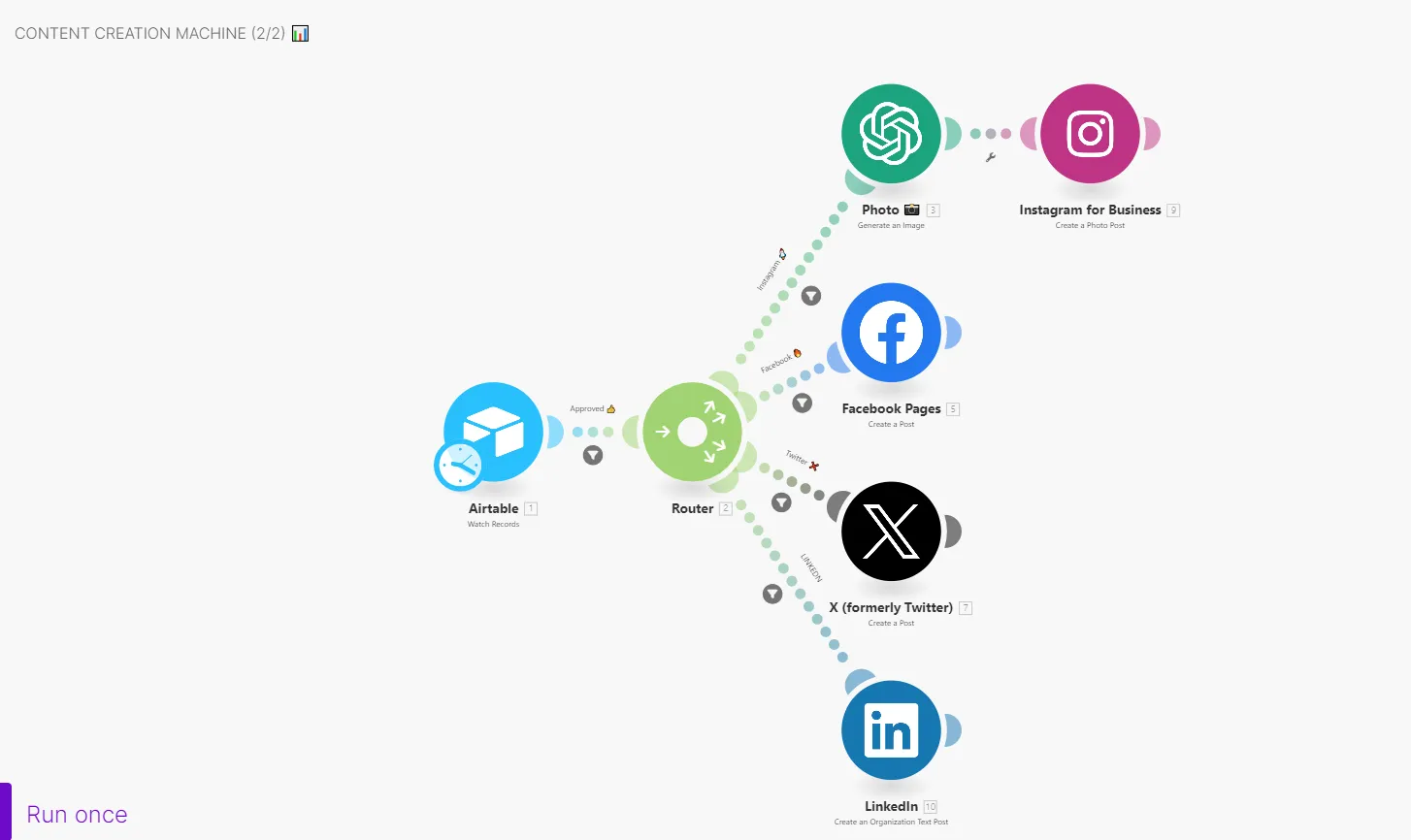
CRM - Automatically creating Social media post

Challenge: Create A system where, Ai will look at real content and trend made by human and post it on Fb, Instagram, Linkedin. system should post generate image as well.

Social Media Posting case Studies
02

Ai image - Generate Ai image and headlines over image via Canva.

Challenge: Create system where Ai will Automatically  create news by following BBC NEWS and system should create caption, headlines, and write the text over ai generated image for a professional look.

03

Ai video - API Integration for Automated Social Media and Content Management

Curabitur aliquam justo ex, ac varius sem facilisis a. In vel felis eros. Fusce ipsum enim, ultrices at ante sollicitudin, faucibus hendrerit nunc. Nullam tempor nulla eu imperdiet interdum.
04

CRM - Inventory and Order Management System with Custom Automations in airtable

Challenge:
An e-commerce client needed a centralized inventory and order management solution in Airtable to manage stock levels, track orders, and automate notifications for low stock and shipping updates.

05

Data scraping - Use ai to scrap viral post, hashtags, video and image and Repurposing in airtable

Challenge:
Watch my competitor posts and account get all the posts and sort viral posts, most used hashtags and Scrap followers.

instagram scrapper

Case Study 1: Multi-Base Automation for Project Organization

Case Study 1: Multi-Base Automation for Project Organization

Challenge: A client managing multiple projects and teams across different locations needed an Airtable setup that allowed them to track and automate workflows across various project bases. They struggled with organizing data consistently and wanted a way to automate reporting, updates, and task management.d disorganized records, impacting sales conversion rates.w

Detailed : Multi-Base Automation for Project Organization

Multi-Base Automation for Project Organization

Challenges


A client managing multiple projects and teams across different locations needed an Airtable setup that allowed them to track and automate workflows across various project bases. They struggled with organizing data consistently and wanted a way to automate reporting, updates, and task management.

Solution:
I designed a multi-base Airtable automation system, connecting various project bases and automating key workflows, including task assignments, data synchronization, and real-time reporting. I used api module within airtable which was sending and receiving data in control method using automation. The setup enabled the client to gain centralized oversight of all projects while keeping individual project bases self-contained for easy access.

Impact:
This solution improved their project coordination, reduced manual data entry, and allowed managers to monitor project statuses across the board in real time.


How to Use UiPath Insights for Effective ROI Optimization with AI

How to Use UiPath Insights for Effective ROI Optimization with AI

Optimizing ROI is crucial for businesses aiming to maximize their returns from investments in automation and AI. Effective ROI management not only enhances profitability but also drives strategic decision-making, ensuring resources are allocated efficiently. 

UiPath Insights, a powerful tool in the landscape of intelligent automation, offers robust capabilities for managing ROI with Automation and AI, including GenAI. This platform enables organizations to harness data-driven insights, enhancing the value of their automation endeavors. 

Key features of UiPath Insights include: 

  • ROI Dashboard: Provides a comprehensive view of automation impact. 
  • Drill-Down Analysis: Helps pinpoint inefficiencies for targeted improvements. 
  • Self-Service Analytics: Empowers users to forecast robot performance and optimize workflows. 

These features position UiPath Insights as an indispensable solution for businesses looking to optimize their automation investments effectively. 

Moreover, the adoption of intelligent automation solutions like those offered by qBotica can significantly enhance operational efficiency in various sectors. For instance, in the healthcare industry, Robotic Process Automation (RPA) can serve as a strategic resource to help health systems regain their footing post-pandemic. 

In the realm of customer service, leveraging automation can enhance agent productivity in contact centers, allowing businesses to meet rising customer expectations for personalized services while managing increasing workloads effectively. 

Furthermore, qBotica’s success in the ITServe Startup Cube Competition with its Intelligent Document Processing Solution, Doqument, highlights the potential of intelligent automation in revolutionizing document processing within enterprises. This recognition underscores qBotica’s commitment to providing innovative solutions that drive efficiency and effectiveness in business operations. 

As we continue to navigate through this rapidly evolving digital landscape, adopting a forward-thinking approach towards intelligent automation will be essential for organizations aiming to improve their operational efficiency and stay ahead of the competition. 

Understanding ROI Optimization 

Return on Investment (ROI) is a key metric in business strategy that measures the efficiency of an investment. It compares the profitability of an investment to its costs, providing insights into the financial gains generated. This information helps businesses make informed decisions about where to allocate their resources effectively. 

Methods for Measuring and Tracking ROI 

To measure and track ROI efficiently, consider the following methods: 

  • Cost-Benefit Analysis: Compare the total investment costs against anticipated benefits. 
  • Net Present Value (NPV): Assess the value of future cash flows in today’s terms. 
  • Internal Rate of Return (IRR): Identify the break-even rate of return on investments. 

Real-World Example of ROI Optimization

A practical example of effective ROI optimization can be seen in a recent case study by qBotica. In this case, a government organization was able to process documents four times faster by implementing a digital solution. This not only revealed profitable opportunities but also greatly improved operational efficiency. 

The Impact of ROI Optimization on Business Performance 

ROI optimization directly affects business performance by identifying profitable opportunities and areas that need improvement. It supports decision-making based on data by providing a clear understanding of financial outcomes. This is crucial for maintaining a competitive edge and fostering strategic growth. 

Additionally, staying updated with industry trends and news, such as those found in the qBotica company newsroom, can offer valuable insights that assist in making informed decisions about resource allocation. 

The Role of Automation and AI in Business 

The Importance of Automation 

Automation is crucial for running a business efficiently. By automating repetitive tasks, companies can: 

  • Make workflows smoother 
  • Reduce mistakes made by humans 
  • Use resources more wisely 

As a result, this leads to significant time savings and increased productivity across various departments. 

How AI Enhances Automation 

AI takes automation to the next level by adding smart decision-making capabilities to business processes. With AI algorithms analyzing large amounts of data quickly, businesses can gain insights that help them improve operations and make better decisions. This combination of automation and AI turns traditional workflows into flexible systems that can adapt to changes. 

Benefits of Generative AI in Workflow Optimization 

Generative AI specifically offers substantial benefits in optimizing workflows. It can: 

  • Predict potential bottlenecks 
  • Suggest process improvements 
  • Automate creative tasks such as content generation or design 

As a result, businesses not only enhance their current operations but also innovate continuously to stay ahead of the competition. 

Real-World Examples: Automation and AI in Action 

This seamless blend of automation and analytics empowers organizations to achieve superior business outcomes efficiently. For instance: 

Automation in healthcare has shown how streamlining processes can significantly improve efficiency and enhance patient care. 

AI-driven software is revolutionizing document processing by offering advanced solutions that optimize workflows. 

qBotica’s Approach: Powering Businesses with Automation and AI 

At qBotica, we leverage the power of automation and artificial intelligence to streamline your business operations, reducing costs by up to 50% through our exclusive discount program. Our best-of-breed solutions span across various sectors including Finance and Accounting, Energy, Insurance, Government/Public Sector, and Healthcare. 

Key Features of UiPath Insights for Effective ROI Optimization with AI 

UiPath Insights empowers organizations by offering data-driven dashboards that are pivotal in validating automation investments. The ROI Dashboard serves as a central hub for assessing the profitability of automation projects, allowing businesses to align their strategies with tangible financial outcomes. By showcasing customizable KPIs, it ensures that every metric reflects unique business goals, facilitating a clear understanding of performance metrics. 

The Drill-Down Analysis feature takes this a step further by identifying inefficiencies within processes. This capability provides insights into bottlenecks and areas ripe for improvement, enabling continuous enhancement of workflows. Through detailed analytics, organizations can dissect data to pinpoint issues and optimize resources effectively. 

Another cornerstone of UiPath Insights is its Self-Service Analytics, which equips users to forecast robot performance independently. This feature allows teams to harness predictive analytics, making informed decisions based on anticipated trends and patterns. By leveraging these insights, companies can plan future strategies more accurately, enhancing their ability to adapt to changing business landscapes. 

These features collectively empower businesses to optimize ROI by integrating automation and AI seamlessly into their operations, paving the way for sustained growth and innovation. For instance, next-gen automation trends could further enhance these capabilities. 

Moreover, companies like TPI Composites are already leveraging such advanced technologies. They are utilizing RPA as a Service and intelligent document processing solutions to automate heavy back office work in just weeks. 

This aligns perfectly with the idea of workflow automation, which is set to revolutionize the way businesses operate in 2024 by boosting efficiency, productivity, and collaboration. 

Additionally, UiPath’s offer of document processing solutions can significantly streamline operations by improving accuracy and reducing costs. 

Integration Capabilities with Other Tools for Enhanced Performance Tracking 

UiPath Insights enhances your automation strategy by seamlessly integrating with a variety of tools. One of the standout integration capabilities is its connection with Automation Hub, allowing organizations to streamline process discovery and implementation. This integration not only facilitates a more cohesive automation lifecycle but also ensures that you can track performance metrics across all stages of your automation initiatives. 

Sharing dashboards is critical for collaborative decision-making and insights dissemination. UiPath Insights supports integration with visualization platforms such as Splunk and Power BI. By sharing dashboards on these platforms, you enable stakeholders to interact with data in real-time, fostering an environment of transparency and informed decision-making. This capability ensures that performance metrics are not siloed but instead accessible to teams across the organization, promoting a unified approach to measuring success and optimizing ROI. 

These integration features reinforce UiPath Insights as a versatile tool for comprehensive performance tracking and strategic alignment across various business functions. 

Real-Time Monitoring and Performance Tracking with UiPath Insights 

Understanding real-time monitoring within UiPath Insights is crucial for organizations aiming to maintain high operational standards. UiPath Insights provides an array of features designed to track and analyze operational metrics, offering a dynamic view into the performance of automation processes. This real-time capability ensures that businesses can respond promptly to any inefficiencies or anomalies. 

Key elements of real-time monitoring include: 

  • Queue-Level Monitoring: This feature allows you to observe the status of automation tasks, pinpointing bottlenecks or delays at an early stage. By keeping an eye on queue levels, you ensure smooth workflow execution without unexpected interruptions. 
  • Exception Tracking: Identifying exceptions in automation processes is essential for maintaining operational oversight. UiPath Insights highlights these exceptions in real time, enabling swift corrective actions to avoid prolonged disruptions. 

These features provide a robust framework for continuous improvement, supporting organizations in maintaining efficiency and optimizing their return on investment through precise data-driven insights. 

In sectors like real estate and mortgage, the integration of such real-time monitoring capabilities can streamline operations significantly. For instance, automating billing and statements through RPA not only reduces manual errors but also allows staff to focus on higher-level customer relations by ensuring quick and accurate bill issuance. 

Customizable Dashboards for Measuring Success with UiPath Insights 

Data-driven performance dashboards in UiPath Insights allow your organization to effectively visualize Key Performance Indicators (KPIs). This customization provides a tailored view into both operational metrics and high-level business outcomes, crucial for optimizing ROI. By customizing dashboards, you can focus on the data that matters most to your specific goals. 

Why Customization Matters 

Every organization has unique objectives and challenges. By customizing your dashboards, you can: 

  • Focus on What Matters: Instead of sifting through irrelevant data, you can directly access the metrics that align with your goals. 
  • Adapt to Changing Needs: As your business evolves, so do your priorities. Custom dashboards allow you to quickly adapt and stay on track. 
  • Enhance Decision-Making: With a clear view of your most important KPIs, you can make informed decisions that drive success. 

Understanding Operational Metrics and Business Outcomes 

To effectively measure success, it’s essential to monitor both day-to-day activities and broader impacts on business strategy. Here’s a closer look at these two aspects: 

Operational Metrics 

These are the key indicators that reflect the performance of your automation processes on a daily basis. By keeping a close eye on operational metrics, you can ensure that your automation initiatives are running smoothly and delivering the expected results. 

Business Outcomes 

While operational metrics provide insights into the efficiency of individual processes, business outcomes reveal the overall impact of automation on your organization’s goals. This includes financial performance, customer satisfaction, and other strategic objectives. 

Aligning Automation Efforts with Future Goals 

The insights gained from customized dashboards play a crucial role in aligning your automation efforts with future goals. Here’s how: 

  • Identifying Gaps: By analyzing both operational metrics and business outcomes, you can identify areas where improvement is needed. 
  • Setting Targets: Based on these insights, you can set specific targets for your automation initiatives. 
  • Tracking Progress: Regularly reviewing your customized dashboards allows you to track progress towards these targets and make necessary adjustments. 

Integrating Automation and AI Technologies 

As organizations increasingly adopt automation and AI technologies, it becomes essential to integrate these tools into existing strategies. Customized dashboards provide visibility into this integration process, allowing you to: 

  1. Monitor Adoption Rates: By tracking how widely automation and AI technologies are being adopted across different teams or departments. 
  2. Assess Impact: Evaluating the impact of these technologies on key business outcomes. 
  3. Drive Continuous Improvement: Using insights from customized dashboards to drive continuous improvement in ROI strategies. 

Flexibility to Adapt with Emerging Business Needs 

In today’s rapidly changing digital landscape, it’s crucial for organizations to be flexible and adaptable. Customized dashboards in UiPath Insights offer this flexibility by allowing you to: 

  • Add New Metrics: As new business needs arise. 
  • Change Data Sources: If you’re using different systems or tools for certain processes. 
  • Tailor Visualizations: According to preferences or requirements of specific stakeholders. 

This ability to adapt ensures that your measurement tools remain relevant and effective in supporting decision-making. 

With UiPath Insights’ customizable dashboards, organizations have the power to measure success in a way that aligns with their unique goals and objectives. By focusing on both operational metrics and business outcomes, businesses can strategically drive their automation efforts towards achieving desired results – ultimately leading to improved ROI strategies over time! 

Evaluating the Impact of AI on Business Performance through Insights from UiPath Analytics 

Assessing the effectiveness of AI investments is crucial for understanding their impact on business performance. UiPath Analytics provides a powerful framework to evaluate these investments by offering detailed insights into various automation metrics. You can track key performance indicators (KPIs) directly linked to AI-driven processes, allowing you to visualize and measure improvements in efficiency and cost savings. 

Key Steps in Assessing AI Effectiveness: 

  • Data Collection: Gather comprehensive data on AI-driven automation tasks. 
  • Performance Metrics Analysis: Use UiPath Analytics to monitor KPIs such as process throughput, error rates, and time savings. 
  • ROI Calculation: Evaluate financial returns by comparing pre- and post-automation performance. 

In practice, organizations have reported significant improvements through case studies. For instance, a retail company leveraged UiPath Insights to reduce processing times by 30%, enhancing customer satisfaction and operational efficiency. Such examples illustrate the transformative power of AI when effectively monitored and optimized using analytic tools like UiPath Insights. 

However, it’s not just the retail sector that has benefited from these insights. The manufacturing industry is also seeing a shift with the advent of intelligent automation. This technology is optimizing inventory management among other processes, leading to improved results. 

Moreover, as we look towards the future, it’s essential to stay updated with the latest trends in AI and automation. qBotica’s white paper offers valuable insights into the top AI and automation trends for 2024, which could further transform industries. 

Whether it’s through enhancing volunteer experiences in community services or securing funding for technological advancements as seen with qBotica’s recent endeavors, the role of AI and automation continues to expand. 

Future Strategies with Automation, AI, and UiPath Insights for Continuous Improvement 

Embracing future strategies with automation and AI is essential for businesses aiming to optimize ROI. Leveraging UiPath Insights as a comprehensive tool ensures sustained success by continuously refining processes and amplifying efficiency. Key approaches include: 

  1. Adopting scalable automation solutions to adapt to evolving business needs, such as in the aerospace sector where Robotic Process Automation is streamlining data collection and analysis. 
  2. Utilizing AI-driven analytics for deeper insights into operational performance, a practice that can significantly enhance areas like healthcare claims processing by reducing errors and ensuring timely reimbursements. 
  3. Fostering a culture of innovation, encouraging teams to explore new automation possibilities. This was exemplified when the Local United Way in Phoenix partnered with qBotica to enhance volunteer experiences through automation. 

By integrating these strategies, organizations position themselves for long-term growth and resilience in an increasingly digital landscape. The potential of automation is further illustrated in the realm of cybersecurity operations, where RPA is being utilized to streamline processes and mitigate risks. Additionally, adopting advanced denial management strategies can revolutionize healthcare billing processes, ensuring maximum revenue retention while reducing claim denials. 


Frequently Asked Questions

AI improves ROI by automating repetitive tasks, reducing operational costs, increasing efficiency, and enabling more accurate data-driven decision-making. By streamlining processes, AI helps businesses reduce the time and resources needed for tasks, leading to faster project completion and improved output. AI can also identify patterns and trends in data, which allows companies to optimize their strategies, reduce errors, and allocate resources more effectively. This ultimately leads to higher revenue and lower costs, directly improving the Return on Investment (ROI). 

UiPath Insights is a performance management and analytics tool that provides real-time, in-depth analysis of robotic process automation (RPA) operations. It allows businesses to monitor the performance of their AI and RPA processes, track key performance indicators (KPIs), and identify areas for improvement. With UiPath Insights, businesses can measure the impact of automation initiatives on their operations, visualize ROI, and ensure that automation efforts align with organizational goals. It provides actionable insights that help organizations optimize their workflows and increase overall productivity. 

Measuring ROI from AI involves comparing the costs of implementing AI solutions with the financial benefits they generate. Key metrics to evaluate include cost savings from automation, time saved, increase in productivity, and revenue growth attributed to AI-driven insights or services. The formula to calculate AI ROI typically involves dividing the net benefits (e.g., increased revenues, reduced costs) by the total AI investment (e.g., technology, development, implementation, and training costs). By tracking key performance metrics like task efficiency, error reduction, and overall business performance improvements, companies can accurately measure the ROI of AI. 

For generative AI projects, ROI is calculated by evaluating the benefits achieved through content creation, product development, or other applications of AI-generated outputs. The ROI for these projects can be measured by: 

  • Revenue generated from AI-generated content, designs, or products. 
  • Cost savings from reducing the need for human input in creative processes. 
  • Improved efficiency in tasks like marketing, design, or code generation. 

The formula for calculating ROI in generative AI is: 

ROI=Net Benefits(e.g., increased revenue or cost savings)−AI Implementation CostsAI Implementation Costs×100text{ROI} = frac{text{Net Benefits} (text{e.g., increased revenue or cost savings}) – text{AI Implementation Costs}}{text{AI Implementation Costs}} times 100ROI=AI Implementation CostsNet Benefits(e.g., increased revenue or cost savings)−AI Implementation Costs ×100 

Businesses should also factor in intangible benefits like faster time-to-market and enhanced customer experiences when calculating the overall ROI. 

The ROI formula for Robotic Process Automation (RPA) involves quantifying the benefits gained through automation and dividing them by the investment costs. The general formula is: 

ROI=Annual Benefits from RPA (Cost Savings + Increased Revenue)RPA Implementation Costs×100text{ROI} = frac{text{Annual Benefits from RPA (Cost Savings + Increased Revenue)}}{text{RPA Implementation Costs}} times 100ROI=RPA Implementation CostsAnnual Benefits from RPA (Cost Savings + Increased Revenue) ×100 

For example, RPA can lead to cost reductions by automating tasks that would otherwise require manual labor, thus generating savings. Additionally, productivity gains from faster task execution can also be included in the ROI calculation. Businesses should account for both direct financial returns and indirect benefits, such as enhanced customer satisfaction and reduced error rates. 

The formula for effective ROI is: 

ROI=Net Gain (Benefits – Costs)Total Investment Costs×100text{ROI} = frac{text{Net Gain (Benefits – Costs)}}{text{Total Investment Costs}} times 100ROI=Total Investment CostsNet Gain (Benefits – Costs) ×100 

In this formula: 

  • Net Gain refers to the total benefits or profits derived from a project or investment, such as cost savings, increased revenues, or improved operational efficiency. 
  • Total Investment Costs include all the expenses associated with implementing a project or technology, such as hardware, software, labor, and training costs. 

The post How to Use UiPath Insights for Effective ROI Optimization with AI first appeared on qBotica | Intelligent Automation for your Enterprise | Featured UiPath Platinum Partner.

AI’s next act is agentic: It’s not just thinking—it’s doing

AI’s next act is agentic: It’s not just thinking—it’s doing

The phrase “AI’s next act is agentic: It’s not just thinking—it’s doing” summarizes the exciting potential of agentic automation. Unlike traditional AI that mainly focuses on analyzing data, agentic automation enables AI systems to take actions on their own. This evolution represents a major advancement in AI’s abilities, making it an important milestone in technology. 

Cloud computing plays a crucial role in this change by providing the necessary infrastructure for scalable and efficient agentic systems. By using cloud resources, businesses can deploy and manage advanced AI agents capable of making complex decisions. 

The key point here is that agentic automation shifts the focus from passive data interpretation to proactive action-taking systems. This shift has the potential to transform business operations, allowing organizations to streamline processes, boost productivity, and make better decisions. 

For example, intelligent automation, as described in a recent guide for CIOs, is one powerful solution that has gained significant popularity. Embracing such robotic process automation could help businesses improve their operations while also managing risks effectively. 

Additionally, as companies explore this new territory, implementing strategies like document processing solutions could be crucial for enhancing accuracy and reducing expenses. These developments are already being adopted by forward-thinking companies, as we can see in the latest news from qBotica’s newsroom

Understanding Agentic Automation 

Agentic automation is a game-changing approach in artificial intelligence. It goes beyond just processing information and instead focuses on making decisions and carrying out tasks actively. Unlike traditional automation methods like Robotic Process Automation (RPA), which mainly automate repetitive tasks based on predefined rules, agentic automation involves systems that can handle complex tasks requiring a deeper understanding and flexibility. 

Key Characteristics 

1. Autonomous AI 

At the core of agentic automation is autonomous AI. These systems have the ability to make decisions on their own without needing human involvement. Using advanced algorithms, they can analyze situations, figure out the best course of action, and carry it out effectively. 

2. Complex Task Management 

Agentic AI systems excel in situations where tasks are not clearly defined or when multiple factors need to be considered. This is in stark contrast to RPA, which struggles with scenarios that require subtle judgment or creativity. 

The difference between these two types of automation lies in what they can do and where they are used. While RPA is still very useful for streamlining simple operations like data entry or report generation in industries such as healthcare where Robotic Process Automation can become a strategic resource, agentic automation goes further by addressing problems that need strategic thinking and adaptability. 

For example, an autonomous AI system in healthcare might not only schedule patient appointments but also adjust those schedules based on real-time information such as hospital capacity or patient urgency. 

In short, agentic automation represents a significant advancement towards AI systems that are not just capable of thinking but also taking action. This has the potential to revolutionize industries by performing tasks that were previously believed to be exclusive to humans. 

The Role of AI Agents in Agentic Automation 

AI agents are the driving force behind agentic automation. They power these systems with their ability to act independently and make decisions. Unlike traditional automation tools that follow fixed instructions, AI agents are designed to adapt and learn from their surroundings. This capability to operate on their own makes them essential in situations where quick decision-making is critical. 

Autonomy and Decision-Making Capabilities 

  1. Autonomy  – AI agents work independently, allowing them to perform tasks without constant human involvement. This independence is crucial for managing complex processes that require immediate decision-making. 
  2. Effective Decision-Making –  These agents use advanced algorithms to analyze data, evaluate situations, and make informed choices. This skill is especially valuable in industries such as finance and healthcare, where prompt and accurate decisions can greatly influence outcomes. For example, AI solutions for Finance and Accounting offered by companies like qBotica can streamline operations in these fields. 

Enhancing Situational Awareness with Context Grounding 

Context grounding techniques are vital for improving how well AI agents understand their surroundings. By grasping the specific conditions they operate in, these agents can adjust their actions accordingly. Here are a couple of examples: 

In a manufacturing environment, an AI agent could modify production schedules based on real-time analysis of supply chain disruptions. 

In customer service, an AI agent might customize responses by interpreting the emotional tone of customer interactions. 

These context-aware abilities enable AI agents to carry out tasks more efficiently and relevantly, making them key players in the world of agentic automation. As organizations continue to adopt these technologies, the importance of AI agents will only grow in shaping independent operations across various industries. 

Moreover, the integration of AI-driven software in document processing is transforming how businesses manage their paperwork, leading to greater efficiency and fewer human errors. 

In addition to these advancements, qBotica has also partnered with local organizations like United Way in Phoenix to enhance volunteer experiences, demonstrating the flexibility of AI in diverse sectors including non-profit. 

As we move forward, it’s evident that staying informed about upcoming trends in AI and automation will be essential for businesses looking to remain competitive in this rapidly changing landscape. 

Benefits and Use Cases of Agentic Automation in Business 

Adopting agentic automation technologies can significantly transform business operations by enhancing operational efficiency and decision-making capabilities. These systems bring a proactive approach to handling complex tasks, thus enabling businesses to achieve seamless business transformation

Key Advantages: 

  • Operational Efficiency: By automating routine processes, businesses can reduce manual intervention, leading to faster execution and reduced error rates. 
  • Enhanced Decision-Making: With AI-driven insights, organizations can make informed decisions swiftly, optimizing outcomes across various domains. 

Real-World Applications: 

  • Healthcare: In healthcare, agentic automation is utilized to streamline patient data management and improve treatment personalization. AI agents can autonomously process medical records and suggest optimal care paths, enhancing patient outcomes. 
  • Finance: Financial institutions leverage agentic systems for fraud detection and risk management. These AI agents analyze transaction patterns in real-time, identifying anomalies swiftly and reducing potential financial losses. 
  • Cybersecurity: In cybersecurity, agentic automation plays a pivotal role in threat detection and response. AI systems continuously monitor network activities, autonomously mitigating threats before they escalate into significant breaches. 
  • Supply Chain Optimization: Businesses utilize agentic automation for supply chain optimization by predicting demand fluctuations and adjusting logistics operations accordingly, ensuring timely delivery and cost efficiencies. 
  • Employee Engagement: Organizations enhance employee engagement through intelligent virtual assistants that handle repetitive tasks, allowing staff to focus on strategic initiatives. 

AI’s next act is indeed agentic—it’s not just thinking; it’s doing. This shift empowers businesses to operate at unprecedented scales of efficiency and effectiveness across diverse sectors. For instance, companies like qBotica, a featured UiPath Platinum Partner, are leveraging the power of automation and artificial intelligence to streamline business operations while reducing costs by up to 50%. 

Challenges and Considerations in Implementing Agentic Automation Technologies 

The integration of agentic automation technologies presents several challenges, particularly concerning ethical considerations and accountability

Ethical Considerations and Accountability 

Autonomous decision-making in AI systems raises questions about ethics and the potential consequences of these decisions on both individuals and society. Establishing accountability frameworks becomes essential to ensure that these technologies are used responsibly. Companies need to create guidelines that clearly define who is responsible for the outcomes generated by AI systems, thus safeguarding against misuse or unintended harm. 

The Black Box Problem 

Another significant issue is the black box problem. Many AI algorithms operate in ways that are not fully transparent, making it difficult for users to understand how decisions are made. This lack of transparency can lead to mistrust, as stakeholders may feel uneasy about relying on systems they cannot fully comprehend. To address this, organizations must prioritize developing AI models with greater interpretability and transparency, ensuring that decision-making processes can be explained and audited when necessary. 

These challenges underscore the importance of a careful approach in implementing agentic automation technologies. By addressing ethical concerns and enhancing transparency, businesses can foster trust and confidence in these advanced systems, paving the way for their successful adoption across various sectors. 

Facilitating the Transition with Robotic Process Automation (RPA) 

One way to facilitate this transition is through the use of Robotic Process Automation (RPA). RPA can automate heavy back office work, reducing the time spent on mundane tasks and allowing staff to focus on higher-level customer relations. For instance, in the case of billing and statements, RPA can ensure that energy companies quickly and accurately issue bills, thus streamlining a process that is often time-consuming and error-prone when done manually. 

Expanding Beyond Corporate Settings: Success Stories in Public Sector Operations 

Moreover, the implementation of agentic automation technologies is not limited to corporate settings. As demonstrated by a government organization which successfully processed documents four times faster with qBotica’s digital solution, these technologies can also enhance efficiency in public sector operations. The self-service option with digital forms introduced by qBotica not only expedited document processing but also helped avoid data quality issues, showcasing the potential of agentic automation in diverse sectors. 

The Future of Agentic Automation Technologies in Business Operations 

Emerging trends in workforce automation are redefining the relationship between humans and machines, setting the stage for agentic automation to take center stage. As businesses increasingly rely on AI-driven solutions, the integration of agentic systems promises to enhance continuous process improvement by enabling more dynamic and responsive operations. 

Key Developments: 

1. Human-Machine Collaboration 

Agentic automation is poised to facilitate seamless collaboration between human workers and AI agents. By handling complex tasks autonomously, these systems free up human resources for more strategic initiatives. 

2. Adaptive Systems 

The adaptability of agentic AI allows businesses to respond swiftly to market changes and operational demands. This agility is critical for maintaining competitiveness in a rapidly evolving business landscape. 

3. Future Applications 

Industries like manufacturing, logistics, and customer service can benefit from agentic automation’s ability to optimize workflows and decision-making processes. As technology advances, expect even broader applications across sectors such as personalized healthcare and intelligent finance management. A recent comparative analysis of technology trends across industries reveals that the potential of next-gen automation is vast and varied. 

Agentic automation will likely play a pivotal role in shaping how organizations operate, driving efficiencies that were previously unattainable. By embracing these technologies, businesses position themselves at the forefront of innovation, ready to meet future challenges head-on. 

Implementing Agentic Automation Successfully: Key Strategies for Businesses 

To effectively implement agentic automation technologies in business operations, organizations must focus on strategic approaches that drive success. Here are practical strategies: 

1. Change Management 

Embrace a culture of adaptability and openness to change. Encourage stakeholders at all levels to understand and support the integration of agentic systems. Facilitate continuous dialogue and feedback loops to address concerns. 

2. Skill Development 

Equip employees with the necessary skills to work alongside AI agents. Provide training programs focused on digital literacy, data analysis, and collaborative problem-solving to ensure a seamless transition. 

3. Pilot Programs 

Start with small-scale pilot projects to test the efficacy of agentic solutions. This approach allows for experimentation and learning without significant risk, enabling companies to fine-tune processes before large-scale implementation. 

4. Integration with Existing Systems 

Ensure that agentic automation tools are compatible with current IT infrastructure. This alignment minimizes disruption and maximizes the utility of existing technological investments. 

By focusing on these strategies, businesses can discover ways to implement agentic automation effectively. For instance, leveraging automation to enhance agent productivity in contact centers is one area where these strategies can be applied successfully. Similarly, revolutionizing denial management in healthcare through advanced automation solutions is another example of how agentic automation can drive business success. Additionally, optimizing inventory management with intelligent automation in manufacturing showcases the potential benefits of integrating these technologies into existing systems. As AI’s next act transitions from mere thinking to doing, these strategic approaches will position organizations for success. 

Conclusion: Embracing the Power of Agentic Automation for Future Success 

Agentic automation is reshaping the future of automation technologies. By using these advanced systems, businesses can improve efficiency and stay competitive in a world where everything is becoming automated. 

As AI evolves, it is moving from just thinking to actively doing. This change gives organizations the power to discover new possibilities and innovate in a dynamic way. 

It’s important for businesses to explore and adopt agentic AI solutions. This will not only help them improve their current processes but also prepare them for future industry needs. 

The message is clear—start using agentic automation now for a successful future 

Generative AI (GenAI) trained for document processing is transforming business operations at scale. This advanced technology enables organizations to handle vast volumes of documents with unparalleled accuracy and efficiency. By leveraging GenAI, businesses can automate tedious tasks, extract valuable insights from unstructured data, and streamline workflows.

UiPath’s Intelligent Document Processing (IDP) solutions play a crucial role in this evolution. As a leader in robotic process automation (RPA) and AI, UiPath offers cutting-edge tools designed to enhance productivity and maintain a competitive edge in today’s fast-paced digital landscape. Their IDP solutions are specifically tailored to manage complex document-based processes, ensuring that businesses stay ahead of the curve.

Key Benefits:

  • Increased Efficiency: Automate repetitive tasks, reducing manual intervention.
  • Enhanced Accuracy: Minimize errors in data extraction and classification.
  • Scalability: Handle large volumes of documents effortlessly.

Adopting GenAI-driven document processing solutions like those offered by UiPath not only optimizes operations but also unlocks new levels of innovation and agility. For instance, claims processing in healthcare or insurance can be streamlined significantly with these technologies. These processes, which are often time-consuming and manual, can be automated to reduce the burden on agents who currently spend days verifying information from multiple sources.

Moreover, the supply chain and logistics industry, which is undergoing incredible transformation due to the rise of e-commerce, can also benefit immensely from such advancements. The integration of intelligent automation in this sector not only streamlines operations but also enhances overall efficiency.

Additionally, the manufacturing sector is also poised for a revolution with intelligent automation, which involves integrating AI, robotics, machine learning, and IoT to optimize processes.

Lastly, even sectors like financial services are undergoing a digital transformation through automation as seen in a recent case study of a top money transfer company that simplified their processes with these technologies.

Understanding the Power of Generative AI for Document Extraction

Generative AI (GenAI) is a game-changing technology, especially when it comes to handling documents. With GenAI, businesses can pull out important information from sources that aren’t structured, like documents, emails, and reports. This is vital for companies aiming to make their operations smoother.

What is Generative AI?

Generative AI involves machine learning models that can generate new content based on existing data. In the context of document processing, GenAI can:

  • Analyze and interpret text: Extract information from complex documents.
  • Generate summaries: Convert lengthy reports into concise summaries.
  • Identify patterns: Detect trends and anomalies within data sets.

Applications of GenAI in Document Processing

GenAI’s application in document extraction provides several key benefits. Here’s how it enhances accuracy and efficiency:

  1. Automated Data Extraction: Traditional methods of data extraction often require manual effort, which is time-consuming and prone to errors. GenAI automates this process, ensuring consistency and reducing human error.
  2. Enhanced Accuracy: By using advanced algorithms, GenAI can accurately read and interpret documents. This includes recognizing different formats, understanding context, and extracting relevant information with high precision. For example, UiPath’s generative AI solutions have shown remarkable accuracy in reading diverse document types.
  3. Increased Efficiency: Automating document processing tasks enables organizations to handle large volumes of documents quickly. This not only saves time but also allows employees to focus on more strategic activities.

Real-World Examples

Consider a financial institution that processes thousands of invoices monthly. Implementing GenAI for invoice processing can:

  • Reduce Processing Time: Transform hours of manual work into minutes.
  • Improve Data Quality: Ensure extracted data is accurate and reliable.
  • Unlock Productivity Gains: Enable staff to concentrate on higher-value tasks.

With GenAI applications for document extraction, businesses can achieve unparalleled levels of productivity and operational efficiency. This technology not only transforms how documents are processed but also unlocks new opportunities for growth and innovation.

The potential applications of generative AI extend beyond document processing into areas such as customer experience and even government sector where its adoption can lead to significant improvements in efficiency and service delivery.

As we continue to explore these advancements, it’s essential to recognize the transformative impact that generative AI will have on various sectors including insurance, where it is already being used to enhance customer experience across channels.

Advancements in Intelligent Document Processing Solutions

Specialized LLMs vs. Foundational LLMs

Understanding the distinctions between specialized language models (LLMs) and foundational LLMs is crucial for leveraging their respective strengths in intelligent document processing (IDP).

1. Specialized LLMs

These models are tailored for specific document types or industries. For instance, a specialized LLM designed for healthcare might excel in understanding medical terminologies, patient records, and insurance claims. The specificity results in higher accuracy and relevance when processing domain-specific documents.

2. Foundational LLMs

These are broader models that offer versatility across various document types and industries. Foundational LLMs like OpenAI’s GPT-3 provide a wide range of capabilities, making them suitable for general-purpose applications. Their adaptability can be advantageous when dealing with diverse datasets.

Comparing Leading IDP Solutions: DocPath vs. CommPath

To illustrate the advancements in IDP solutions, consider the performance benchmarks of two leading platforms: DocPath and CommPath.

1. DocPath

  • Accuracy: Excels in precision for specific document types such as invoices and contracts due to its specialized LLMs.
  • Efficiency: Offers optimized processing speeds by leveraging domain-specific knowledge, reducing the need for manual validation.

2. CommPath

  • Accuracy: Provides robust performance across a variety of document formats through its foundational LLM approach.
  • Efficiency: Shows strong adaptability, making it effective for organizations handling multiple document types without requiring extensive customization.

The choice between specialized and foundational LLMs depends on your organization’s specific needs. Specialized LLMs like those used by DocPath can offer unparalleled accuracy for niche applications, while foundational LLMs like those in CommPath deliver flexibility and broad applicability.

These advancements highlight how IDP solutions have evolved to meet diverse business requirements, ensuring that organizations can choose the best-fit technology to enhance their document processing workflows.

Unlocking Cost Savings and Productivity Gains with GenAI-driven IDP Solutions

Implementing GenAI-powered Intelligent Document Processing (IDP) solutions can lead to substantial cost savings and productivity gains. Many organizations have reported significant reductions in invoice processing times, thanks to the capabilities of these advanced technologies.

Compelling Statistics


1. Invoice Processing Time Reduction

Studies show that businesses leveraging GenAI for document processing have reduced their invoice processing time by up to 70%. This efficiency translates into a faster turnaround, enabling companies to handle larger volumes of invoices without increasing headcount.

2. Cost Savings

By automating document-centric processes, companies can achieve cost savings of up to 40%. This is due to the reduced need for manual data entry and verification, which minimizes human error and decreases operational costs.

Real-World Examples

Several real-world examples illustrate the transformative impact of GenAI-driven IDP solutions across various business functions:

  • Healthcare Sector: A leading healthcare provider utilized UiPath’s IDP solutions to automate patient record management. The automation led to a 50% reduction in administrative workload, allowing healthcare professionals to focus more on patient care.
  • Banking Industry: A major bank implemented GenAI for processing loan applications. The result was a decrease in processing time from days to hours, significantly improving customer satisfaction and operational efficiency.
  • Manufacturing: A multinational manufacturing company adopted GenAI solutions for managing supplier invoices. This automation streamlined their accounts payable process, reducing errors and accelerating payment cycles. To further enhance efficiency in this sector, digital innovation is being integrated into the supply chain management.

Straight-Through Processing

Straight-through processing (STP) is another key benefit of GenAI in document handling. STP enables end-to-end automation without human intervention, ensuring faster and more accurate processing. Invoices, purchase orders, and other critical documents are processed seamlessly, enhancing overall business operations at scale.

Leveraging GenAI-trained systems for document processing not only advances business operations but also ensures that organizations stay competitive in today’s fast-paced digital landscape. The combination of cost savings, improved accuracy, and increased productivity makes GenAI-driven IDP solutions an invaluable asset for modern enterprises.

In addition to these benefits, implementing an Automation Center of Excellence can further streamline operations by providing packaged business solutions targeting critical areas such as revenue cycle management and procurement.

Ensuring Data Security and Compliance in an AI-Driven Document Processing Landscape

When using AI for document processing, protecting sensitive information is crucial. Organizations, particularly in regulated industries such as healthcare and finance, face specific challenges in ensuring data security and compliance.

Key Concerns in Document Handling

  1. Data Breaches: Unauthorized access to confidential information can result in significant financial losses and damage to reputation.
  2. Regulatory Compliance: Industries must comply with strict regulations such as GDPR, HIPAA, and other regional data protection laws.
  3. Data Integrity: It is essential to maintain the accuracy and consistency of information throughout the document lifecycle.

UiPath’s AI Trust Layer Framework

UiPath tackles these issues with its AI Trust Layer framework, created to improve security while ensuring compliance:

  • Data Encryption: All data processed through UiPath’s platform is encrypted both during transmission and when stored. This guarantees that sensitive information remains safe from unauthorized access.
  • Access Controls: Strong user authentication methods restrict access to sensitive documents only to authorized personnel, minimizing the risk of internal threats.
  • Audit Trails: Detailed logging and auditing capabilities offer transparency into who accessed what data and when, aiding compliance with regulatory requirements.
  • Anonymization Techniques: Sensitive information can be made anonymous during processing to further protect privacy without compromising the usefulness of the data.

Addressing Industry-Specific Challenges with Intelligent Automation

In sectors like finance and healthcare, the need for data security and compliance is even more critical. For example, intelligent automation can greatly improve processes in the finance industry while ensuring adherence to regulatory standards. Similarly, in healthcare, enhancing the healthcare cycle through advanced AI solutions can help manage large amounts of patient data securely and efficiently.

Balancing Security with Efficiency

Using advanced technologies like GenAI for document analysis requires finding a balance between security and efficiency. The use of AI-based tools for generating documents must not compromise the protection of important business data. By utilizing frameworks such as UiPath’s AI Trust Layer, organizations can confidently implement AI-driven solutions while upholding high levels of data security and regulatory compliance.

Ensuring these precautions are taken allows businesses to fully utilize the benefits of AI document processing without putting themselves at unnecessary risk. This comprehensive strategy not only safeguards sensitive information but also fosters trust among stakeholders, leading to wider acceptance of intelligent automation technologies.

As a UiPath Diamond Partner, qBotica has been leading the way in this automation revolution. The knowledge gained from events like UiPath FORWARD 5 offers valuable advice for companies seeking to successfully navigate this intricate landscape.

Best Practices for Successful Implementation of GenAI Solutions in Document Processing Workflows

Implementing GenAI solutions in document processing requires thoughtful planning and execution. Selecting the right Intelligent Document Processing (IDP) solution is critical. Here’s how you can align your choice with your organization’s unique requirements:

1. Assess Your Needs

Identify the types of documents you process frequently and the specific challenges you face. For instance, if you’re dealing with high volumes of invoices, look for an IDP solution specialized in financial document processing. It’s also essential to ensure that your chosen solution safeguards data integrity and compliance, especially when it comes to finance automation, as this is a crucial aspect of maintaining operational efficiency.

2. Evaluate Capabilities

Compare different IDP solutions based on their features. Solutions like UiPath IDP offer robust capabilities, including intelligent document classification, which can categorize documents accurately and efficiently.

3. Scalability and Integration

Ensure the selected IDP solution can scale with your business growth and integrate seamlessly with your existing systems. UiPath IDP solutions are known for their flexible integration capabilities.

4. Accuracy Benchmarks

Look for solutions that provide high accuracy rates in data extraction and classification. Accurate data is crucial for maintaining operational efficiency and reducing manual intervention.

To ensure optimal results with GenAI-driven IDP solutions, intelligent document classification plays a pivotal role. This technology enables automated systems to understand and categorize documents correctly, leading to:

  • Reduced processing times
  • Enhanced data accuracy
  • Streamlined workflows

Incorporating human validation into automated workflows is another key strategy for successful implementation:

  • Initial Validation Phase: During the early stages of implementation, include a human review step to verify the accuracy of automated processes.
  • Continuous Monitoring: Regularly monitor the system’s performance and make adjustments as needed to improve accuracy.
  • Feedback Loop: Create a feedback loop where human validators can correct errors, helping the GenAI system learn and improve over time.

By integrating these best practices, you can harness the full potential of GenAI-driven IDP solutions like UiPath IDP to transform your document processing workflows without compromising on accuracy or efficiency.

Understanding the Future Potential of GenAI in Document Processing Automation

Generative AI (GenAI) is reshaping business operations by enhancing document processing capabilities at scale. As organizations continue to adopt GenAI-driven Intelligent Document Processing (IDP) solutions, they unlock unprecedented levels of efficiency, accuracy, and cost savings.

GenAI trained for document processing offers significant advantages:

  • Enhanced Data Extraction: Extracting valuable insights from unstructured data sources becomes seamless, enabling better decision-making.
  • Increased Productivity: Automated workflows reduce manual intervention, freeing up resources for more strategic tasks.
  • Cost Efficiency: Reduction in processing times translates to lower operational costs.

UiPath’s IDP solutions exemplify the impact of automation technologies. By integrating these solutions, businesses can drive innovation and agility, staying competitive in a fast-paced digital landscape. For instance, qBotica exemplifies how such integration can revolutionize document processing through their media and events showcasing successful implementations.

Encouraging readers to embrace these advancements is crucial. Leveraging GenAI not only streamlines operations but also fosters growth within organizations. The future outlook on GenAI in document processing is promising, with continuous advancements propelling business operations to new heights.

To further understand the potential of intelligent automation in various sectors, one can explore use cases provided by qBotica which illustrate how different industries can benefit from adopting such technologies.

“Innovation distinguishes between a leader and a follower.” – Steve Jobs

For CIOs aiming to revolutionize enterprise efficiency, the Intelligent Automation Blueprint offered by qBotica serves as a comprehensive guide.

Frequently Asked Questions

The agentic approach in AI refers to the development of systems that can act independently, make decisions, and perform tasks without requiring constant human input. These systems are designed to adapt, learn from their environments, and execute tasks autonomously. The agentic approach enables AI systems to go beyond simple automation, allowing them to solve problems dynamically and make informed choices in real-time. This approach is at the core of AI-driven innovation, where systems can anticipate needs, optimize workflows, and take actions that align with organizational goals. 

Agentic AI systems are intelligent systems that function as autonomous agents. They are capable of perceiving their environments, processing information, and taking actions to achieve predefined objectives. Unlike traditional AI, which relies on predefined rules or human inputs, agentic AI systems can make decisions, learn from data, and adjust their actions based on real-time feedback. For instance, the partnership between qBotica and UiPath is focused on developing AI agents that autonomously manage business processes, driving greater efficiency and operational excellence. 

The next AI systems will likely be more advanced versions of agentic AI, incorporating higher levels of autonomy, adaptability, and problem-solving capabilities. These future AI systems will be equipped with enhanced natural language processing, machine learning, and cognitive computing capabilities, allowing them to interact with humans more naturally and efficiently. These systems will also play a pivotal role in industries like healthcare, finance, and manufacturing, where they will optimize operations, make real-time decisions, and innovate in ways not possible with current AI systems. 

While AI as a concept has been around for several decades, significant advancements in computing power, data availability, and machine learning algorithms have propelled AI into mainstream use in recent years. The rise of big data and more sophisticated machine learning models has made AI more practical and impactful in various industries. Although the foundation of AI was laid many years ago, the rapid acceleration of its development has only been seen in the past decade. 

Beyond AI, the future likely holds developments in Artificial General Intelligence (AGI), where machines are not just task-specific but possess generalized intelligence, similar to human cognitive abilities. Other technologies such as quantum computing may combine with AI to solve even more complex problems, pushing the boundaries of what machines can do. The evolution of AI into more autonomous systems, such as the agentic AI developed by qBotica and UiPath, signals a shift toward machines that can fully operate without human oversight, driving the next technological frontier. 

Yes, AI is widely considered the next big thing due to its ability to transform industries, enhance productivity, and create new business models. With advancements in AI, machine learning, and automation, businesses can operate more efficiently, provide personalized experiences, and innovate at an unprecedented rate. AI is already reshaping industries like healthcare, finance, logistics, and manufacturing, and it is expected to have an even larger impact in the coming years as its capabilities continue to grow. 

By 2025, AI is expected to be deeply integrated into various aspects of business and daily life. AI systems will be more advanced, handling complex tasks like diagnosing diseases, managing supply chains, automating financial processes, and even driving cars. Businesses will rely more on AI for decision-making, predictive analytics, and operational efficiencies. The collaboration between qBotica and UiPath is an example of how AI will evolve, with agentic systems automating workflows and enhancing business outcomes. Additionally, AI is expected to significantly impact job markets, with new roles emerging in AI management and data science while certain repetitive tasks will be fully automated. 

By 2025, AI is likely to become an indispensable tool across industries, and businesses that embrace it will be at the forefront of innovation. 

The post AI’s next act is agentic: It’s not just thinking—it’s doing first appeared on qBotica | Intelligent Automation for your Enterprise | Featured UiPath Platinum Partner.

How Latte is Revolutionizing Linear Time Transformers

How Latte is Revolutionizing Linear Time Transformers

Latte: Latent attention for linear time Transformers is making waves in the world of AI, particularly in how it transforms traditional transformer models. Linear time Transformers have long been hampered by their quadratic time complexity, posing challenges in efficiently handling extensive data sequences. Latte addresses these issues head-on, offering a significant leap forward. 

This article delves into Latte’s groundbreaking contributions within the realm of linear time Transformers. By revolutionizing attention mechanisms, Latte paves the way for enhanced computational efficiency and scalability. Through a novel approach that incorporates latent variables, it achieves remarkable performance without sacrificing quality. 

As you read on, discover how Latte’s innovations redefine possibilities for real-time applications and unlock new avenues in AI model development. This exploration promises valuable insights into how this cutting-edge technology is setting new standards in AI advancements. 

In conjunction with Latte’s advancements, companies like qBotica are leveraging similar innovative technologies to scale up their ecosystem approach and help enterprises streamline their operations. From providing RPA as a Service to offering intelligent document processing solutions, qBotica is at the forefront of digital transformation. 

Moreover, qBotica is also making significant strides in sectors like healthcare with their intelligent automation solutions designed to streamline healthcare claims processing. Their expertise extends to real estate as well, where they provide robotic process automation services aimed at optimizing mortgage processes and enhancing real estate marketing automation. 

Understanding the Need for Linear Time Transformers 

Traditional transformers face significant challenges due to their quadratic time complexity, particularly when tasked with handling lengthy sequences in natural language processing (NLP). This complexity arises because each token in a sequence must attend to every other token, resulting in substantial computational demands. For real-time applications, this quadratic growth is a bottleneck, making it difficult to scale models efficiently. 

Improving runtime performance and memory efficiency is crucial for advancing AI models. As sequences grow longer, the computational burden escalates, hindering the ability of traditional transformers to process data swiftly and effectively. This limitation impacts not only NLP tasks but also applications requiring rapid data processing and decision-making. 

By transitioning to linear time transformers, you can significantly enhance both runtime performance and memory efficiency. This shift allows for real-time processing capabilities, enabling models to operate seamlessly across various scales. Adopting linear AI approaches facilitates scalable solutions that can adapt to growing data volumes without incurring prohibitive computational costs. 

Linear time transformers represent a pivotal development in AI, offering the potential for wide-ranging applications that demand quick adaptation and robust scalability. Embracing these innovations is essential for pushing the boundaries of what AI can achieve in today’s fast-paced digital world. 

In sectors like healthcare, where Robotic Process Automation (RPA) has become a strategic resource, the need for efficient data processing is more pronounced than ever. Companies like qBotica, a prominent player in intelligent automation, are leveraging these linear time transformer technologies to streamline operations and reduce costs by up to 50%. Such advancements not only enhance operational efficiency but also play a crucial role in transforming industries such as cybersecurity where RPA is being utilized to optimize operations and mitigate risks associated with human factors. 

Introducing Latte: Latent Attention Mechanism for Linear Time Transformers 

Latte is a new development in the world of linear time Transformers. It uses latent variables to achieve linear time complexity while still maintaining high-quality attention mechanisms. This new method is a significant departure from traditional models, providing a more efficient and scalable solution for working with large data sequences. 

Key Components of Latte: 

Bidirectional Standard Attention Mechanism: At the core of Latte is its bidirectional standard attention mechanism. This feature allows for smooth integration of information from both past and future tokens, ensuring that context is preserved throughout the sequence processing. 

Probabilistic Framework: Latte uses a strong probabilistic framework that supports the flexible adjustment of attention weights. This framework enables more accurate modeling of dependencies within sequences, improving the model’s ability to adapt to different data structures. 

By combining these elements, Latte not only solves the problems caused by quadratic time complexity but also improves performance without compromising the quality of attention mechanisms. The use of latent variables and a probabilistic approach ensures that Latte stays at the forefront of innovation in AI models, opening doors for more efficient and effective natural language processing solutions. 

Potential Applications of Latte 

  • Enhancing Agent Productivity in Contact CentersThis innovative technology can significantly enhance agent productivity in contact centers, where handling extensive data sequences is crucial. With its linear time complexity and efficient attention mechanisms, Latte can streamline operations and improve customer experience by providing more personalized services. 
  • 2. Improving Document Processing Solutions Latte’s capabilities extend to document processing solutions as well. The model’s ability to handle large volumes of data efficiently can lead to substantial improvements in accuracy and cost reduction in document processing tasks. 

For example, a recent case study showed how a government organization was able to process documents four times faster with the implementation of qBotica’s digital solution. Such success stories highlight the potential impact of using advanced AI models like Latte in various sectors. 

The Innovative VAPOR Technique in Latte Architecture 

VAPOR (Value Embedded Positional Rotations) is an important technique used in Latte to make it run more efficiently. It works by directly including information about the position of each token in the value representations used in attention mechanisms. This allows VAPOR to keep high-quality attention weights without requiring additional computational resources. As a result, during processing, the relative position of each token is automatically taken into account. 

Why Relative Distances Matter 

The idea of looking at the distances between tokens is crucial here. It enables us to predict the next token in constant time, which is essential for applications that require real-time responses. By efficiently encoding these distances and minimizing any loss of information, Latte can achieve linear time complexity while still effectively capturing dependencies that span over long distances. 

How VAPOR Improves Latte 

By incorporating VAPOR into the Latte architecture, we can see how advanced techniques can streamline processes and optimize performance. This not only improves runtime efficiency but also maintains the effectiveness of attention mechanisms, making it a groundbreaking approach in transforming linear time Transformers. 

Applications Beyond NLP 

However, the potential of such advanced techniques goes beyond just natural language processing. For example, in industries like aerospace, Robotic Process Automation is being used to handle the large amounts of data generated by aircraft. Each flight can produce up to 20 terabytes of data every hour, which requires efficient methods for collecting and analyzing this information in order to gain valuable insights. 

Additionally, intelligent automation is transforming efficiency in various sectors such as finance, healthcare, and manufacturing. Specifically in manufacturing, using intelligent automation to optimize inventory management has proven to be a game changer. 

The Future of AI and Automation 

As we continue to push the limits of what AI and automation can do, it becomes clear that these technologies are not just tools for improving efficiency but also catalysts for transformation across industries. 

For organizations looking to implement such advanced solutions, qBotica offers a range of top-notch solutions and services designed to meet the diverse needs of different industries. 

Performance Assessment of Latte on Long Sequences 

Evaluating the performance of Latte involves rigorous benchmarking, particularly in contexts that demand handling long-range dependencies. The Long Range Arena serves as an essential benchmark suite, providing diverse tasks that test a model’s efficiency and ability to process extended sequences. For language modeling tasks, this requires maintaining coherent context over extensive input data. 

Latte’s performance is measured against these benchmarks, demonstrating its capability to manage long-range dependencies effectively. Key metrics include perplexity scores, which gauge the model’s prediction accuracy for unseen data, and computational efficiency, indicating how swiftly and resourcefully it processes information. 

Experimental results highlight several strengths: 

Superior Perplexity Scores: Latte consistently outperforms traditional attention models, achieving lower perplexity scores. This indicates enhanced predictive accuracy in language modeling tasks. 

Enhanced Computational Efficiency: By leveraging latent attention mechanisms, Latte requires less computational power while processing large datasets efficiently. This reduction in resource consumption does not compromise the quality of output. 

These findings underscore Latte’s potential for revolutionizing linear time transformers by delivering robust performance on long sequences. Its innovative approach provides a scalable solution for real-time applications where maintaining efficiency without sacrificing quality is crucial. 

Challenges Faced by Latte with Character-Level Datasets 

Latte, despite its innovative design, encounters certain limitations when applied to character-level datasets. These datasets require capturing fine-grained elementwise interactions among characters, which poses unique challenges for effective attention modeling. The intricacies of character-level processing demand a heightened sensitivity to the nuanced relationships between individual elements, something that Latte’s current framework struggles with. This issue becomes apparent in tasks where precise character dependencies are crucial, potentially affecting the model’s performance and accuracy. 

However, understanding and addressing these limitations is essential for expanding Latte’s applicability across diverse linguistic tasks and dataset structures. For instance, in sectors such as billing and statements where character-level processing is vital for automating and accurately issuing bills, enhancing Latte’s capabilities could significantly improve efficiency and accuracy in such tasks. 

Comparative Analysis: Efficiency Gains from Using Latte Framework vs. Traditional Methods 

Latte, with its latent attention for linear time Transformers, introduces a groundbreaking shift in how attention mechanisms are evaluated and applied. When comparing performance metrics such as PPL (Perplexity) and BPC (Bits Per Character), Latte demonstrates significant advantages over traditional models. 

Understanding the Metrics 

Before diving into the specifics, let’s briefly understand what these metrics represent: 

Perplexity (PPL): This metric measures how well a model predicts a sample. Lower perplexity indicates better performance. 

Bits Per Character (BPC): This metric assesses the efficiency of character-level language models. 

Advantages of Latte over Traditional Models 

Now, let’s explore how Latte outperforms traditional models in terms of these metrics: 

Lower Perplexity: Latte’s approach to utilizing latent variables effectively reduces PPL across various datasets, showcasing its ability to capture long-range dependencies with greater precision than standard attention mechanisms. 

Improved BPC Scores: By employing the latent chain of thought, Latte achieves improved BPC scores, indicating enhanced capacity for handling intricate character-level interactions that often challenge conventional models. 

The core of these efficiency gains lies in Latte’s unique latent chain of thought mechanism. It allows the model to process information more contextually and with reduced computational overhead. This innovative approach contrasts starkly with traditional methods that often struggle with scalability and efficiency when faced with complex sequences. 

Notably, these insights into the next-gen automation trends across various industries highlight how technologies like Latte are paving the way for more efficient automated solutions. 

Latte not only excels in runtime performance but also maintains robustness in preserving the quality of attention weights. The integration of latent variables ensures that the model can adaptively manage varying levels of sequence complexity, thus offering a versatile solution for real-time applications requiring efficient yet powerful AI models. 

Applications and Future Directions for Linear Time Transformers with Latte as a Foundation 

The integration of linear time transformers with latent attention mechanisms, such as those found in Latte, opens up exciting possibilities across various domains. One area where these advancements can be particularly impactful is in multimodal tasks. By efficiently processing large datasets that encompass diverse data types—be it text, image, or audio—Latte-based models could excel in tasks requiring the simultaneous understanding of multiple modalities. 

Another promising application is cross-lingual transfer learning. With the capability to process long sequences efficiently, Latte enables more effective alignment between languages, potentially reducing the need for extensive language-specific data. This can facilitate smoother transitions and better performance across different linguistic contexts. 

Looking ahead, future developments may include: 

Improved training strategies: Tailoring optimization techniques to better exploit the latent variables within Latte could enhance learning efficiency and model robustness. 

Sophisticated latent variable structures: Introducing more complex latent variable architectures might improve the capture of intricate dependencies in data, thereby boosting the model’s ability to generalize across various scenarios. 

These advancements hold promise not only for traditional language modeling scenarios but also for extending AI’s capabilities into new and innovative applications. For instance, leveraging these technologies in healthcare automation could significantly streamline processes and enhance patient care. 

Moreover, the potential for these models to revolutionize denial management in healthcare billing processes is immense. By reducing claim denials and ensuring maximum revenue retention through advanced denial management strategies, we can redefine financial efficiency in this sector. 

Furthermore, the application of these technologies isn’t limited to healthcare alone. A recent partnership between qBotica and the local United Way in Phoenix showcases how automation can enhance volunteer experiences, bringing about significant improvements in service delivery. 

Conclusion: Embracing Efficiency with Innovation through Latent Attention Mechanism 

Latte has transformed linear time Transformers by introducing a latent attention mechanism that balances superior performance with computational efficiency. By using latent variables, Latte maintains high-quality attention mechanisms, crucial for handling long sequences in natural language processing tasks. 

Enhanced Performance and Efficiency: The innovative VAPOR technique ensures runtime efficiency without sacrificing the quality of attention weights, showcasing impressive results in benchmarks. 

Opportunities for Exploration: Encouraging further research into this domain could lead to groundbreaking advancements in AI. Potential areas include multimodal reasoning, cross-lingual transfer learning, and more sophisticated latent variable structures. 

As we embrace these innovations, the potential for shaping future AI advancements remains immense. For instance, the top business benefits of AI in document processing illustrate how AI-driven software can revolutionize document automation, significantly benefiting businesses. 

Moreover, exploring workflow automation can lead to boosted efficiency, productivity, and collaboration within organizations. 

The insights from our white paper on AI and automation trends for 2024 provide a comprehensive overview of the upcoming changes in these fields. 

Exploring these opportunities further will propel us towards a more efficient and intelligent automation landscape. 

The post How Latte is Revolutionizing Linear Time Transformers first appeared on qBotica | Intelligent Automation for your Enterprise | Featured UiPath Platinum Partner.